
TL;DR

Get kitchen gear delivered free with Prime
- Fast, free delivery on millions of items
- Prime Video, Amazon Music and more included
- Member-only deals all year
A Good Housekeeping report says many home cooks overlook the microwave’s power-level control, even though adjusting it can help food heat more evenly. Experts recommend lower power for delicate foods, medium power for many leftovers and frozen meals, and high power for water-rich foods that need quick heating.
A Good Housekeeping report says home cooks can improve how food heats in a microwave by using its power-level setting rather than defaulting to full power. Food and appliance experts cited in the report say lowering the setting can help reduce uneven heating and protect delicate foods from drying out or overcooking.
Microwaves heat food by sending energy waves that make water molecules vibrate, producing heat. The power control changes how that energy is delivered. In many conventional models, lower settings make the microwave alternate between running and pausing; the pauses allow heat to spread through the food. Models with inverter technology can instead deliver a reduced level of power continuously, according to the report.
Steph Chen, founder and CEO of microwave cookware company Anyday, advises using lower power for foods that need gentle heat, including chocolate, custards, dairy-based sauces, seafood, chicken, eggs and grains. Foods that separate or burn easily may also need frequent stirring; the report recommends stirring such mixtures about every 15 seconds.
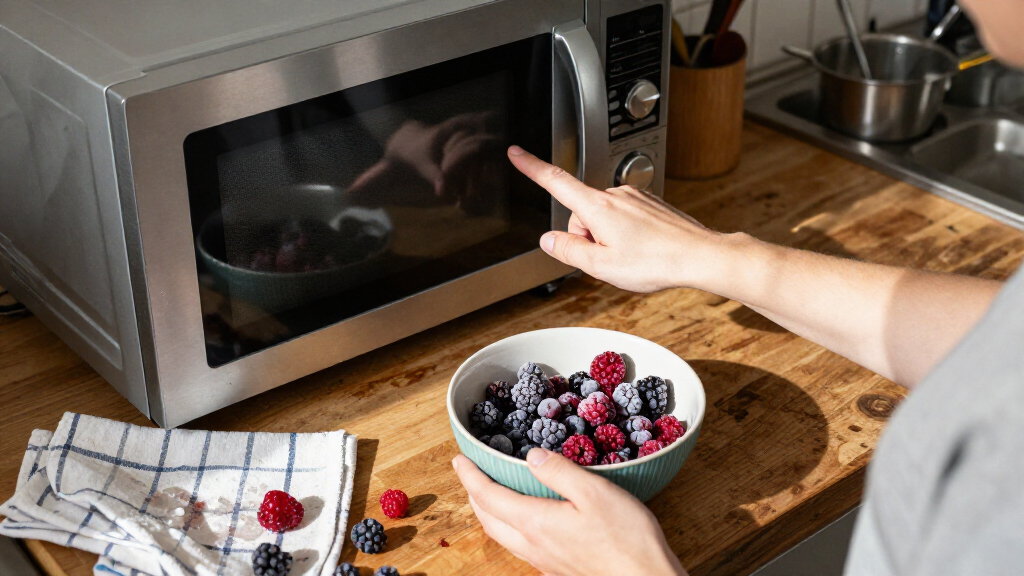
For many leftovers, Chen recommends medium power, or 50%, to warm food more gently and help limit moisture loss. That can be useful for dishes that are difficult to stir, such as casseroles, pot pies and burritos, as well as frozen foods. High power is better suited to quickly heating foods with high water content, such as vegetables, soups and sauces, and can be used for microwave pasta, the report says.
A Better Way to Reheat Food
The advice offers a practical way to address a common kitchen problem: food that is hot in some places but cold in others, or that becomes dry and rubbery while reheating. Using a lower setting can give heat more time to spread, particularly in foods that cannot be stirred during cooking. That may improve texture and consistency, though results will depend on the food, quantity and microwave.
It also challenges the assumption that the highest setting is always the fastest route to a good result. Full power remains useful for quick heating, but power selection is part of cooking control, much like choosing different heat levels on a stovetop. The report presents this as expert guidance, not as a guarantee that every dish will heat evenly or that the same time and setting will work in every appliance.
Products Worth Considering

Vitamix 5200 Professional-Grade Blender, 64 oz. Container, Black

Ninja Crispi Glass Air Fryer (Stone) – 4‑in‑1

De'Longhi Magnifica Duo Fully Automatic Espresso Machine with Milk Frother, Silver
As an affiliate, we earn on qualifying purchases.
How Microwave Power Controls Heat
Microwave power settings do not necessarily change the appliance’s maximum wattage. Instead, the way a lower setting works depends on the microwave’s design. In traditional models, the unit typically switches its energy output on and off. Inverter models, according to Good Housekeeping Reviews Analyst Eva Bleyer, can maintain a steady, lower energy supply. Both approaches are intended to provide gentler heating, but the mechanics differ.
To change the level, users should check their appliance’s manual because controls vary. The report says many models have a button marked Power or Power Level, or place the option in a settings menu. Bleyer describes a common sequence: enter the cooking time, press Power Level, choose a number such as 5 for 50%, then start. Some preset programs, including popcorn, may not allow manual power adjustment.
“Most people use their microwave on full power all the time, but full power isn’t always the right setting. It’s similar to cooking on the stovetop—you wouldn’t cook everything on high heat.”
— Steph Chen, founder and CEO of Anyday
Settings Depend on Your Microwave
The report does not provide a single cooking time or power level that applies to every food and microwave. Wattage, appliance design, portion size and starting temperature can all affect results; the supplied material does not quantify those differences. The advice is general guidance, and users may need to check food during cooking and adjust the time or setting.
It is also not clear from the report how much a lower setting changes heating consistency across different models or dishes. Manufacturer instructions remain the source for appliance-specific controls, and preset programs may restrict manual adjustments. The report does not claim that a power-level change alone prevents every hot or cold spot.
Check the Manual and Adjust
Readers can look for a Power or Power Level control, consult the microwave’s manual, and try a reduced setting when reheating leftovers or cooking delicate foods. A practical starting point cited in the report is 50% power for leftovers; lower settings may suit foods prone to burning or drying, while high power can help heat water-rich foods quickly. Users should monitor the food and follow any recipe or appliance instructions.
Good Housekeeping’s report does not announce a new product, rule or change in microwave technology. Its next step for consumers is simply to test the existing control on their own appliance and judge the results. The suitable setting and cooking time will vary by dish and microwave.
Key Questions
Why use a lower microwave power setting?
A lower setting can give heat more time to spread through food, which may help reduce overcooked edges and uneven texture. The effect depends on the microwave and the food.
What power level should I use to reheat leftovers?
Steph Chen recommends medium power, around 50%, for many leftovers. Check the food as it heats and adjust the time to suit the portion and appliance.
Which foods benefit from low power?
The report says gentle heat can help with chocolate, custards, dairy-based sauces, delicate proteins, eggs and grains. Foods that separate or burn easily may also need frequent stirring.
When should I use full power?
High power is suited to quickly heating foods with high water content, such as vegetables, soups and sauces. The report also says it can work for cooking pasta in a microwave.
How do I change my microwave’s power level?
Controls differ by model, so check the manufacturer’s manual. Many microwaves have a Power or Power Level button; some require entering a cook time first. Preset programs may not permit a manual change.
Source: goodhousekeeping.com