
TL;DR
Building a pickling brine involves choosing the right method—vinegar or fermentation—and carefully measuring ingredients like vinegar, salt, and spices. Proper technique ensures safety, flavor, and crunch in your homemade pickles.
Nothing beats the satisfying crunch of a freshly made pickle. But behind every crisp, tangy jar is a simple but crucial step: building the right brine.
If you want your home-canned or fermented vegetables to turn out safe, flavorful, and perfectly textured, understanding how to craft your brine is essential. This isn’t just about mixing salt and water—it’s about balancing acidity, salt, spices, and food safety in a way that works for your ingredients and your skill level. Whether you’re new to pickling or refining your technique, this guide will walk you through the process with clear steps, real-world tips, and safety advice to keep your food delicious and safe.
Always measure salt by weight to ensure consistent fermentation and safety.
Use vinegar labeled 5% acidity for predictable, shelf-stable pickles.
Vegetables must stay fully submerged during fermentation to prevent spoilage.
Choose your water source carefully—filtered or dechlorinated water helps maintain clarity and microbial health.
Follow tested recipes precisely—especially for shelf-stable canning—to avoid safety risks.
How to Build a Brine for Pickling
A reliable brine balances acidity or salt with clean water, measured ingredients, and sound food-safety technique. Start by choosing vinegar pickling or natural fermentation—then build the brine for that method without treating the two as interchangeable.
Use commercial vinegar labeled 5% acidity for predictable pickling strength.
A common salt concentration for many vegetables, measured accurately by weight.
About 65–75°F: warm enough for activity without encouraging rapid softening.
Two methods, two different preservation systems
Vinegar pickles receive acid immediately. Fermented pickles develop lactic acid over time through beneficial microbial activity. Select one path before measuring anything.
Vinegar pickles
A practical starting formula for refrigerator pickles. This is a flavor framework, not a universal shelf-stable canning recipe.
For shelf-stable jars, use a scientifically tested canning recipe and never reduce its prescribed vinegar.
Fermented pickles
Salt selects for beneficial lactic-acid bacteria, which transform vegetable sugars into acid over days or weeks.
Some recipes calculate salt from vegetables plus water. Follow the exact convention in your chosen recipe.
Use weight for repeatable fermentation
Example: 25 grams of salt divided by 1,000 grams of water equals a 2.5% brine. A kitchen scale avoids the large volume differences caused by salt crystal size.
Pickling salt dissolves cleanly. Kosher salt can also work, but crystal size varies by brand. Table salt is chemically usable, although additives may cloud the brine or create sediment.
Construct the brine without weakening its safety system
Choose 5% vinegar
Distilled white vinegar tastes clean and preserves bright colors. Apple cider vinegar brings a fruitier profile and may darken pale vegetables.
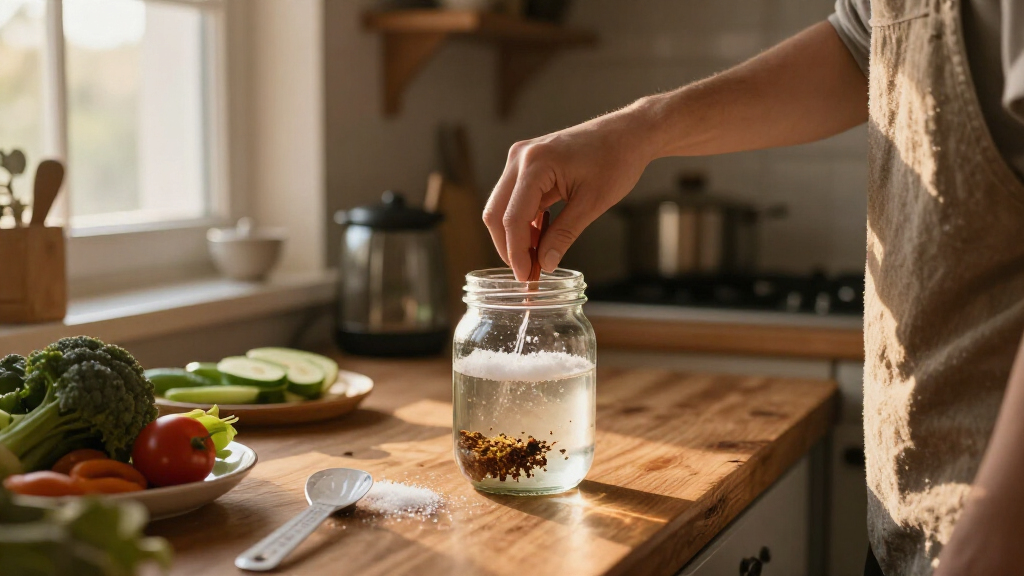
Weigh, then dissolve
Accurate salt concentration supports texture, fermentation speed, microbial balance, and consistency from one batch to the next.
Start clean
Use potable water. Filtered, spring, or dechlorinated water can reduce cloudiness and avoid interference with fermentation organisms.
Prefer whole spices
Dill, mustard seed, fennel, coriander, and peppercorns distribute flavor while keeping the liquid clearer than ground spices.
Balance, never replace
Sugar or honey can soften perceived sourness. Sweetener does not replace vinegar, salt, refrigeration, or heat processing.
Protect the crunch
Use fresh, firm vegetables, cut them uniformly, and remove cucumber blossom ends. Food-grade calcium chloride can add crispness when used as directed.
From fresh produce to a finished jar
Flavor develops under refrigeration. Keep the jar chilled and use clean utensils.
Keep vegetables submerged and allow carbon dioxide to escape through an airlock or suitable loose lid.
Taste periodically. Refrigerate when acidity and texture suit you to slow further fermentation.
Know what each technique can—and cannot—do
| Decision point | Vinegar refrigerator pickle | Natural ferment | Shelf-stable canned pickle |
|---|---|---|---|
| Commercial 5% vinegar | ✓Standard foundation | ✗Not the fermentation engine | ✓Use exactly as tested |
| Salt measured by weight | ~Useful for consistency | ✓Strongly recommended | ~Follow recipe directions |
| Complete brine coverage | ✓Reduces exposed surfaces | ✓Essential throughout | ✓Pack to recipe guidance |
| Gas-release system | ✗Generally unnecessary | ✓Airlock or venting lid | ✗Use prescribed processing |
| Tested canning recipe | ~Not shelf-stable | ✗Use a fermentation recipe | ✓Non-negotiable |
| Refrigeration | ✓Required | ~After desired sourness | ✗Not before opening if properly processed |
Do not improvise acidity
Avoid homemade vinegar or vinegar of unknown strength in shelf-stable recipes. Never dilute the prescribed vinegar, and never assume a sealed lid proves a jar is safe.
Keep everything submerged
Use fermentation weights or suitable jar inserts. Check the vessel during active bubbling and prevent vegetable pieces from floating above the brine.
Five rules for a safer, crisper brine
Measure fermentation salt by weight for consistent concentration.
Use commercial vinegar clearly labeled 5% acidity.
Keep fermenting vegetables completely below the brine.
Choose potable, low-chlorine water for flavor, clarity, and microbial health.
Follow tested recipes precisely whenever jars must be shelf-stable.
Pick Your Method: Vinegar or Fermentation — Which Fits Your Style?
The first decision when building a brine is choosing your method. Do you want quick, shelf-stable vinegar pickles or slow, probiotic-rich fermented vegetables? Each method uses different ingredients and techniques.
Vinegar pickles rely on acid to preserve and flavor vegetables instantly. A typical refrigerator brine might be:
- 1 cup 5% acidity vinegar
- 1 cup water
- 1-2 tablespoons pickling salt
- Optional spices and sugar
Follow a tested recipe for canned versions, as precise vinegar ratios are vital for safety.
Fermented pickles depend on salt and water, encouraging good bacteria to produce lactic acid over time. A common brine contains:
- 2-3% salt by weight
- 20-30 grams salt per liter of water
This method yields complex flavors and probiotic benefits but requires strict attention to salt levels and cleanliness.
As an affiliate, we earn on qualifying purchases.
Choose the Perfect Vinegar for Reliable, Tasty Pickles
Vinegar is the backbone of quick pickles. Using the right vinegar ensures predictable acidity and vibrant color. Always opt for vinegar labeled **5% acidity**—that’s the standard strength for safe, shelf-stable pickles.
Distilled white vinegar offers a sharp, clean flavor and keeps vegetables bright; apple cider vinegar adds a fruity note that darkens pale produce slightly. Never substitute homemade vinegar or vinegar of unknown strength in tested recipes.
For example, if a recipe calls for 1 cup of vinegar, stick to that exact amount. Diluting vinegar beyond the specified ratio reduces acidity, risking spoilage. Remember: sugar softens perceived sourness but doesn’t replace the acidity needed for safety.
digital kitchen scale for precise salt measurement
As an affiliate, we earn on qualifying purchases.
As an affiliate, we earn on qualifying purchases.
Measure Salt Like a Pro: Why Weight Matters Over Volume
Salt is critical in both quick and fermented pickles. Using a kitchen scale to measure salt ensures accuracy—volume measurements can vary wildly because of crystal size or density.
For fermentation, aim for **2-3% salt by weight**—that’s about 20-30 grams per liter of water. For example, in 1 liter of brine, use roughly 25 grams of salt for most vegetables.
Pickling salt dissolves easily and contains no anti-caking agents, making it ideal. Kosher salt can work but watch for varying crystal sizes, which affect measurements. Table salt is safe but may cloud the brine or leave sediments.
In practice, weighing salt guarantees consistent results, especially if you’re scaling recipes or experimenting with different vegetables.
fermentation weight for vegetables
As an affiliate, we earn on qualifying purchases.
As an affiliate, we earn on qualifying purchases.
Water Quality Matters: Use the Right Water for Clear, Crisp Pickles
Water influences the clarity, texture, and safety of your brine. Hard water can cause cloudiness, and chlorinated tap water may inhibit beneficial bacteria in fermentation.
In fermentation, it’s best to use filtered, spring, or dechlorinated water to avoid mineral deposits or unwanted flavors. For vinegar pickles, water quality mainly affects taste and appearance.
For example, if your tap water is heavily chlorinated, running it through a filter or letting it sit uncovered overnight can remove chlorine. This small step protects the crispness and flavor of your final product.
As an affiliate, we earn on qualifying purchases.
Flavor It Up: Spices, Herbs, and Sweeteners That Make Your Brine Sing
Once you have a basic brine, it’s time to add flavor. Whole spices like dill, mustard seeds, fennel, or peppercorns create a clearer brine and distribute flavor evenly. Dried or fresh herbs add aromatic complexity.
For example, a classic dill pickle brine might include garlic cloves, fresh dill sprigs, and a teaspoon of mustard seed per jar.
Sweeteners such as sugar or honey aren’t just for flavor—they also balance acidity. In some recipes, a tablespoon of sugar softens the sharpness, creating a more rounded taste. But remember, sugar does not contribute to safety—acid and salt do that.
Be cautious with ground spices—they tend to cloud the brine and can make it murky. Whole spices stay suspended and look more appealing.
Prep Vegetables for Perfect Pickles
Fresh, firm vegetables make all the difference. Wash produce thoroughly—no soaking in dirt or chemicals. Trim blossom ends of cucumbers to reduce enzymes that soften them.
Cut vegetables into uniform pieces for even pickling. For instance, slice cucumbers into spears or round discs, depending on your preference. Keep in mind that smaller pieces pickle faster but may soften quicker.
Use food-grade calcium chloride if you want extra crunch. It’s a safe, modern alternative to traditional methods like grape leaves but should be used according to package instructions.
When filling jars, leave the recommended headspace—usually about ½ inch—to accommodate expansion and allow for proper sealing.
Keep Vegetables Submerged and Manage Fermentation Gas
During fermentation, vegetables must stay completely below the brine to prevent spoilage. Use fermentation weights, small jars, or special lids to keep produce submerged.
Gas from fermentation needs a way to escape—airlocks or loose-fitting lids allow CO₂ to vent without letting in spoilage-causing air.
In refrigerator pickles, ensuring full brine coverage reduces mold risk. For fermenting jars, check regularly to make sure vegetables stay submerged, especially during initial fermentation when bubbles are active.
Control Temperature and Time for Consistent Results
Temperature influences how quickly and safely fermentation or pickling proceeds. Most fermentations do best between 18–24°C (65–75°F). Too warm, and vegetables soften or develop off-flavors; too cold, and fermentation slows excessively.
Quick refrigerator pickles develop flavor in hours to days, while fermentation can take weeks. For example, cucumbers ferment best at room temperature but need cooler storage once they reach your desired sourness.
Patience pays off—taste test after a few days. When the tang and texture meet your liking, refrigerate to slow further fermentation.
Refrigerator or Shelf-Stable? Know the Difference
Refrigerator pickles are quick and simple—they stay fresh for weeks but aren’t shelf-stable. Keep them refrigerated and use clean utensils to avoid introducing spoilage.
For shelf-stable pickles, follow a tested canning process. This involves precise vinegar ratios, proper jar sterilization, and processing in boiling water or pressure canner as instructed.
Note: A sealed lid alone doesn’t guarantee safety. Always follow tested recipes to prevent botulism and spoilage.
In practice, refrigerator pickles are perfect for small batches or experimentation, while shelf-stable methods suit long-term storage and gifting.
Spot the Signs of Spoilage and Keep Your Pickles Safe
Always watch for signs of spoilage: slimy texture, foul odor, mold, bulging lids, or leaks. If anything seems off, discard immediately. Do not taste questionable jars.
Normal fermentation changes include bubbling, sour smell, sediment, and cloudy brine, which indicate active bacteria. But if surface mold appears or the brine turns pink or brown, it’s safest to toss the batch.
Before opening jars, check for any signs of spoilage. When in doubt, err on the side of safety. Better to lose a jar than risk food poisoning.
Frequently Asked Questions
How do I know if my brine is safe for fermentation?
A safe fermentation brine has the correct salt percentage (usually 2-3%), vegetables stay submerged, and the jar shows normal bubbling and sour smell. Avoid jars with mold, sliminess, or foul odors. Always follow a tested recipe for safety.
Can I reuse my pickle brine?
Reusing brine as a flavoring for refrigerated dishes is fine if it has been kept cold, remains clear, and shows no signs of spoilage. However, it’s unsafe to use for a new batch of shelf-stable pickles, as acidity may have dropped and safety compromised.
What happens if I use too much salt in my brine?
Too much salt can inhibit beneficial bacteria in fermentation, slow down or halt fermentation, and produce a salty, unbalanced flavor. Stick to the recommended 2–3% salt by weight for reliable results.
Do I need to sterilize jars for fermentation?
No need for sterilization like in canning, but jars should be thoroughly cleaned with hot soapy water. For shelf-stable pickles, follow proper sterilization and processing instructions to prevent spoilage.
How long can my refrigerator pickles last?
Most refrigerator pickles remain safe and tasty for several weeks if kept cold and stored properly. Check for signs of spoilage before eating, and aim to consume within the timeframe specified in your recipe.
Conclusion
Building a good brine isn’t magic; it’s a matter of understanding your ingredients and purpose. Precise measurement, proper prep, and attentive monitoring turn simple vegetables into tangy, crispy treasures.
Next time you fill a jar, remember: it’s the small details—accurate salt, clean water, and enough submersion—that make all the difference. Pickling is a skill that rewards patience and practice, filling your pantry with flavor and your kitchen with satisfaction.