
TL;DR

Get kitchen gear delivered free — and shop member deals
- Fast, free delivery on millions of items
- Access to Prime Big Deal Days deals on October 6–7
- Prime Video, Amazon Music and more included
Pre-infusion gently wets coffee grounds before full extraction, leading to more even saturation and better flavor. It boosts consistency and crema, especially with fine grinds or dark roasts.
Imagine pulling an espresso shot where the rich, dark crema is thick and velvety, bursting with nuanced flavors. That’s the magic of pre-infusion. It’s a simple step that makes a noticeable difference in flavor, crema stability, and consistency. If you’re tired of uneven extraction or bitter shots, mastering pre-infusion can elevate your manual espresso game.
In this guide, I’ll explain exactly what pre-infusion is, how it works in manual brewing, and how you can implement it without fancy gadgets. Whether you’re using a lever machine or a manual pump, understanding this technique unlocks more control over your espresso’s quality and flavor.
Pre-infusion applies gentle water contact before full pressure, promoting even saturation and better flavor extraction.
Timing matters: 2–10 seconds is ideal, but experiment with your setup for best results.
Control pressure and grind size to optimize pre-infusion and prevent over- or under-extraction.
Use a timer or visual cues to keep pre-infusion consistent across shots.
Mastering pre-infusion boosts your confidence and elevates your manual espresso quality.
What is pre-infusion, and why does it matter?
Pre-infusion is the process of applying a small amount of water to the coffee grounds before the full pressure extraction begins. This initial wetting allows the coffee bed to saturate evenly, reducing channeling and uneven extraction. It’s like giving your coffee a gentle warm-up before the main event.
Think of it as watering a garden before watering the roots deeply. The even saturation means flavor compounds dissolve uniformly, resulting in a richer, more balanced shot. Without pre-infusion, water can find the path of least resistance, creating channels that lead to under- or over-extraction, and ultimately, a less satisfying espresso.
By promoting uniform wetting, pre-infusion minimizes the risk of over-extraction—where bitter flavors dominate—and under-extraction—where the shot tastes sour or weak. This process is especially important when working with finely ground coffee or darker roasts, which are more prone to uneven extraction due to their solubility and surface area. Essentially, pre-infusion acts as a safeguard, giving you more control over the final flavor profile and ensuring each shot is consistently balanced.
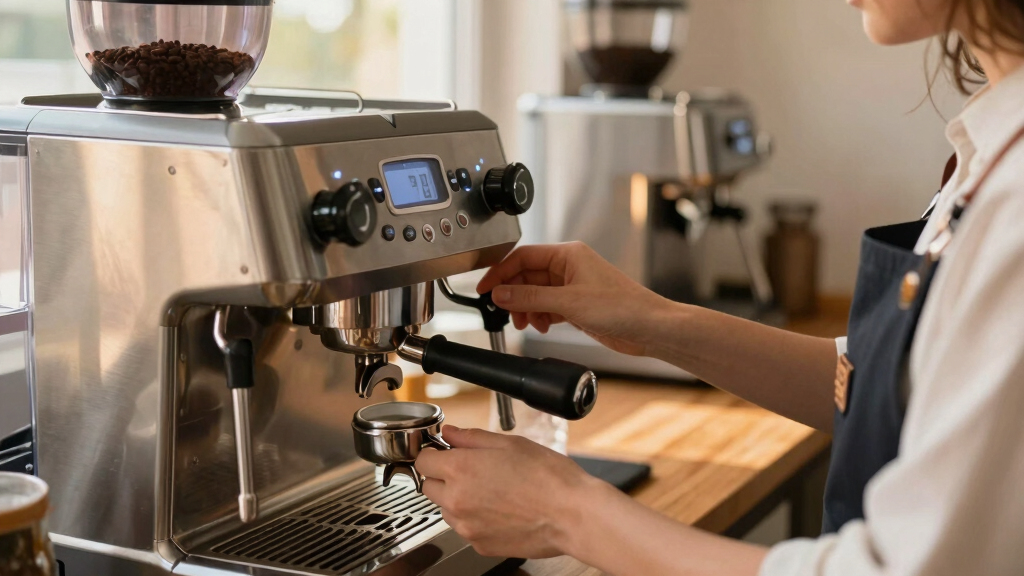
manual espresso machine with pre-infusion
As an affiliate, we earn on qualifying purchases.
As an affiliate, we earn on qualifying purchases.
How pre-infusion makes your espresso taste better
Pre-infusion enhances flavor extraction by allowing water to gently penetrate the coffee grounds, which is crucial for unlocking the full spectrum of flavors in your beans. When done correctly, this process helps dissolve more complex flavor compounds that might otherwise remain trapped during rapid or uneven extraction. The result is a cup with greater depth, richness, and clarity—think of it as giving your coffee a chance to fully develop its aromatic profile.
Moreover, pre-infusion reduces the likelihood of bitterness, which often results from over-extraction of the bitter compounds in the coffee. By gradually saturating the grounds, you avoid the ‘scorching’ effect that can occur with immediate high-pressure extraction. This gentle approach also helps produce a thicker, more resilient crema that holds its texture longer, adding to the sensory pleasure of your espresso. The tradeoff is that pre-infusion adds a small amount of time to your brewing process, but this investment yields a more harmonious and flavorful shot, especially when working with delicate or finely ground coffees.
In essence, pre-infusion acts as a flavor amplifier, giving you more consistent control over the extraction process. It’s about balancing the extraction so that no single flavor dominates, resulting in a more nuanced and enjoyable espresso experience.
As an affiliate, we earn on qualifying purchases.
How to do pre-infusion with your manual espresso machine
- Start with a fine grind and tamp firmly. The more consistent your prep, the better the results, as this ensures uniform resistance and pressure during extraction.
- Apply gentle pressure or gradually increase pressure on your lever or pump. This controlled application is key to avoiding sudden surges that can cause channeling or uneven saturation.
- Pause for 2–10 seconds after applying initial pressure. Use this window to allow the water to fully permeate the coffee bed, promoting even saturation. The exact timing depends on your machine, grind size, and coffee roast—shorter for coarser grinds, longer for finer ones.
- Proceed with full pressure to complete the shot. This final phase extracts the flavors, now better developed thanks to the pre-infusion step.
For example, on a lever machine, you might slowly lift the lever just enough to let water seep into the grounds, then hold it briefly before pulling open fully. This slow, controlled movement ensures the initial wetting is gentle and uniform. Experiment with timing and pressure to find the optimal balance for your setup, as the effectiveness of pre-infusion depends on how well you can control these variables.
As an affiliate, we earn on qualifying purchases.
Pre-infusion vs. no pre-infusion: what’s the difference?
| Feature | With Pre-Infusion |
|---|---|
| Evenness of saturation | High, reduces channeling and uneven extraction, leading to more consistent flavor profiles across shots. |
| Flavor clarity | Richer, more nuanced, because the coffee grounds are fully and evenly saturated, allowing complex flavors to develop without imbalance. |
| Crema quality | Thicker, more stable, and better at holding aromatic oils, resulting in an appealing visual and textural contrast. |
| Extraction consistency | More reliable, as the initial wetting ensures each shot has a similar starting point, reducing variability caused by uneven wetting or channeling. |
Without pre-infusion, water quickly finds the easiest path through the coffee bed, often creating channels that cause uneven extraction. This can lead to shots that taste sour, weak, or bitter—flaws that undermine the quality of your espresso. Pre-infusion acts as a preparatory step, ensuring the entire coffee bed is uniformly saturated, which is essential for achieving balanced, flavorful shots that highlight the unique qualities of your beans.
As an affiliate, we earn on qualifying purchases.
Getting the most out of pre-infusion in your routine
- Use a timer: note how different pre-infusion times affect flavor development and consistency. Keeping track helps you refine your technique over time.
- Experiment with pressure: start with gentle pre-infusion and gradually increase pressure to see how it influences extraction and flavor.
- Adjust grind size: finer grinds may require shorter pre-infusion to prevent over-extraction, while coarser grinds might benefit from longer times to ensure proper saturation.
- Keep notes: record what timing and pressure produce your best shots so you can replicate and improve your process.
- Practice patience: mastering pre-infusion involves trial and error, but developing a consistent routine will pay off in shot quality and flavor clarity.
For example, I found that a 4-second pre-infusion on my manual setup hit the sweet spot—creating a shot that’s both smooth and flavorful with a thick, resilient crema. Over time, fine-tuning the timing and pressure helped me produce shots with more depth and consistency, reinforcing the importance of careful control.
Common pitfalls and how to avoid them
Pre-infusion can backfire if overdone. Spending too long or applying excessive pressure during pre-infusion can lead to over-extraction, resulting in bitter, harsh flavors that mask the coffee’s complexity. Conversely, too brief or gentle pre-infusion might not sufficiently saturate the grounds, leading to under-extraction and sour, weak flavors. Finding the right balance is key.
Another common pitfall is inconsistent timing—if your pre-infusion duration varies shot to shot, it can cause unpredictable results. Using a timer or a visual cue, like watching the initial water seepage, helps maintain consistency. Remember, small adjustments—just a few seconds or a slight pressure change—can dramatically influence the final flavor and crema quality.
For example, I once tried a 15-second pre-infusion, which resulted in a flat, over-extracted shot. Recognizing that it was too long, I dialed back to around 3 seconds, which restored balance and flavor. This experience underscored the importance of precise control and patience in mastering pre-infusion.
Why pre-infusion is worth mastering for your espresso
Pre-infusion isn’t just a fancy technique—it’s a practical way to gain more control over your brewing process. By incorporating this step, you can consistently produce better shots, especially when working with delicate, finely ground, or dark roasted beans that are more prone to uneven extraction. The ability to control saturation and pressure during pre-infusion allows you to fine-tune the flavor profile and achieve a more balanced, nuanced espresso.
Imagine the satisfaction of pulling a shot that’s bursting with aroma, with a thick crema that holds its shape and enhances the sensory experience. Over time, mastering pre-infusion becomes a vital part of your routine, elevating your skills from good to exceptional. It’s about developing a deeper understanding of how water interacts with coffee, and using that knowledge to craft consistently excellent espresso shots tailored to your preferences.
Frequently Asked Questions
What exactly is pre-infusion, and how does it differ from regular espresso extraction?
Pre-infusion is applying a small amount of water at low pressure to wet the coffee grounds before the main extraction. Unlike regular shots where water is pushed through immediately, pre-infusion allows for gentle, even saturation, reducing channeling and uneven extraction. This extra step helps to develop a more balanced flavor profile and a richer crema, especially with delicate or finely ground coffee. It’s a way to give your espresso a controlled start, ensuring that the entire coffee bed is uniformly wetted before the full pressure is applied, ultimately leading to a more consistent and flavorful shot.
How long should pre-infusion last for the best results?
Most often, 2–10 seconds works well. Shorter times may not fully activate the benefits of even saturation, while longer times can risk over-extraction, especially with fine grinds or dark roasts. The optimal duration depends on your specific equipment, grind size, and coffee roast. Experimenting within this range allows you to find the sweet spot where flavors are fully developed without introducing bitterness or dullness. The key is to observe how the coffee responds—look for even wetting and a gentle bubbling or seepage—then adjust accordingly to suit your preferences and setup.
Can I perform pre-infusion with any espresso machine, or does it require special equipment?
Pre-infusion can be performed on many manual machines, especially lever and manual pump types, as they often allow for direct control over pressure and timing. It generally does not require specialized equipment beyond your existing setup. Some modern espresso machines include dedicated pre-infusion features that automate or assist this process, but with practice, manual control is sufficient and often preferable for fine-tuning. The main requirement is the ability to modulate pressure or pause during extraction, which many manual or semi-automatic machines can achieve with technique. Learning to control the pressure profile during your shot is what makes pre-infusion effective, regardless of your machine’s sophistication.
Does pre-infusion add extra time to the brewing process?
Yes, it adds a few seconds—typically 2 to 10 seconds depending on your technique and setup. While this extension may seem minor, it’s a worthwhile investment because it significantly improves flavor extraction, crema stability, and overall shot consistency. The small time increase is offset by the quality gains, making your espresso more balanced, aromatic, and visually appealing. Over time, as you become more skilled at controlling pre-infusion, the process becomes second nature, and the benefits become a regular part of your brewing routine.
How does pre-infusion affect the flavor and crema of my espresso?
Pre-infusion leads to a more even and thorough extraction by gently saturating the coffee grounds before the full pressure is applied. This process allows the water to dissolve a broader range of flavor compounds, resulting in a more complex, aromatic, and well-rounded espresso. It also promotes the formation of a thicker, more stable crema that holds aromatic oils longer, enhancing the sensory experience. Additionally, pre-infusion reduces the chances of over-extraction—where bitter compounds dominate—and under-extraction, which can cause sourness or weak flavors. Overall, pre-infusion helps you achieve a balanced shot with vibrant flavors, a rich aroma, and a beautiful crema that visually signals quality.
Conclusion
Pre-infusion isn’t just a step — it’s a game-changer. It turns a good shot into a great one by ensuring every drop of water interacts with the coffee evenly. With practice, controlling this step can become your secret weapon for richer, more flavorful espresso.
Next time you pull a shot, think of pre-infusion as giving your coffee a gentle handshake before the full embrace. It’s simple, effective, and worth every second.
Halloween Picks
halloween
As an affiliate, we earn on qualifying purchases.