
TL;DR

Get kitchen gear delivered free — and shop member deals
- Fast, free delivery on millions of items
- Access to Prime Big Deal Days deals on October 6–7
- Prime Video, Amazon Music and more included
Pour-over ratios are the key to balancing strength and flavor. Starting with 1:15 to 1:17 and adjusting to taste ensures consistent, delicious coffee every time. Precision in measurement and a willingness to experiment help refine your perfect brew.
Ever poured hot water over coffee grounds and wondered why some cups taste perfect while others fall flat? The secret often lies in the coffee-to-water ratio. It’s a simple concept, but one that can make or break your brew. Mastering this ratio means you can consistently craft a cup that’s just right—whether you like it bold or light, complex or smooth.
In this guide, you’ll learn how to measure your ratios accurately, how adjustments change flavor, and how recent trends and tools can help you fine-tune your pour-over process. It’s about making manual brewing more predictable—and more satisfying.
Start with a ratio between 1:15 and 1:17 for balanced, flavorful pour-over coffee.
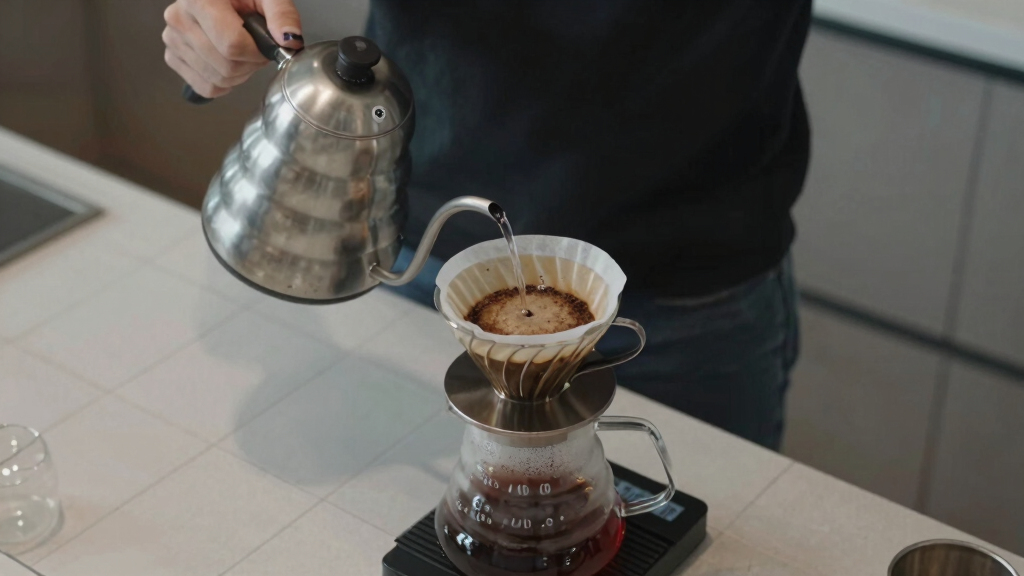
Use a digital scale for both coffee and water to ensure precision and repeatability.
Adjust ratios in small steps—like 1:14 or 1:20—to fine-tune strength and flavor.
Different beans and roasts respond better to specific ratios; experiment and take notes.
Recent tools and community insights make it easier than ever to perfect your pour-over ratios.
What Is the Perfect Coffee-to-Water Ratio? Start Here
The perfect ratio for pour-over coffee generally falls between 1:15 and 1:17. That means for every 15 to 17 grams of water, you use 1 gram of coffee. For example, a typical 20-gram dose of coffee with 300 grams of water (1:15) makes a balanced, flavorful cup.
Adjust within this range depending on your taste. Want a lighter, more delicate brew? Use closer to 1:17. Craving something bolder? Drop to 1:15 or even 1:14. Your taste buds are the final judge, but starting here gives you a reliable baseline.
Choosing the right ratio is crucial because it directly affects how the coffee extracts. A higher water-to-coffee ratio (closer to 1:17) results in a lighter, more nuanced brew, highlighting delicate flavors. Conversely, a lower ratio (around 1:14) produces a stronger, more robust cup, which can sometimes lead to over-extraction if not carefully managed. Understanding these tradeoffs allows you to tailor your brew to your preferred flavor profile while avoiding common pitfalls like under- or over-extraction.
digital coffee scale for pour-over
As an affiliate, we earn on qualifying purchases.
As an affiliate, we earn on qualifying purchases.
How to Adjust Your Ratio for Your Perfect Cup
- Measure your coffee accurately with a digital scale. Precision matters because small deviations can significantly alter flavor and strength, especially given how sensitive extraction is to ratio changes.
- Start with 20 grams of coffee and 300 grams of water (1:15). This provides a solid baseline for testing adjustments.
- Taste your brew. Is it too strong, too weak, too bitter, or too flat? Your perception guides your next step.
- Adjust the water amount: increase water for a milder, more delicate profile; decrease for a bolder, more intense flavor. Remember, even small changes—like 1 gram—can make a noticeable difference.
- Experiment with small incremental changes—try ratios like 1:14 or 1:17—while keeping detailed notes. This helps you understand how each adjustment affects extraction and flavor.
- Over time, you’ll develop a personal profile for different beans and roasts, optimizing your ratios for each.
For example, a light roast might benefit from a higher ratio (around 1:17), emphasizing floral and fruity notes without over-extracting. A dark roast might handle a lower ratio (closer to 1:15) to bring out bold, roasted flavors while avoiding bitterness. The key is understanding that these adjustments influence extraction time, flavor clarity, and body, so your choices impact the overall balance and complexity of your brew.
coffee pour-over dripper with measurement marks
As an affiliate, we earn on qualifying purchases.
As an affiliate, we earn on qualifying purchases.
Comparison Table: Common Pour-Over Ratios and Their Effects
| Ratio | Flavor Profile | Strength | Brew Time |
|---|---|---|---|
| 1:12 | Very bold, intense with pronounced body | High, rich | Longer extraction, 3-4 min |
| 1:15 | Balanced, flavorful with clarity | Medium, well-rounded | Typically 2.5-3 min |
| 1:17 | Lighter, more delicate with nuanced flavors | Lower, more refined | Faster, 2-2.5 min |
| 1:20 | Very light, subtle, ideal for highlighting specific notes | Low, subtle | Shorter, around 2 min |
This table illustrates how changing ratios influences the final flavor, strength, and extraction time. For instance, if you prefer a bold, full-bodied coffee, aim for a lower ratio like 1:12, which emphasizes extraction and richness. For a more delicate, nuanced cup, higher ratios like 1:17 or 1:20 allow subtle flavors to shine while keeping the brew light and clean. Recognizing these tradeoffs helps you choose ratios aligned with your taste goals and the specific beans you’re brewing.
precision coffee grinder for pour-over
As an affiliate, we earn on qualifying purchases.
As an affiliate, we earn on qualifying purchases.
The Latest Trends and Tools for Better Ratios
Today’s brewers are experimenting more than ever with ratios. Digital scales with built-in timers, flow meters, and even smartphone apps suggest ideal ratios based on bean origin, roast level, and personal preference. For example, some smart scales automatically adjust pour rate to optimize extraction, giving you more control and consistency.
Many home brewers now try unconventional ratios—like 1:12 for a super-strong shot or 1:20 for a very light cup—pushing the boundaries of flavor exploration. These experiments can reveal new taste profiles and help you understand how ratio influences extraction dynamics. The availability of online communities, tutorials, and innovative tools makes it easier than ever to learn, experiment, and refine your ratios—turning what was once a trial-and-error process into a more precise art.
These innovations empower you to control your brew more accurately, reduce waste, and achieve greater consistency—even when working off-grid or with manual tools. This means you can explore new flavor territory with confidence, knowing your measurements are precise and your adjustments are intentional.
As an affiliate, we earn on qualifying purchases.
Why Precision and Consistency Matter in Manual Brewing
Using a scale to measure both coffee and water isn’t just about accuracy; it’s about repeatability. When you get your ratios right, each brew becomes predictable, and your skills grow sharper. Over time, this consistency reveals what ratios work best with your favorite beans and taste preferences.
Imagine brewing a coffee on Monday and replicating it perfectly on Saturday. That’s the power of a precise ratio. It’s like following a recipe—once you know the right measurements, you can make the same great coffee anytime, anywhere.
Plus, being precise means you can tweak ratios confidently—knowing exactly how a small change impacts flavor. It’s a practical way to turn brewing from an art into a reliable science. This control not only helps you avoid over-extraction or under-extraction but also allows you to experiment more intentionally, leading to a deeper understanding of how each variable influences your final cup.
Frequently Asked Questions
What is the best coffee-to-water ratio for pour-over brewing?
A good starting point is between 1:15 and 1:17. Adjust within this range based on your taste preferences for a balanced or lighter brew.How do I know if I should use more or less water?
If your coffee tastes too weak or flat, try reducing the water slightly. For a bolder flavor, add a bit more coffee or reduce the water ratio. Small tweaks reveal what suits your palate best.Does the ratio affect how long I pour?
Yes. A more concentrated brew (lower ratio) often requires a slower pour and longer extraction time. Diluted ratios pour faster and might need a shorter brew time.Can I experiment without ruining my coffee?
Definitely. Keep notes of your ratios and tasting results. Small adjustments—like a gram less or more—help you learn what works without wasting coffee or water.Are there specific ratios for different types of beans?
Light roasts usually benefit from slightly higher ratios (like 1:17), to highlight their delicate flavors. Dark roasts can often handle lower ratios (closer to 1:15) for a bolder, more robust cup.Conclusion
Getting your coffee-to-water ratio just right turns a good brew into a great one. It’s a simple tweak that can dramatically improve flavor, clarity, and consistency. The next time you brew, remember: small adjustments in ratio are your secret weapon for that perfect cup.
Pour-over brewing is as much about skill as it is about understanding your ingredients. Keep experimenting, keep notes, and enjoy the process of crafting your ideal coffee—off-grid, by hand, with confidence.
Evergreen bestsellers Picks
bestsellers
As an affiliate, we earn on qualifying purchases.