🔍 Read the full analysis: Pasta Water Is An Ingredient: Salting, Saving, And Finishing In The Pan on Mad Tasting

Get kitchen gear delivered free with Prime
- Fast, free delivery on millions of items
- Prime Video, Amazon Music and more included
- Member-only deals all year
TL;DR
Mad Tasting’s cooking guide explains that reserved pasta water carries salt and starch that can help sauce coat noodles when the pasta is tossed in the pan. It recommends saving about a cup before draining, adding only a little at a time and tasting before adding more salt; the water’s strength varies with how the pasta is cooked.
Mad Tasting’s cooking guide explains how to use reserved pasta water to help sauce coat noodles: save some before draining, then add it gradually as the pasta is tossed with its sauce in a pan. The guidance matters for home cooks because the water carries starch and salt, but its concentration varies, so adding too much can dilute a dish or make it too salty.
The guide describes pasta water as a seasoning and texture tool, not a sauce on its own. Starch released by the noodles can help water and fat come together while the pasta and sauce are tossed. The result may be a more even coating, rather than oil or liquid separating and collecting at the bottom of the bowl. The method can help with garlic and olive oil, butter sauces and thick tomato sauces, though it cannot correct every imbalance or make every sauce creamy.
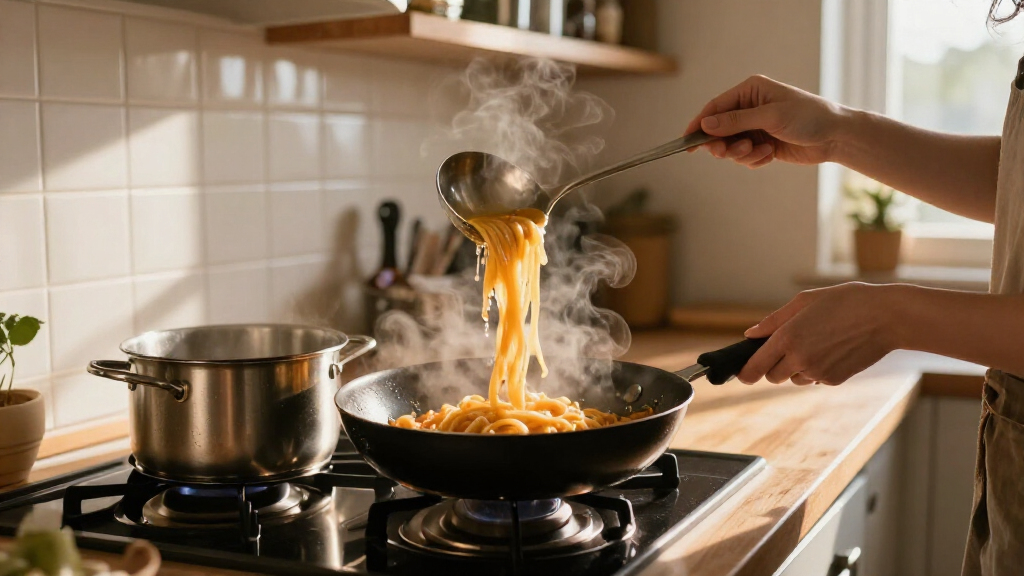
Mad Tasting recommends setting aside a heat-safe cup or mug before the pasta is ready. Near the end of cooking, reserve about a cup before draining; a few tablespoons may be all the sauce needs. Transfer pasta that is still slightly firm into a pan where the sauce is ready, and toss it over heat. Add reserved water in small splashes if the sauce looks too tight or does not coat the noodles. Stop when the texture is right.
The guide advises salting cooking water to season the noodles, rather than following a rigid ratio. Since pecorino, anchovies, olives, cured meat and broth can all contribute salt, it recommends tasting the finished dish before adding more. Pasta type, water volume and cooking time also affect how much starch and salt the reserved liquid contains. The source does not provide a fixed measure that guarantees a particular result.
Pasta water is an ingredient Save, season, finish
Reserved pasta water brings salt and starch to the pan. Added gradually as pasta meets sauce, it can help the sauce coat the noodles.
What the water does
Its starch and salt make it a seasoning and texture tool, not a sauce on its own.
Helps sauce cling
Starch can help water and fat come together as you toss pasta with sauce.
Not a universal fix
Too much can dilute the dish, and pasta water cannot correct every imbalance.
Finish pasta in the pan
Have the sauce ready before the pasta finishes cooking.
Keep a heat-safe cup nearby and reserve water just before draining.
Move slightly firm pasta into the prepared sauce and toss over heat.
If the sauce is too tight or does not coat, add a little water and stop when the texture is right.
Adjust to the pot and sauce
The liquid’s strength varies with pasta type, water volume and cooking time.
- Use small splashes while tossing.
- Try it with garlic and olive oil, butter or thick tomato sauce.
- Pecorino, anchovies, olives, cured meat and broth add salt.
- Do not rely on a fixed measure to guarantee the result.
A small adjustment changes the coating
For home cooks, the technique offers a practical way to adjust a sauce at the point where pasta and sauce meet. A little reserved water can help a slick oil-based sauce coat noodles more evenly or help a thick sauce move into pasta ridges. That can improve the dish’s texture without requiring another ingredient, but the result depends on gradual additions and tossing, not simply pouring in a full ladle.
The advice also helps avoid two common problems: draining away the liquid before saving any, and adding too much salt or water at the end. Since some liquid can reduce in the pan and salty ingredients can build up, taste and adjust rather than treating the cooking water as a precisely standardized product.
Products Worth Considering

KitchenAid Classic Series 4.5-Quart Tilt-Head Stand Mixer, Onyx Black

Cuisinart SS-10P1 Programmable Single-Serve Coffee Maker, 72 oz, Silver

Cuisinart Freeze Ease Automatic Ice Cream Maker, 1-Quart
As an affiliate, we earn on qualifying purchases.
Why pasta water varies
Pasta water changes as noodles cook. The source says dried and fresh pasta release different amounts of starch; the quantity of water and cooking time also affect the liquid’s concentration. A smaller volume of water may produce starchier cooking liquid, but the guide cautions that noodles still need room to cook and should be stirred to prevent sticking.
The method is part of finishing pasta in its sauce: the noodles move from the cooking pot to a pan before they are fully soft, then finish cooking as they are tossed with the sauce. The guide uses Roman-style cacio e pepe as an example of a dish where a coating matters, while noting that cheese temperature and tossing also affect the result. Pasta water is one part of the technique, not a substitute for balancing the other ingredients.
“Think of the water as a seasoning and texture tool.”
— Mad Tasting
No fixed strength or salt measure
The source gives no single salt ratio, starch concentration or amount of pasta water that will work for every pot. Water strength varies with pasta type, water volume and cooking time, and the final salt level depends on the other ingredients. The guide also does not specify a publication date or report testing results for the technique. Its recommendations are practical cooking guidance, not a guarantee that every sauce will become glossy or cling evenly.
Taste and adjust at the stove
The guide’s next step for cooks is to prepare the sauce before the pasta finishes, keep a cup nearby, and reserve water just before draining. Toss the slightly firm pasta in the sauce over heat, then add a small splash only if needed. Taste before adding salt, especially when the dish includes cheese, olives, anchovies or cured meat. There is no later milestone reported; the technique is adjusted in the pan as the pasta finishes cooking.
Key Questions
Why add pasta water to sauce?
Reserved pasta water contains starch and salt. When added a little at a time while pasta is tossed with sauce, the starch can help the sauce coat the noodles more evenly. It may also loosen a thick sauce, but adding too much can dilute it.
How much pasta water should I save?
Mad Tasting suggests reserving about one cup before draining, while noting that a dish may need only a few tablespoons. Treat it as a reserve, not a target amount to pour into the pan.
When should pasta water be added?
Save it near the end of cooking, before draining. Transfer pasta that is still slightly firm into the prepared sauce, then add a small splash as you toss the pasta over heat.
Should pasta water be heavily salted?
The guide recommends salting the water to season the noodles, but not following a rigid ratio. Taste the finished sauce before adding more salt, particularly if it includes pecorino, anchovies, olives or cured meat.
Does pasta water work with every sauce?
It can help adjust the texture of oil, butter and tomato sauces, but it is not a universal fix. If a sauce is already loose, more water may dilute it; the source advises adding only enough to help the sauce coat the pasta.
Source: Mad Tasting