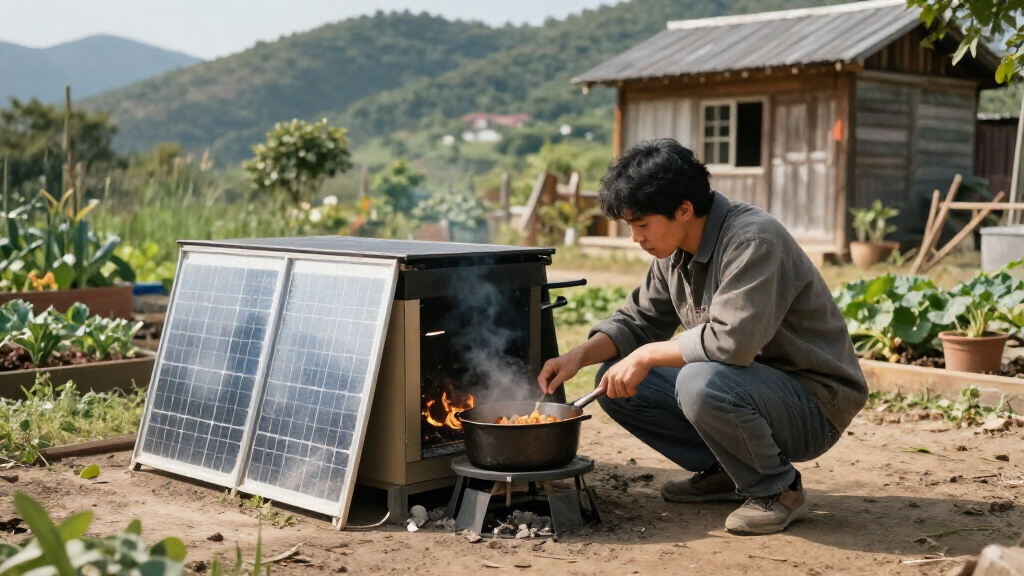
For most off-grid cooks, I’d start with the Haines 2.0 SunUp Solar Cooker and Dutch Oven Kit as the best overall pick, while the GoSun Portable Solar Oven Kit stands out for a more integrated portable setup and the Sunflair Mini for compact simplicity. Solar ovens can cook without fuel, but performance depends on direct sunlight, setup, and the size and type of meal you plan to make. The main tradeoff is between portability and cooking capacity, with parabolic designs adding speed at the cost of more careful aiming and handling. I compare all 15 options by practical off-grid fit, usability, and likely limitations. Keep reading for the full breakdown and advice on choosing a cooker for your conditions.

Get kitchen gear delivered free with Prime
- Fast, free delivery on millions of items
- Prime Video, Amazon Music and more included
- Member-only deals all year
Complete the kit


Key Takeaways
- The lineup splits into distinct cooking styles: foldable enclosed ovens suit slower, hands-off meals, while the parabolic cooker is aimed at buyers who value concentrated heat and can manage more active positioning.
- Capacity labels alone do not settle the choice. Several models list a 4.5 L size, but buyers still need to check the usable shape and dimensions of their own pots and food containers.
- Portability favors compact designs, not necessarily the easiest daily cooking. The Sunflair Mini is a small-pack option, while larger kits can make more sense when cooking for a group from a fixed camp.
- Thermometers and carrying bags address different problems. A thermometer helps track cooking conditions; a bag eases transport, but neither compensates for clouds or weak sunlight.
- Off-grid reliability depends on weather planning as much as cooker choice. No solar oven in this list removes the need for a backup meal or alternate cooking method when sun is unavailable.
| Haines 2.0 SunUp Solar Cooker and Dutch Oven Kit |  | Best Overall for Campsite Cooking | Brand: Haines | Model: H20 | Capacity: 4 quarts | VIEW LATEST PRICE | See Our Full Breakdown |
| Sunflair Mini Portable Solar Oven |  | Best for Beginners and Ultralight Kits | Brand: Sunflair | Model: FBAMini | Power source: Solar | VIEW LATEST PRICE | See Our Full Breakdown |
| HIOSUNSTOVE Portable Solar Oven for 1–2 People |  | Best Compact High-Heat Pick | Brand: HIOSUNSTOVE | Model: HY450Y | Capacity: 1–2 people | VIEW LATEST PRICE | See Our Full Breakdown |
| HIOSUNSTOVE Portable Solar Oven, 4.5 L |  | Best for Higher-Capacity Tube Cooking | Brand: HIOSUNSTOVE | Model: HY-130 | Capacity: 4.5 L | VIEW LATEST PRICE | See Our Full Breakdown |
| PRECISTECH Portable Foldable Solar Oven, 4.5 L |  | Best for Group Meals and Multiple Cooking Methods | Capacity: 4.5 L | Maximum temperature: 550°F (288°C) in strong direct sunlight | Operating temperature range: 200°F–450°F (93°C–232°C) | VIEW LATEST PRICE | See Our Full Breakdown |
| Parabolic Solar Cooker, 1000–1500W, 700–1000°C |  | Best for High-Heat Outdoor Cooking | Brand: Mlonausz | Model: SX5211 | Thermal power: 1000–1500W | VIEW LATEST PRICE | See Our Full Breakdown |
| ORISUNTECH Portable Solar Oven, 4.5L |  | Best for Versatile Camp Cooking | Brand: ORISUNTECH | Capacity: 4.5 liters | Maximum temperature: 288°C (550°F) | VIEW LATEST PRICE | See Our Full Breakdown |
| GOSUN Portable Solar Oven Kit |  | Best Compact Kit for 1–2 Meals | Brand: GOSUN | Model: SOLAR OVEN KIT | Model number: FOOK0000 | VIEW LATEST PRICE | See Our Full Breakdown |
| Emergency Zone SunCore Portable Solar Cooker Oven |  | Best for Guided Sun Positioning | Brand: Emergency Zone | Part number: 274 | Fuel type: Solar | VIEW LATEST PRICE | See Our Full Breakdown |
| Foldable Portable Solar Oven |  | Best Lightweight Storage Pick | Brand: Generic | Outer material: Woven fabric | Inner lining: Aluminum foil and EPE pearl cotton | VIEW LATEST PRICE | See Our Full Breakdown |
| Sunflair Mini Portable Solar Oven, Orange |  | Best Compact Pick | Brand: Sunflair | Model: CampMini | Color: Orange | VIEW LATEST PRICE | See Our Full Breakdown |
| Portable 4.5 L Solar Oven with Thermometer and Carrying Bag |  | Best for Cooking-Mode Versatility | Capacity: 4.5 L | Maximum temperature: 288°C (550°F) | Operating temperature: 93–232°C (200–450°F) | VIEW LATEST PRICE | See Our Full Breakdown |
| MrMapMax 4.5L Portable Solar Oven with Thermometer |  | Best for Heat Retention | Capacity: 4.5 L | Fuel type: Solar | Power source: Solar powered | VIEW LATEST PRICE | See Our Full Breakdown |
| Portable Foldable Solar Cooker |  | Best for Flame-Free Food Warming | Fuel type: Solar | Dimensions: 14.57 x 10.43 x 4.53 inches | Material features: Reinforced and scratch-resistant | VIEW LATEST PRICE | See Our Full Breakdown |
| SolCook All Season Solar Cooker |  | Best for Lightweight Group Cooking | Brand: SOL COOK | Fuel type: Sunshine | Power source: Solar powered | VIEW LATEST PRICE | See Our Full Breakdown |
| solar ovens for off-grid cooking | Brand | Dimensions | Capacity | Weight |
|---|---|---|---|---|
| Haines 2.0 SunUp Solar Cooker | Haines | 35 x 35 x 20 inches | 4 quarts | — |
| Sunflair Mini Portable Solar O | Sunflair | 2 x 11 x 13 inches | 1.5 cups | — |
| HIOSUNSTOVE Portable Solar Ove | HIOSUNSTOVE | 19 x 6.7 x 6.7 inches | 1–2 people | 5 pounds |
| HIOSUNSTOVE Portable Solar Ove | HIOSUNSTOVE | 23 x 7 x 9 inches | 4.5 L | 14 pounds |
| PRECISTECH Portable Foldable S | — | — | 4.5 L | 5.1 kg |
| Parabolic Solar Cooker | Mlonausz | 59.05 × 59.05 × 45.27 in | — | — |
| ORISUNTECH Portable Solar Oven | ORISUNTECH | — | 4.5 liters | 5.1 kg dry; 6.3 kg gross |
| GOSUN Portable Solar Oven Kit | GOSUN | — | 1–2 meals | — |
| Emergency Zone SunCore Portabl | Emergency Zone | 29 × 13 × 4.5 in | — | 11 pounds |
| Foldable Portable Solar Oven | Generic | — | — | About 700 g |
| Sunflair Mini Portable Solar O | Sunflair | 13 x 5 x 15 inches | — | 1.3 pounds |
| Portable 4.5 L Solar Oven with | — | — | 4.5 L | — |
| MrMapMax 4.5L Portable Solar O | — | 8.6 × 7 × 22.8 inches | 4.5 L | 11.2 pounds |
| Portable Foldable Solar Cooker | — | 14.57 x 10.43 x 4.53 inches | — | — |
| SolCook All Season Solar Cooke | SOL COOK | 28 x 28 x 28 inches | — | 4 pounds |
More Details on Our Top Picks
Haines 2.0 SunUp Solar Cooker and Dutch Oven Kit
The Haines 2.0 is the strongest all-around pick here for off-grid cooks who want a familiar pot-based setup rather than a small specialty cooker. Its reflective panels direct sunlight toward an included 4-quart ceramic Dutch oven, giving it more room for a shared meal than the Sunflair Mini’s 1.5-cup pot. The cooker folds for storage, which helps offset its broad 35-inch assembled footprint when it is time to pack up. Compared with the HIOSUNSTOVE HY-130, this kit has less listed capacity detail and no stated peak temperature, but its Dutch oven format is straightforward for soups, stews, and other one-pot meals. The tradeoffs are real: cooking still depends on sun, and the ceramic pot plus large panels make this less convenient for tight packing or frequent carrying.
Pros:- Includes a 4-quart ceramic Dutch oven for cooking a larger meal than the Sunflair Mini can accommodate
- Reflective panels use sunlight rather than fuel
- Folds for storage and transport
- Panels are described as weather-resistant
Cons:- Cooking performance depends on available sunlight
- The assembled cooker spans 35 x 35 inches, requiring room for setup
- Ceramic cookware is less convenient to carry than a compact soft-sided cooking kit
Best for: Campers and off-grid households who want to cook shared one-pot meals in a reusable Dutch oven and can set up a broad cooker in a sunny spot
Not ideal for: Backpackers or cooks with limited storage who need a compact, lightweight cooker or dependable performance through cloudy weather
- Brand:Haines
- Model:H20
- Capacity:4 quarts
- Dimensions:35 x 35 x 20 inches
- Dutch oven material:Ceramic
- Lid material:Ceramic
- Finish:Polished
- Part number:1509
Our verdict“Choose the Haines 2.0 if you want a foldable, Dutch-oven-style solar cooker for shared campsite meals and have room for its wide setup.”
Sunflair Mini Portable Solar Oven
For a first solar cooker or a tightly packed camping kit, the Sunflair Mini emphasizes ease of carrying over meal capacity. At 1.3 pounds, it folds to about laptop size and needs no assembly; the included thermometer, trivet, collapsible pot, and stuff bag make it a more ready-to-use package than the Haines 2.0, which is built around a larger Dutch oven and broad reflective panels. Its listed temperature reaches up to 285°F, suitable for modest cooking tasks when sun is available, but the 1.5-cup capacity is the limiting factor: it is sized for an individual portion, not a group meal. The oven can be used where open flames are not allowed, but it cannot replace a fuel stove when clouds or poor sun interrupt cooking.
Pros:- Weighs 1.3 pounds and folds to about laptop size
- Sets up without assembly
- Includes a thermometer, trivet, collapsible silicone pot, and stuff bag
- Can be used where open flames are not allowed
Cons:- 1.5-cup capacity is too small for group meals
- Listed maximum temperature is lower than the 550°F claims for the HIOSUNSTOVE models
- Cooking depends on available sunlight
Best for: Solo campers, van travelers, and beginners who want a very light cooker for small portions and simple sunny-day use
Not ideal for: Families or off-grid cooks who need to prepare full meals, or anyone who needs reliable cooking regardless of sunlight
- Brand:Sunflair
- Model:FBAMini
- Power source:Solar
- Temperature range:Up to 285°F
- Capacity:1.5 cups
- Item weight:1.3 pounds
- Dimensions:2 x 11 x 13 inches
- Included components:Thermometer, trivet, collapsible silicone pot, stuff bag
- Warranty:1 year limited
Our verdict“Pick the Sunflair Mini for lightweight solo cooking and easy setup, but skip it if you need capacity for more than a small portion.”
HIOSUNSTOVE Portable Solar Oven for 1–2 People
The HY450Y is the compact choice for buyers who value a high stated peak temperature but do not need to cook for a group. It weighs 5 pounds and is rated for up to 550°F in full sun, while the Sunflair Mini is lighter and simpler to pack but lists a lower maximum temperature and only 1.5 cups of capacity. The HIOSUNSTOVE is specified for one to two people and includes an aluminum plate, food box, and vacuum tube, giving it a more substantial cooking setup than the mini oven. Its advertised cooking time of as little as 20 minutes applies in full sunlight, not as a predictable all-weather schedule. That dependence on strong sun matters for off-grid planning, and its small serving range means the Haines 2.0 is a better fit for shared Dutch-oven meals.
Pros:- Rated to reach up to 550°F in full sunlight
- Designed for one to two people
- Weighs 5 pounds and measures 19 x 6.7 x 6.7 inches
- Includes an aluminum plate, food box, and vacuum tube
Cons:- Cooking depends on access to full sunlight
- Capacity is limited to one or two people
- The stated 20-minute cooking time applies only under full-sun conditions
Best for: One- or two-person campers who want a portable solar cooker with a high stated peak temperature for sunny-day meals
Not ideal for: Families, group camps, or anyone who needs predictable cooking in variable weather
- Brand:HIOSUNSTOVE
- Model:HY450Y
- Capacity:1–2 people
- Maximum temperature:550°F (288°C)
- Cooking time:As little as 20 minutes in full sunlight
- Dimensions:19 x 6.7 x 6.7 inches
- Weight:5 pounds
- Materials:Aluminum, vacuum tube
- Included components:Aluminum plate, food box, vacuum tube
Our verdict“Choose the HY450Y if you want a compact, higher-heat solar cooker for one or two people and can plan meals around full sun.”
HIOSUNSTOVE Portable Solar Oven, 4.5 L
The HY-130 gives buyers a larger listed capacity than the HY450Y, moving this HIOSUNSTOVE from a one-to-two-person cooker toward meals for a small group. Its 4.5-liter capacity and stated maximum of up to 550°F make it a higher-capacity alternative to the smaller HIOSUNSTOVE, while its borosilicate vacuum tube, stainless steel tray, and silicone seal form a distinct tube-based setup. It also avoids smoke and open flames, useful where fuel storage or fire restrictions shape camp cooking. The main compromise is portability: at 14 pounds, it is nearly three times the weight of the HY450Y, despite dimensions intended for outdoor use. Like the PRECISTECH 4.5 L, it relies on sunlight, but the PRECISTECH includes a carry bag and shoulder strap and lists multiple cooking methods.
Pros:- 4.5-liter capacity offers more room than the HY450Y’s one-to-two-person format
- Rated to reach up to 550°F on sunny days
- Uses a borosilicate vacuum tube, 304 stainless steel tray, and silicone seal
- Cooks without fuel, electricity, smoke, odors, or an open flame
Cons:- Weighs 14 pounds, substantially more than the HY450Y
- Cooking performance depends on sunlight
- The listed included component is only the vacuum tube
Best for: Car campers and off-grid cooks who want a 4.5-liter solar oven and can carry a 14-pound unit to a sunny cooking area
Not ideal for: Hikers or travelers who prioritize low pack weight, or cooks who need dependable operation in overcast conditions
- Brand:HIOSUNSTOVE
- Model:HY-130
- Capacity:4.5 L
- Maximum temperature:Up to 550°F
- Dimensions:23 x 7 x 9 inches
- Weight:14 pounds
- Materials:Aluminum, borosilicate vacuum tube, 304 stainless steel tray, silicone seal
- Power source:Solar powered
- Included components:Vacuum tube
Our verdict“The HY-130 suits car campers who need 4.5-liter capacity more than they need a lightweight cooker or broad accessory kit.”
PRECISTECH Portable Foldable Solar Oven, 4.5 L
The PRECISTECH stands out among these 4.5-liter options for combining a foldable design with an explicit range of cooking methods: baking, grilling, boiling, and simmering. Its stated capacity serves four to five people, putting it closer to the Haines 2.0’s shared-meal role than either HIOSUNSTOVE cooker for one or two people. A carry bag and adjustable shoulder strap make transport more manageable, though its 5.1 kg weight is not a backpacking-friendly load. The operating range is listed as 200°F–450°F, with 550°F possible in strong direct sunlight, so buyers should not treat the peak figure as a steady cooking temperature. The vacuum tube and reflective panels are described as fragile, and the pan can cause burns; the HIOSUNSTOVE HY-130 may suit buyers who prefer its stainless tray construction.
Pros:- 4.5-liter capacity is specified for serving four to five people
- Supports baking, grilling, boiling, and simmering
- Folds for storage and includes a carry bag and adjustable shoulder strap
- Vacuum tube and reflective panels concentrate sunlight without fuel or an open flame
Cons:- Weighs 5.1 kg, making it a poor fit for long-distance carrying
- Vacuum tube and reflective panels are described as fragile
- Strong direct sunlight is needed for peak performance, and the cooking pan can cause burns
Best for: Car campers and small groups who want a foldable 4.5-liter cooker for varied meal types and can handle a heavier, delicate setup
Not ideal for: Backpackers, rough-use travelers, or cooks who cannot rely on strong direct sunlight and careful handling
- Capacity:4.5 L
- Maximum temperature:550°F (288°C) in strong direct sunlight
- Operating temperature range:200°F–450°F (93°C–232°C)
- Open dimensions:106 x 52 x 50 cm
- Closed dimensions:64 x 23 x 22 cm
- Weight:5.1 kg
- Material:Food-grade stainless steel
- Cooking methods:Baking, grilling, boiling, and simmering
- Included accessories:Carry bag and adjustable shoulder strap
Our verdict“Choose the PRECISTECH if you want a foldable solar cooker for small-group meals and varied cooking, and can protect it during transport.”
Parabolic Solar Cooker, 1000–1500W, 700–1000°C
For off-grid cooks who need concentrated heat rather than a compact oven, this parabolic cooker takes a different approach from the enclosed tube designs in this lineup. Its adjustable support rod lets you regulate the focal spot, while the stated thermal output and maximum temperature point toward high-heat cooking when strong sunlight is available. The iron construction and 33.06-pound load capacity suit a more stationary outdoor setup than the 700-gram Foldable Portable Solar Oven. Three wheels and a design that disassembles help with moving and storing it, but the assembled footprint—about 59 inches square—still demands considerable space. It also requires careful sun alignment and exposes the cooking area to the elements. I’d choose it for a fixed camp kitchen, not for quick meals on the move.
Pros:- Uses solar energy without electricity or fuel
- Adjustable focal spot gives the cook a way to regulate concentrated heat
- Iron construction is intended to resist heat, wear, and corrosion
- Disassembles for storage and includes three wheels for moving
Cons:- Large assembled dimensions make transport and campsite placement difficult
- Cooking depends on direct sunlight and accurate positioning
- An exposed parabolic cooking setup offers less contained, weather-sheltered cooking than tube-style ovens
Best for: Off-grid cooks with a spacious outdoor cooking area who want concentrated solar heat and can reposition the cooker as the sun moves
Not ideal for: Backpackers, small-campsite users, and anyone needing reliable cooking through clouds or after sunset; it is large and depends on direct sunlight
- Brand:Mlonausz
- Model:SX5211
- Thermal power:1000–1500W
- Maximum temperature:1000°C
- Maximum load capacity:33.06 lbs
- Dimensions:59.05 × 59.05 × 45.27 in
- Material:Iron
- Included components:Concentrating solar stove, English manual, 3 wheels, assembly accessories
Our verdict“Choose this for a roomy, sun-exposed off-grid kitchen where concentrated heat matters more than compactness.”
ORISUNTECH Portable Solar Oven, 4.5L
The ORISUNTECH is the most oven-like choice here for cooks who want a sealed 4.5-liter chamber for baking, steaming, roasting, and boiling. Its built-in thermometer and pull-out tray make it easier to check food and handle the cooking chamber than the simpler, lightweight Foldable Portable Solar Oven, whose listed maximum reference temperature is lower. A stated maximum of 288°C and operating range of 93–232°C give this model a broad cooking brief, though actual results still hinge on strong, direct sun. At 5.1 kg dry, it is portable by car or campsite standards, not a natural choice for carrying far on foot. The included bag helps with storage, but its folded size is still substantial beside the compact GOSUN Portable Solar Oven Kit. I’d favor it when cooking variety and a thermometer matter more than minimum pack weight.
Pros:- 4.5-liter sealed chamber supports several cooking methods
- Built-in thermometer helps track chamber temperature
- Pull-out tray makes loading and removing food more manageable
- Folds and includes a carry bag with handle and shoulder strap
Cons:- At 5.1 kg dry, it is heavy for long-distance carrying
- Cooking time and temperature vary with sunlight strength
- Folded dimensions still take meaningful storage space
Best for: Car campers and off-grid households wanting one portable cooker for several cooking methods and a chamber large enough for small-group meals
Not ideal for: Hikers and users who need dependable cooking in weak sunlight; its weight and sun-dependent performance limit those uses
- Brand:ORISUNTECH
- Capacity:4.5 liters
- Maximum temperature:288°C (550°F)
- Operating temperature:93–232°C (200–450°F)
- Estimated power output:200W
- Weight:5.1 kg dry; 6.3 kg gross
- Dimensions unfolded:106 × 52 × 50 cm
- Dimensions folded:64 × 23 × 22 cm
- Included accessory:Carry bag with handle and shoulder strap
Our verdict“Pick this for car camping or a base camp where cooking versatility and temperature monitoring outweigh low pack weight.”
GOSUN Portable Solar Oven Kit
For people who prioritize a manageable camp setup over a large cooking chamber, the GOSUN kit centers on a vacuum-insulated cooking tube with the reflector, mounting system, tray, lid, and cleaning brush included. Its stated capacity of one to two meals makes it a tighter fit than the 4.5-liter ORISUNTECH, but that smaller format suits solo travelers and couples who do not need to feed a group. The product text says cooking can take as little as 20 minutes; I’d treat that as a best-case claim, since solar cooking still depends on sun strength and positioning. The tube is designed to stay cool on the outside, a practical advantage around a crowded campsite. Setup takes five steps, so it is less immediate than a cooker that simply unfolds. I’d choose it for compact, contained outdoor cooking rather than capacity or all-weather reliability.
Pros:- Vacuum-insulated tube is designed to retain heat while staying cool to the touch outside
- Includes reflector, mounting system, cooking tray, lid, and cleaning brush
- Compact meal capacity suits solo use and two-person outings
- Uses sunlight without additional fuel
Cons:- Capacity is limited to about one or two meals
- Requires setup and repositioning toward the sun
- Cooking time varies with sunlight despite the stated short cooking-time claim
Best for: Solo campers, couples, and boaters who want a self-contained solar cooking kit with the main setup and cleaning pieces included
Not ideal for: Families or groups needing larger batches, and anyone who cannot regularly aim a cooker toward direct sun
- Brand:GOSUN
- Model:SOLAR OVEN KIT
- Model number:FOOK0000
- Capacity:1–2 meals
- Cooking time:As little as 20 minutes, as stated in product text
- Setup:Five steps
- Number of items:7
- Included components:Vacuum tube, reflector, mounting system, frame brackets, cooking tray, cleaning brush, lid
Our verdict“Choose this kit for compact, contained solar cooking for one or two people, not for large meals or variable-weather use.”
Emergency Zone SunCore Portable Solar Cooker Oven
The SunCore’s clearest advantage for off-grid use is its sundial indicator, which helps users aim the reflective panels toward the sun, paired with a built-in thermometer for checking cooking conditions. That guidance gives it a more deliberate setup experience than the GOSUN Portable Solar Oven Kit, which requires positioning but does not list a sundial. Its reflective panels focus light into a vacuum tube that heats a removable cooking core, and the cooker folds into a self-contained unit without requiring a separate carry bag. At 11 pounds and 29 × 13 × 4.5 inches, it is portable for vehicle-based trips, though less appealing than the 700-gram Foldable Portable Solar Oven for weight-sensitive travel. No capacity or temperature range is supplied, so I’d avoid choosing it when batch size or precise performance is a deciding factor.
Pros:- Sundial indicator helps with aiming reflective panels toward the sun
- Built-in thermometer supports basic cooking monitoring
- Folds into a self-contained unit without a separate carry bag
- Runs on sunlight without batteries, electricity, or fuel
Cons:- Weighs 11 pounds, making it a poor fit for carrying far on foot
- Cooking requires sunlight and correct panel positioning
- Product data does not state capacity or a temperature range
Best for: Car campers and emergency-preparedness buyers who want built-in cues for aiming and monitoring a solar cooker
Not ideal for: Backpackers and buyers who need stated capacity or temperature figures before choosing a cooker
- Brand:Emergency Zone
- Part number:274
- Fuel type:Solar
- Power source:Solar powered
- Dimensions:29 × 13 × 4.5 in
- Weight:11 pounds
- Thermometer:Built-in
- Sundial indicator:Included
Our verdict“Choose the SunCore for vehicle-based outings where sun-positioning guidance matters more than low weight or published capacity details.”
Foldable Portable Solar Oven
At about 700 grams, this fabric-lined cooker is the easiest option in this group to pack and store. Its folded dimensions are far smaller than the Emergency Zone SunCore’s, and its simple construction avoids the mounting and positioning hardware found with the GOSUN kit. That convenience comes with a narrower cooking envelope: the stated reference temperature is about 90–110°C, well below the ORISUNTECH’s listed maximum, so this is better suited to warming or gentler cooking than high-heat tasks. The woven exterior and aluminum-foil/EPE lining are designed for outdoor use, but the product does not include pots, which adds a piece to pack separately. As with every option here, performance depends on sunlight intensity. I’d choose it when low weight and compact storage matter more than fast cooking, heat range, or included cookware.
Pros:- Lightweight at about 700 g
- Folds to a compact size for transport and storage
- Uses sunlight without electricity or an open flame
- Woven exterior and foil/EPE lining are designed for outdoor use
Cons:- Stated reference temperature of about 90–110°C limits higher-heat cooking
- Pots are not included
- Heating performance depends on sunlight intensity
Best for: Minimalist campers, emergency-kit planners, and travelers who need a very light cooker for warming or gentle cooking in sunny conditions
Not ideal for: Cooks who need higher temperatures, quick meal preparation, included pots, or consistent operation in weak sunlight
- Brand:Generic
- Outer material:Woven fabric
- Inner lining:Aluminum foil and EPE pearl cotton
- Thickness:About 0.3 cm (0.12 in)
- Weight:About 700 g
- Maximum reference temperature:About 90–110°C
- Expanded size:About 60 × 45 × 50 cm
- Folded size:About 10 × 36 × 26 cm
- Included components:1 solar oven; pots not included
Our verdict“Pick this lightweight cooker for compact storage and gentle solar cooking, but skip it if you need high heat or a ready-to-cook kit.”
Sunflair Mini Portable Solar Oven, Orange
For off-grid cooking where low weight and quick setup matter more than batch size, the Sunflair Mini is the most portable choice here. At 1.3 pounds, it is far easier to pack than the 11.2-pound MrMapMax 4.5L, and it folds down without assembly. The included collapsible silicone pot, trivet, and thermometer give a solo camper the basics without adding much gear. It can also suit campsites where open flames are prohibited, though it still needs usable sunlight and is not a dependable option through cloudy spells. Compared with the larger SolCook All Season, this is a better fit for a small kit, not for cooking several portions at once. The product description also advises responsible use when cooking in vehicles, so I would reserve it for open-air setups.
Pros:- Weighs just 1.3 pounds and folds to a laptop-sized package
- Sets up and stores without assembly
- Includes a thermometer, trivet, collapsible silicone pot, and stuff bag
- Can be used outdoors where open flames are not allowed
Cons:- Cooking performance depends on available sunlight
- Compact format is less suited to larger meals
- Vehicle cooking requires the responsible-use precautions noted in the description
Best for: Solo campers, hikers, and emergency-kit owners who prioritize a very light cooker with basic accessories and no-assembly setup
Not ideal for: Households cooking multiple portions or anyone who needs reliable cooking through cloudy weather; its small format and dependence on sunlight limit both
- Brand:Sunflair
- Model:CampMini
- Color:Orange
- Dimensions:13 x 5 x 15 inches
- Weight:1.3 pounds
- Material:PolarGuard
- Included components:Solar oven thermometer, trivet, collapsible silicone pot, stuff bag
- Warranty:1 year limited
Our verdict“Choose the Sunflair Mini when minimal pack weight and fast setup matter more than capacity or all-weather cooking.”
Portable 4.5 L Solar Oven with Thermometer and Carrying Bag
This 4.5 L model is the most explicit about offering several cooking methods: the description lists baking, steaming, roasting, frying, and boiling water. That range can make a single cooker more useful at a remote camp than a warmer with fewer stated uses. Its built-in thermometer helps track chamber temperature, while the carry bag and fold-down design make transport manageable, though not ultralight: the dry weight is 5.1 kg. The stated maximum temperature is higher than the MrMapMax’s, but that figure does not remove the shared limitation that performance depends on strong, direct sunlight. Compared with the 1.3-pound Sunflair Mini, this is better suited to a fixed camp and fuller meals, but its larger packed size and weight make it a poor match for hiking or compact emergency kits.
Pros:- 4.5 L chamber offers more room than compact personal cookers
- Built-in thermometer provides a way to monitor temperature
- Description lists baking, steaming, roasting, frying, and boiling water
- Folds for storage and includes a carry bag with handle and shoulder strap
Cons:- Strong direct sunlight is required for best performance
- At 5.1 kg dry, it is heavy for a portable cooker
- Folded dimensions still take substantial storage space
Best for: Car campers and off-grid households seeking a mid-capacity cooker with a thermometer and several stated cooking methods
Not ideal for: Backpackers or people in regions with frequent cloud cover who need a light cooker or predictable cooking times
- Capacity:4.5 L
- Maximum temperature:288°C (550°F)
- Operating temperature:93–232°C (200–450°F)
- Estimated power output:200 W
- Vacuum tube length:58 cm
- Unfolded dimensions:106 × 52 × 50 cm
- Folded dimensions:64 × 23 × 22 cm
- Dry weight:5.1 kg
- Included:Carrying bag with handle and shoulder strap
Our verdict“Pick this model for a car-based off-grid kitchen that values cooking-method range over light weight and weather flexibility.”
MrMapMax 4.5L Portable Solar Oven with Thermometer
The MrMapMax is a 4.5 L vacuum-tube cooker aimed at buyers who want retained heat in a portable solar oven. Its chamber is designed to hold heat, and the thermometer gives a basic way to follow temperature as sunlight changes. In full sun, the listed maximum is 300°F (150°C), a more modest ceiling than the 550°F stated for the other 4.5 L oven in this batch. That makes the latter the more ambitious choice for higher-heat cooking, while the MrMapMax’s appeal is its insulated tube design and zippered setup. At 11.2 pounds, however, it is much less convenient to carry than the Sunflair Mini, and sunlight still dictates when it can cook. I would choose it for a vehicle-based camp, not for a long walk to a cooking site.
Pros:- 4.5 L capacity supports more than a single small portion
- Vacuum-tube chamber is designed to retain heat
- Zippered sides support quick setup and storage
- Includes a thermometer and adjustable carry strap
Cons:- Weighs 11.2 pounds, limiting practical carry distance
- Maximum temperature is listed as 300°F in full sunlight
- Cooking remains dependent on available sunlight
Best for: Car campers and off-grid users who want a 4.5 L vacuum-tube cooker with a thermometer and can tolerate substantial carry weight
Not ideal for: Backpackers, or cooks seeking the higher stated maximum temperature of the other 4.5 L oven in this batch
- Capacity:4.5 L
- Fuel type:Solar
- Power source:Solar powered
- Maximum energy output:200 watts
- Maximum temperature:300°F (150°C) in full sunlight
- Dimensions:8.6 × 7 × 22.8 inches
- Weight:11.2 pounds
- Materials:Anodized specular aluminum sheet and stainless steel
- Included component:Thermometer
Our verdict“Choose the MrMapMax for a vehicle-based camp where its heat-retaining tube matters more than low weight or a higher listed temperature.”
Portable Foldable Solar Cooker
This foldable cooker is the simplest option in the group for warming or cooking food without an open flame. Its reinforced, scratch-resistant construction is described as outdoor-ready, and the foldable form fits a travel bag. Unlike the Sunflair Mini, it does not list a thermometer, pot, or other cooking accessories, so buyers should expect to supply more of their own setup. The product data also gives no capacity, weight, or temperature range, making it harder to judge meal size and performance against the two 4.5 L ovens. That uncertainty matters for off-grid use: it may suit straightforward outdoor warming, but it is a less supported choice for planned meals or precise cooking. Like the rest of these solar cookers, it needs sunlight and cannot provide steady heat on demand.
Pros:- Uses solar energy without requiring electricity
- Warms or cooks food without an open flame
- Folds for transport and storage in a travel bag
- Reinforced, scratch-resistant construction is intended for outdoor use
Cons:- Cooking and warming depend on available sunlight
- No capacity, weight, or temperature range is provided
- No thermometer or cooking accessories are listed
Best for: Outdoor travelers who want a basic foldable, flame-free cooker for warming or simple cooking and already have suitable cookware
Not ideal for: Buyers planning measured meal portions or needing a thermometer, listed capacity, or temperature information before choosing
- Fuel type:Solar
- Dimensions:14.57 x 10.43 x 4.53 inches
- Material features:Reinforced and scratch-resistant
- Portability:Foldable
- Cooking method:Concentrates sunlight
- Power requirement:No electricity required
Our verdict“Consider this cooker for simple flame-free outdoor warming, but choose a model such as the Sunflair Mini if included cookware and a thermometer matter.”
SolCook All Season Solar Cooker
At 4 pounds and 28 x 28 x 28 inches, the SolCook trades a small packed footprint for a low carry weight and a broad cooking surface. Its listed uses include baking, boiling, steaming, roasting, and small-batch dehydration, giving it more stated range than the basic Portable Foldable Solar Cooker. The cooking rack and reusable cooking bags are useful inclusions for an off-grid setup, while the UV-protected reflective film is specified as part of its construction. Compared with the 1.3-pound Sunflair Mini, this is heavier but better suited to cooking beyond a personal serving; unlike the 4.5 L tube ovens, it has no listed chamber capacity or thermometer. Its large setup dimensions can also be awkward at a cramped campsite, and solar cooking remains tied to sunlight.
Pros:- Weighs 4 pounds despite its broad 28-inch dimensions
- Supports baking, boiling, steaming, roasting, and small-batch dehydration
- Folds for transport and storage
- Includes a cooking rack and reusable cooking bags
Cons:- The 28 x 28 x 28 inch setup dimensions can take up significant space
- Cooking depends on sunlight
- No chamber capacity or thermometer is listed
Best for: Car campers and off-grid cooks who want a light-to-carry cooker for varied meals or small-batch produce drying and have room to set it up
Not ideal for: Hikers needing a compact packed shape, or cooks who want a listed chamber capacity and built-in temperature monitoring
- Brand:SOL COOK
- Fuel type:Sunshine
- Power source:Solar powered
- Maximum energy output:1.5 kW
- Dimensions:28 x 28 x 28 inches
- Weight:4 pounds
- Material:Polypropylene fluteboard with commercial-grade UV-protected reflective film
- Included components:Cooking rack and reusable cooking bags
Our verdict“Choose the SolCook for varied camp cooking and small-batch drying when setup room matters more than compact dimensions or temperature tracking.”
How We Picked
I ranked these 15 solar ovens by how well their stated design and included components match off-grid cooking needs: usable capacity, portability, setup demands, cooking control, and the practical value of included accessories. A cooker that is easy to carry and position earns credit for remote trips; a larger format can rank higher for a stationary camp where batch size matters. I also weighed whether the product appears suited to beginners or asks the cook to manage more active aiming and heat.
The ranking favors balanced, adaptable options over products whose appeal depends on a narrow use case. That puts the Haines kit in the overall lead, with the GoSun kit and Sunflair Mini serving different priorities rather than duplicating it. Compact and similarly sized 4.5 L models are compared by their stated additions and role, not treated as interchangeable winners. The parabolic cooker has a distinct place for buyers seeking concentrated heat, but its more demanding operation keeps it below the easier enclosed formats for general off-grid use.
Factors to Consider When Choosing Solar Ovens For Off-grid Cooking
Choosing a solar oven for off-grid cooking starts with the kind of meals and conditions you expect, not a headline capacity or heat claim. I’d match the cooker to your campsite routine, then plan around the fact that solar cooking depends on usable sun.
Match capacity to the meals you actually make
A listed volume does not tell you whether a cooker will fit your usual pot, loaf pan, or meal portions. Check the internal cooking area and opening dimensions against the cookware you intend to bring, especially if you rely on a particular pot for multiple meals. Smaller cookers reduce packed bulk and can suit solo trips, but they limit batch cooking and may require more rounds for a group. Larger formats can save repeated cooking when camp is fixed, though they take more room to carry and store. A common mistake is buying for the largest meal you might make rather than the meals you routinely prepare. If the dimensions are unclear, treat capacity as a rough guide rather than a guarantee of compatibility.
Plan for sun, shade, and cooking time
Solar ovens need direct sunlight, so a campsite with tree cover or frequent cloud can change what is practical. Think about whether you can place the cooker in an open area and adjust its position as the sun moves. Enclosed oven designs generally favor steadier, slower cooking, while concentrated-light designs ask for more attention to alignment. Avoid building a meal plan around a precise finish time unless you have a dependable sun window. Food that tolerates a longer cooking window is a safer fit for remote trips than meals that must be ready on a schedule. Bring a non-solar backup plan for weather, shade, and late-day changes.
Choose between hands-off cooking and active heat control
Some buyers want to set up a cooker and let a meal progress with occasional checks; others are willing to reposition it to pursue more concentrated heat. That difference matters more off-grid than it might in a backyard, where the cook may also be managing water, shelter, or other camp tasks. A thermometer can help you understand cooking conditions, but it cannot create heat when sunlight is poor. Reflective or parabolic systems can require more careful handling and attention to where concentrated light is directed. If you are new to solar cooking, prioritize a stable setup and straightforward controls over ambitious performance claims. Experienced cooks may accept more active management when it better fits their desired cooking style.
Treat portability as more than packed size
A foldable cooker can pack down compactly, but the full travel burden includes pots, supports, food, and any protective bag. Check whether the design is easy to set up on uneven ground and whether it needs a particular orientation or clear space. A light cooker that shifts in wind may be less convenient than a sturdier option at a fixed base camp. For backpacking, every added component competes with water and essentials; for vehicle-based trips, capacity and ease of setup may matter more. Carrying bags help with transport and storage, but they do not establish how durable a cooker will be in rough handling. Match portability to your actual mode of travel rather than the word “portable” alone.
Decide what accessories are worth carrying
Included cookware, a thermometer, or a carry bag can make a package more ready to use, but each item adds weight and may duplicate gear you already own. A thermometer is useful for learning how conditions affect cooking and checking food progress; it does not replace safe food handling or sound meal planning. A supplied pot is convenient if its size suits your portions, yet mismatched cookware can make an otherwise appealing kit less useful. Compare the complete setup you would need to pack, not just the cooker body. If you already own compatible equipment, a simpler model may be the better fit. If you are starting from scratch, an integrated kit can reduce guesswork.
Set a realistic role for solar cooking
For off-grid use, a solar oven is best treated as one part of a cooking system rather than a guaranteed replacement for every stove. It can make sense for slow meals during a clear day, while a compact fuel stove or another backup covers breakfast, boiling water, and poor weather. This division can prevent the common mistake of choosing a cooker based on one ideal sunny afternoon. Consider fuel availability, trip length, fire restrictions, and how much time you can give a meal. Paying more can be justified when an included kit fits your routine or a specialized design solves a real constraint. It is less useful when the extra features do not address your campsite conditions.
Frequently Asked Questions
Can a solar oven be my only cooking method on an off-grid trip?
I would not plan on a solar oven as the only method unless your schedule and location allow meals to wait for suitable sun. Cloud cover, shade, and changing daylight can disrupt cooking even when the cooker is well designed. A backup stove or ready-to-eat meal gives you a way to handle breakfast, urgent meals, and poor conditions. The longer and more remote the trip, the more valuable that backup becomes. Treat solar cooking as a fuel-saving option within a wider plan, not a weather-proof guarantee.
Is a 4.5 L solar oven large enough for two people?
It may be enough for some two-person meals, but the volume label does not show the usable dimensions or the shape of cookware that fits. A deep pot, wide dish, or bulky ingredients can use space differently, so compare the interior measurements with your intended container. Also think about whether you want one-pot meals or leftovers for the next serving. If you routinely cook larger portions, a bigger format may reduce repeated batches. For occasional compact trips, a smaller capacity can be a reasonable trade for easier packing.
Should I choose an enclosed solar oven or a parabolic cooker?
An enclosed oven is generally the more straightforward choice for cooks who prefer a contained setup and slower cooking. A parabolic design concentrates sunlight and may suit buyers who want a more active, high-heat cooking style, but it demands careful positioning and attention. The two formats are not direct substitutes: one emphasizes a contained cooking space, while the other relies on aiming concentrated light. Consider how much supervision you can give the cooker and whether your campsite has room for positioning it. If you are learning solar cooking, the simpler operating routine may matter more than a performance claim.
Do I need a thermometer if the solar oven already includes one?
A thermometer can help you track changing conditions and learn how quickly a meal is progressing, particularly when sunlight varies. It is a useful feedback tool, not a fix for insufficient sun or a substitute for safe food handling. If you already own a suitable thermometer, an included one may add little value unless it is easier to read or use with the cooker. New solar cooks may appreciate the extra information while learning what their setup can do. Either way, plan meals with a flexible timing window rather than relying on a single reading.
What should I pack for cloudy or windy conditions?
Pack a backup cooking method and at least one meal that does not depend on solar heat. Wind can make placement and stability harder, while clouds can reduce available cooking energy, so choose a sheltered, open location where the cooker can still receive sun. Avoid placing it where shifting shade will repeatedly block the light. A carry bag may help with transport, but it does not solve setup challenges at camp. For trips with uncertain weather, let the solar oven handle meals that can wait and reserve time-sensitive cooking for your backup method.
Conclusion
Best overall: I’d choose the Haines 2.0 SunUp Solar Cooker and Dutch Oven Kit for a balanced starting point. Best for a portable integrated setup: the GoSun Portable Solar Oven Kit is the standout to compare when a kit format suits your trip. Best compact pick: the Sunflair Mini makes more sense when packed size leads your priorities, while the HIOSUNSTOVE and other 4.5 L models suit buyers comparing a larger stated capacity and specific accessories. Best for concentrated heat: the parabolic cooker is for people comfortable with active aiming and a less hands-off routine. Best for beginners: start with an enclosed cooker whose setup and cooking style match your meals, then keep a backup method for cloudy days. My final choice would come down to your campsite’s sun exposure, the cookware you need to fit, and how much attention you can give a meal.