TL;DR

Get kitchen gear delivered free — and shop member deals
- Fast, free delivery on millions of items
- Access to Prime Big Deal Days deals on October 6–7
- Prime Video, Amazon Music and more included
Transitioning to a non-electric kitchen is best done gradually. Start with simple swaps like a hand whisk or stovetop kettle, build skills, and plan for safety and fuel storage—making resilience practical and affordable.
Start small: replace a low-impact electric tool with a manual version and see how it fits your routine.
Choose heat sources carefully—gas, propane, or wood—based on your space, safety, and local rules.
Build skills like chopping, kneading, and cooking over fire; these are the backbone of a non-electric kitchen.
Plan and stage upgrades; don’t try to overhaul everything at once. Prioritize based on your biggest needs.
Always prioritize safety—ventilation, alarms, and proper maintenance protect your household during transitions.
How to Transition Slowly to a Non-Electric Kitchen
A staged approach to switching off electric appliances — starting with hand whisks and stovetop kettles, building real skills, and planning heat, water, and food storage for a kitchen that works when the grid doesn’t.
“A staged approach to manual cooking can cut household kitchen energy use by up to 30% — without disrupting daily routines.”
Low-cost, high-impact swaps firstStart with the easiest swaps to cut electric reliance
Keep a list of your most-used electric tools, then replace the low-impact ones first. You don’t need to discard functional appliances — phase in manual versions as electrics wear out, and see how each fits your routine.
Electric Kettle → Stovetop Kettle
A durable cast iron or stovetop kettle reduces electricity use and works reliably during outages on any heat source.
Electric Mixer → Hand Whisk
Builds a tactile understanding of textures and ingredients. More time and effort — but an investment in skill.
Spice Grinder → Mortar & Pestle
Grinds spices and herbs without power while enhancing flavor extraction — a meditative, mindful process.
Electric Opener → Manual Opener
Removes battery and motor dependence entirely — critical in off-grid scenarios and short outages alike.
Stand Mixer → Hand Kneading
Kneading bread dough by hand deepens your connection to the process and builds a core manual skill.
Fewer Gadgets, More Skill
Each swap shifts mindset from convenience to capability — less clutter, lower bills, greater resilience.
Pick a dependable heat source for outages
Every fuel involves tradeoffs in ventilation, maintenance, fuel storage, and local regulation. Research building, fire, and air-quality rules — plus manufacturer instructions — before buying or installing anything.
| Heat Source | Works in Outage | Indoor Use | Key Consideration |
|---|---|---|---|
| Gas / Propane Stove | ✓ Yes | ✓ If installed correctly | Requires ventilation and regular maintenance; may need professional installation and permits. |
| Wood / Solid-Fuel Stove | ✓ Yes | ~ With clearance & venting | Needs dry fuel supply and labor, but offers long-term resilience. |
| Portable Butane Stove | ✓ Yes | ~ Ventilated areas only | Invaluable for short outages; always ensure strong airflow. |
| Charcoal / Camping Stove | ✓ Yes | ✗ Never indoors | Produces toxic carbon monoxide and serious fire hazards. |
| Electric Stove | ✗ No | ✓ Yes | Convenient, but entirely dependent on the grid. |
Develop essential cooking and prep skills by hand
Familiarity matters more than owning specialized gear. Set aside dedicated practice time, start with simple recipes, and let manual techniques become second nature.
Efficient Knife Work
A sturdy, well-sharpened chef’s knife and a stable cutting board improve safety, speed, and precision — making manual prep less frustrating over time.
Cooking Over Flame
Practice managing heat on a wood stove or open flame. Start with stews and roasted vegetables in a Dutch oven.
Hand Kneading & Dough
Learn the feel of properly worked dough — patience and mindfulness replace the stand mixer’s motor.
Manual Grinding & Milling
Spices, grains, and herbs prepared by hand build flavor intuition and keep working when nothing else does.
Your six-step gradual transition roadmap
Never overhaul everything at once. Move step by step, review seasonally, and invest only where the biggest gaps are.
01 · Set Goal
Lower bills, outage resilience, or fully non-electric?
02 · Low-Cost Swaps
Try manual tools for a few weeks before committing.
03 · Outage Meals
Practice complete meals with your backup method.
04 · Heat Research
Check venting, fuel, and local safety rules.
05 · Stage Capacity
Invest where your biggest need actually is.
06 · Review Seasonally
Test alarms, check fuel, replace expired supplies.
Plan water and food storage without electricity
Refrigerators, freezers, and electric pumps all stop with the grid. Build buffers that don’t: root cellars, cool dark pantries, hand pumps or gravity-fed water, and a rotating stock of shelf-stable staples.
Never use charcoal grills, camping stoves, or outdoor propane appliances indoors. Combustion indoors can cause carbon monoxide poisoning or fire. Use fuel-burning appliances only as manufacturers and local authorities permit, keep working carbon-monoxide alarms, inspect canned goods regularly, and store food in airtight containers. When in doubt, have installation done by a professional.
Start with the easiest swaps to cut your electric reliance today
Switching to a non-electric kitchen begins with small, manageable changes. Think of these as your first stepping stones. Replacing your electric kettle with a stovetop model or a simple, durable cast iron kettle not only reduces electricity use but also introduces you to traditional methods of boiling water, which can be more reliable during outages. Swapping your electric can opener for a manual one might seem minor, but it encourages independence and reduces battery dependence, which is critical in off-grid scenarios. A hand whisk replaces electric mixers, forcing you to develop a more tactile understanding of your ingredients and their textures, fostering patience and skill. Similarly, a mortar and pestle can grind spices and herbs without electricity, offering a meditative process that enhances flavor extraction and culinary mindfulness.
These small changes matter because they gradually shift your mindset from reliance on convenience to appreciation of manual techniques. They also have practical implications: fewer gadgets mean less clutter, lower energy bills, and increased resilience. The tradeoff is that manual tools often require more time and effort, but this can be viewed as an investment in skills and self-sufficiency. By keeping a list of your most-used electric tools, you can prioritize replacements that make the biggest impact without overwhelming your routine. The goal is to integrate these swaps seamlessly, so they become natural parts of your cooking habits, reinforcing your confidence and independence.
As an affiliate, we earn on qualifying purchases.
Pick a dependable heat source that can work during outages
Electric stoves are convenient but not always reliable during outages. A gas or propane stove offers a significant advantage because it can operate independently of the electrical grid, providing consistent heat when electricity fails. This reliability is crucial for maintaining food safety, preparing hot meals, and preserving a sense of normalcy during disruptions. Choosing the right fuel source involves understanding tradeoffs: gas stoves require proper ventilation and regular maintenance, while wood or solid-fuel stoves depend on a steady supply of dry wood or fuel, which can be labor-intensive but offers long-term resilience. For example, a portable butane stove can be invaluable during short-term outages, but it’s essential to use it outdoors or in well-ventilated areas to prevent dangerous buildup of fumes.
Installing these appliances safely is paramount; improper setup can lead to leaks, fires, or carbon monoxide poisoning. Take the time to research local regulations and consider professional installation if needed. My own experience installing a small propane stove in my off-grid cabin showed me how reliable and efficient it can be, especially when grid power is unavailable. Remember, safety always comes first: never use charcoal or camping stoves inside the house—they produce toxic gases and pose fire hazards. By choosing and properly maintaining a dependable heat source, you ensure your kitchen remains functional and safe, even when the power grid is down. This choice not only enhances resilience but also encourages a deeper understanding of alternative energy sources, fostering self-reliance and preparedness.
As an affiliate, we earn on qualifying purchases.
Develop essential cooking and food prep skills by hand
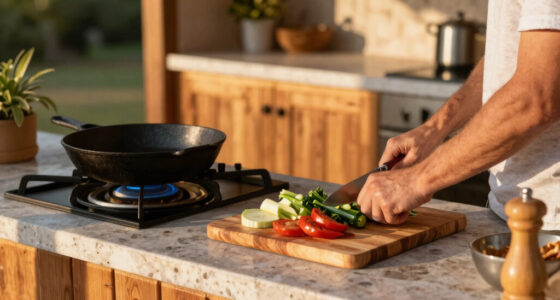
Manual skills become your best allies in a non-electric kitchen. Practice kneading bread dough by hand, chopping vegetables with a sharp knife, and cooking over an open flame or a wood stove. These skills are more than just practical; they deepen your connection with your food, giving you a greater appreciation of the cooking process and the effort behind each meal. Developing these skills also enhances your resilience—should electricity or modern conveniences fail, you’ll be able to prepare nourishing food without relying on powered tools. For example, I learned to chop vegetables efficiently by using a sturdy, well-sharpened chef’s knife and a stable cutting board. This not only improved safety but also increased speed and precision, making meal prep less frustrating over time.
Building habits around these skills involves setting aside dedicated practice time, trying simple recipes like stews or roasted vegetables in a Dutch oven, and experimenting with different heat sources. The more familiar you are with manual techniques, the more confident and efficient you’ll become, reducing your dependence on electric gadgets. This process fosters patience, mindfulness, and a deeper understanding of cooking fundamentals. Remember, each skill you master adds to your self-reliance, making your kitchen a place of empowerment rather than dependence. Over time, these techniques become second nature, allowing you to cook, preserve, and prepare food with a sense of mastery that is incredibly rewarding and crucial during outages or off-grid living.
As an affiliate, we earn on qualifying purchases.
Plan for water and food storage without relying on electricity
Electric refrigerators and water pumps depend on power, but you can store and manage food without them by understanding the importance of proper storage techniques. A root cellar or a cool, dark pantry can keep root vegetables, canned goods, and preserved foods safe for extended periods, mimicking the cooling function of a fridge through temperature and humidity control. Investing in a hand pump or gravity-fed water system ensures a reliable supply of clean water, critical for cooking, cleaning, and hygiene, especially when electric pumps aren’t available. Stockpiling shelf-stable foods—dried beans, rice, canned vegetables, dried fruits—creates a buffer that allows you to prepare nutritious meals without electricity. These methods not only sustain you during outages but also foster self-sufficiency and reduce reliance on commercial infrastructure.
For example, I keep a supply of canned tomatoes, dried lentils, and a hand-crank water filter. These supplies have proven invaluable during power outages, ensuring I can still prepare nourishing meals and maintain hygiene. Proper food safety practices, like inspecting canned goods regularly and storing food in airtight containers, are essential to prevent spoilage and waste. Understanding the tradeoffs—such as the effort required to maintain a cool storage space or the need for regular inspection—helps you plan realistically. These storage strategies are about more than convenience; they’re about creating a resilient, autonomous system that can sustain you in times of crisis or off-grid living, reinforcing the importance of preparedness and resourcefulness.
As an affiliate, we earn on qualifying purchases.
Choose the right equipment and plan your upgrades in phases
Not everything can be switched overnight. Making a phased plan allows you to gradually build a fully functional non-electric kitchen without financial strain or logistical chaos. Start by assessing your current setup and identifying the most critical needs—perhaps replacing an electric stove with a propane range or investing in a solar oven. Each upgrade should address a specific gap, such as better heat sources, improved water storage, or more efficient manual tools. For example, replacing an electric stove with a propane model provides immediate independence from the grid and can be complemented later by installing a wood stove or solar oven for long-term resilience. Planning in phases also lets you evaluate each change’s effectiveness and adjust your approach accordingly.
Consider costs, safety, and local regulations when planning upgrades. I began with a simple camp stove for outdoor cooking, then added a small indoor wood stove as my needs grew. Each step increased my resilience and reduced reliance on external infrastructure. Prioritizing upgrades based on your biggest gaps ensures a logical progression, making the transition manageable and sustainable. This approach minimizes overwhelm and allows you to adapt as your circumstances or resources change. Remember, the goal is a resilient, self-sufficient kitchen that can operate independently of the grid, and phased upgrades are the most practical way to get there without sacrificing your peace of mind or budget.
Maintain safety and stay compliant with local rules
Safety is the foundation of any resilient kitchen. Always follow manufacturer instructions and local regulations when installing or operating fuel-burning appliances. Proper ventilation is critical to prevent dangerous buildup of carbon monoxide; installing detectors and ensuring fresh air exchange can save lives. Regular maintenance—cleaning stoves, inspecting fuel lines, and checking for leaks—reduces fire risks and keeps appliances working efficiently. For example, I installed a carbon monoxide detector near my propane stove, which provides peace of mind and early warning in case of issues. Understanding local rules about permits and inspections is essential; some regions require licenses for indoor wood stoves or gas appliances. Never use outdoor appliances like charcoal grills or camping stoves inside unless explicitly approved, as they pose serious health and safety hazards. Prioritizing safety and compliance not only protects your household but also ensures your transition to a non-electric kitchen remains smooth and sustainable, avoiding costly fines or accidents. This disciplined approach fosters confidence and peace of mind, enabling you to enjoy your off-grid or resilient kitchen fully.
Conclusion
Moving toward a non-electric kitchen isn’t about sacrifice; it’s about gaining independence and confidence. Each small step—whether a manual can opener or a wood stove—adds up to a resilient, self-reliant cooking setup. Think of it as reclaiming your kitchen’s soul, one hand-powered tool at a time. When the lights go out or the grid falters, you’ll be ready—not just surviving, but thriving in your own skillful, unplugged space.Fall Picks
fall essentials
As an affiliate, we earn on qualifying purchases.