TL;DR

Get kitchen gear delivered free with Prime
- Fast, free delivery on millions of items
- Prime Video, Amazon Music and more included
- Member-only deals all year
Long-term dry food storage depends on choosing the right foods, using high-barrier packaging, controlling storage conditions, and regular inspection. Proper techniques can extend shelf life from months to decades, keeping your pantry resilient and ready.
Imagine opening your pantry after 10 years and finding perfectly edible rice, beans, and pasta, just as fresh as the day you stored them. It’s not just wishful thinking — with the right methods, you can make that a reality. Long-term dry goods storage isn’t about magic; it’s about controlling the five main threats: moisture, oxygen, heat, light, and pests.
If you want a pantry that withstands the test of time and keeps your off-grid kitchen self-reliant, understanding these basics is essential. This guide lays out simple, proven practices to extend your dry food’s shelf life while maintaining quality and safety. No hype, no fluff — just practical steps you can take today to build a resilient food stash.
Choose low-fat, low-moisture staples like white rice, dry beans, and oats for decades-long storage.
Use high-barrier Mylar pouches with oxygen absorbers inside sturdy containers to extend shelf life.
Store your pantry in a cool, dark, dry place, ideally around 50–70°F, to slow degradation.
Break down large storage containers into smaller pouches to make rotation and access easier.
Inspect your stored food regularly, discard compromised packages, and always prioritize safety.
Storing Dry Goods for the Long Term
A dependable pantry is built by choosing stable foods, removing oxygen, blocking moisture and light, controlling heat, and inspecting every package. Done well, staples can remain useful for years—or even decades.
Possible for suitable staples under consistently cool, dry, oxygen-controlled conditions.
Never use oxygen absorbers with damp or uncertain-moisture food.
High-barrier pouches preserve food; rigid containers guard the pouches.
Defeat the five threats
Long storage is less about a single product than a controlled system. Each threat accelerates deterioration or creates a path for contamination.
Moisture
Enables mold and microbial growth. Begin only with genuinely dry food.
Oxygen
Drives rancidity, flavor loss, discoloration, and insect survival.
Heat
Speeds chemical change and reduces vitamins, flavor, and useful life.
Light
Degrades quality and raises package temperature. Store fully shaded.
Pests
Insects and rodents exploit weak seals, thin bags, and untidy spaces.
Store foods built to last
Low-fat, low-moisture foods keep best. Intact grains usually outlast flour because grinding exposes more surface area to oxygen.
Strong long-term candidates
Choose foods your household already eats and can prepare with available water, fuel, equipment, and seasonings.
Match packaging to the time horizon
No single container does everything. The best long-term system separates preservation from physical protection.
| Packaging type | Oxygen and moisture barrier | Best use | Important limitation |
|---|---|---|---|
| Mylar pouch | ✓ Excellent | Multi-year storage of dry staples | Must be heat-sealed and protected from punctures |
| Glass jar | ✓ Strong seal | Smaller quantities and visible inventory | Requires protection from light and breakage |
| Vacuum-sealer bag | ~ Moderate | Medium-term storage and active rotation | Thin material slowly passes gases and may puncture |
| Plastic bucket alone | ~ Limited | Physical protection and organization | Not a dependable long-term oxygen barrier |
The five-step preservation system
Fill
Place suitable dry food in a food-grade high-barrier pouch.
Absorb
Add the correctly sized oxygen absorber with minimal delay.
Seal
Heat-seal the pouch and verify a complete, clean seam.
Protect
Place sealed pouches inside a sturdy food-grade container.
Label
Record contents, packaging date, and preparation details.
Temperature sets the pace
Cooler, stable storage generally slows rancidity, vitamin loss, discoloration, and flavor decline. Avoid attics, hot garages, damp rooms, sunlight, fuel, chemicals, and flood-prone areas.
Storage condition profile
Favor a consistent indoor temperature. Repeated heating and cooling can shorten useful shelf life.
Package small, rotate often
A huge container becomes vulnerable the moment it is opened. Smaller units reduce repeated exposure and make everyday rotation practical.
Divide the supply
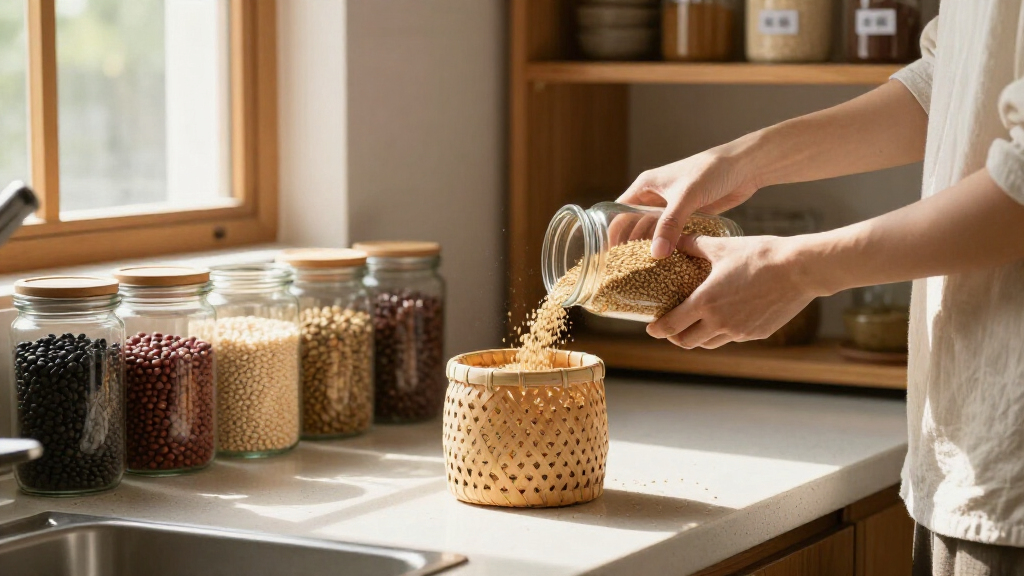
Pack grains, beans, flour, and spices in manageable portions so only the amount needed is exposed.
Freeze correctly
Where appropriate, freeze dry goods for about 48 hours. Keep them sealed while returning to room temperature to prevent condensation.
Store complete capability
Include water, fuel, seasonings, fats, recipes, and equipment needed to turn staples into familiar meals.
A reliable pantry is a connected system, not forgotten inventory.
Safety rule: Discard food with mold, water intrusion, suspicious swelling, contamination, or an uncertain package. Never taste questionable food to decide whether it is safe.
Choose Foods That Actually Last Decades
The first step to storing dry goods long-term is picking the right foods. Not everything is built for the shelf. Staples like white rice, dry beans, and rolled oats store well because they’re low in fat, low in moisture, and intact — meaning less surface area exposed to oxygen.
Foods rich in oils, like nuts, full-fat milk powder, and whole grains, tend to go rancid faster. Brown rice, while popular, usually lasts only a few years because its oils oxidize quickly. If you care about longevity, focus on high-quality, low-moisture staples stored in airtight, oxygen-free environments.
Real-world example: a batch of white rice stored in a cool, dark cellar can last over 20 years, while brown rice might turn rancid after 1-2 years even in the best packaging.
Mylar food storage bags with oxygen absorbers
As an affiliate, we earn on qualifying purchases.
As an affiliate, we earn on qualifying purchases.
Start with Truly Dry Food — No Exceptions
Dry goods meant for long-term storage should contain about 10% moisture or less. Anything damper invites mold, bacteria, or even botulism in oxygen-depleted environments. Never package damp or home-dried foods with oxygen absorbers, as that can trap moisture and support microbial growth.
For example, if you dried beans yourself, make sure they’re fully dehydrated before sealing them up. Using a moisture meter can help — if it reads below 10%, you’re good to go. Remember, oxygen absorbers do not dry out or sterilize food; they just remove residual oxygen.
long-term dry food storage containers
As an affiliate, we earn on qualifying purchases.
As an affiliate, we earn on qualifying purchases.
Use High-Barrier Packaging — Your Best Long-Term Ally
Proper packaging is key. The classic method involves placing dry food in Mylar pouches with oxygen absorbers, then sealing them tightly. Inside a sturdy bucket or rigid container, this setup keeps pests, crushing, and light at bay. Label everything with the date and contents.
Compare common options:
| Packaging Type | Oxygen & Moisture Barrier | Best For | Limitations |
|---|---|---|---|
| Mylar Bags | Excellent | Multi-year storage | Requires heat sealing, small punctures can compromise |
| Vacuum Sealers | Moderate | Medium-term, smaller batches | Less effective long-term without oxygen absorbers |
| Plastic Buckets | Poor (unless lined) | Physical protection, pests | Allow oxygen ingress over time |
For true longevity, combine Mylar pouches with buckets. The pouch shields the food, while the bucket guards against physical damage and pests.
vacuum sealed food storage pouches
As an affiliate, we earn on qualifying purchases.
As an affiliate, we earn on qualifying purchases.
Store Food in a Cool, Dark, Dry Space
Temperature and light are enemies of long-term dry storage. Aim for a stable zone around 50–70°F (10–21°C). Think of a root cellar or basement — somewhere shielded from sunlight, fluctuations, and humidity. Avoid attics, garages, or sheds where temperature swings and moisture creep in.
In one off-grid cabin, I stored a year’s supply of rice and beans in a closet tucked away from the stove and window. Even then, I checked it quarterly, watching for condensation or pests. This simple step can double or triple the shelf life of your stored goods.
As an affiliate, we earn on qualifying purchases.
Keep Pests and Pests Out — No Excuses
Insect eggs might hitch a ride on your grains. Freezing dry goods for 48 hours before packaging kills any eggs present. Sealed, oxygen-free environments with pest-proof containers keep pests at bay long-term. Buckets with tight-fitting lids provide decent protection, but only sealing pouches inside is foolproof.
Inspect your storage area regularly. Look for signs of pests, water intrusion, or package damage. A clean, dry, and well-sealed space prevents infestations from turning your pantry into a disaster.
Package Smartly — Small Batches, Easy Rotation
Large containers might seem convenient but cause headaches once opened. Smaller pouches or jars mean less exposure to air and moisture. When you open a big bucket, you risk contaminating the rest of the stock. Break down grains, flours, and spices into manageable sizes.
For example, dividing a 5-gallon bucket of wheat into 1-quart Mylar pouches lets you use what you need without exposing everything to air each time.
Inspect and Rotate — Keep Your Food Fresh and Safe
Regular checks are your best defense. Every 6 to 12 months, look for damaged packages, moisture, pests, or strange odors. Discard anything suspicious — mold, swelling, leaks, or bad smells mean it’s time to toss or repackage. Remember, safety comes first; don’t taste questionable food.
This habit helps you catch problems early and ensures your storage remains reliable. Think of it as a health check for your pantry.
Frequently Asked Questions
How long can dry goods really last?
With proper packaging and storage conditions, most dry staples like white rice, beans, and oats can last 10 to 20 years. Low-fat, moisture-free foods stored in high-barrier containers at cool temperatures tend to last the longest. However, always check for signs of spoilage before use.
Are Mylar bags necessary for long-term storage?
While not strictly necessary for short-term pantry rotation, Mylar bags with oxygen absorbers significantly extend shelf life for multi-year storage. They resist oxygen, moisture, and light better than most plastic options, making them a smart investment for durable preservation.
Do food-grade buckets need liners like Mylar?
Usually yes. Buckets alone are not reliable oxygen barriers, so lining them with Mylar pouches or other high-barrier bags ensures better oxygen control. Buckets mainly provide physical protection and pest resistance.
How many oxygen absorbers should I use?
The amount depends on the package size and food density. Follow the manufacturer’s guidance, and use a slightly higher capacity than needed to ensure complete oxygen removal. Proper sealing and minimal headspace also matter.
How can I tell if an oxygen absorber is still active?
Fresh absorbers are soft and pliable. Many include a color indicator—if it remains unchanged, the absorber is likely still active. Reseal any unused absorbers promptly and store them in a cool, dry place.
Conclusion
Long-term dry food storage isn’t about magic — it’s about making smart choices and controlling the environment. With durable packaging, stable storage conditions, and routine checks, your pantry can stay reliable for years. That’s the foundation of true self-reliance.
Remember, a well-organized, properly protected stash gives you peace of mind. Every jar, pouch, and bucket is a small act of preparedness that adds up to resilience. Keep your storage simple, effective, and always ready for whatever comes next.
Columbus Day / Indigenous Peoples' Day Picks
long weekend sales
As an affiliate, we earn on qualifying purchases.