
TL;DR
A house clearance uncovered a Mars Bar from the 1990s, showcasing how product sizes have decreased over time due to shrinkflation. The find highlights ongoing changes in consumer goods pricing and packaging.
A Mars Bar from the 1990s was recently found during a house clearance, providing a tangible example of how product sizes have shrunk over the years due to shrinkflation. The discovery has drawn attention to ongoing changes in packaging and pricing strategies in the confectionery industry.

Get kitchen gear delivered free with Prime
- Fast, free delivery on millions of items
- Prime Video, Amazon Music and more included
- Member-only deals all year
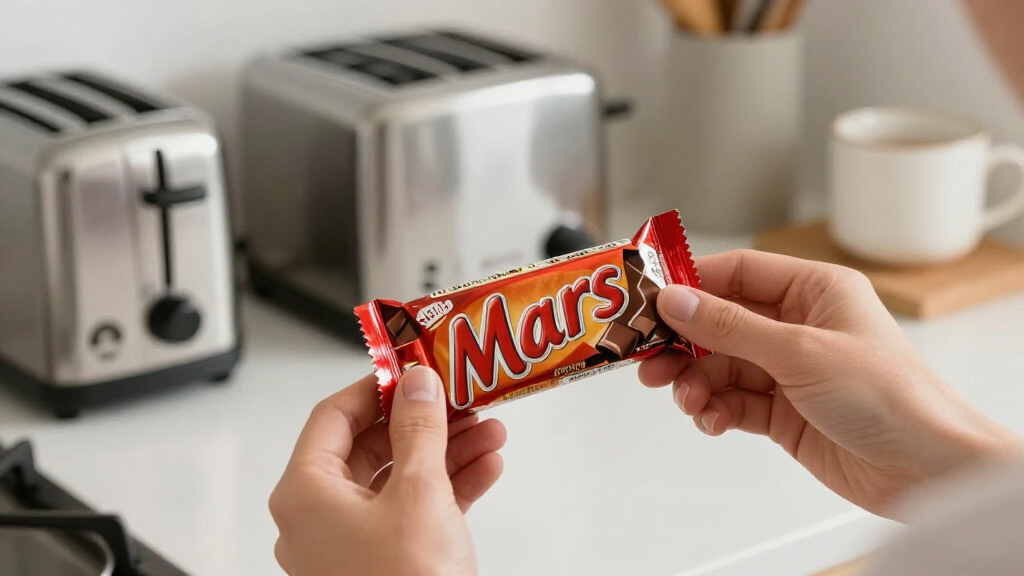
The vintage Mars Bar, still sealed and in good condition, was uncovered in a box of old sweets during a home clearance in the UK. The bar, dating back to the 1990s, appears noticeably larger than current versions available today.
Experts say this find visually demonstrates the phenomenon of shrinkflation, where companies reduce product sizes or quantities while maintaining or increasing prices, effectively passing costs onto consumers. The current Mars Bar size is approximately 51 grams, whereas the 1990s version was typically 62 grams, according to industry records.
Food industry analyst Jane Smith noted, “This discovery is a clear example of how manufacturers have adjusted packaging and portion sizes over time, often without explicit consumer awareness.”
Implications of Vintage Candy Size for Consumers
This find underscores the widespread practice of shrinkflation, which has led to smaller product sizes over the past few decades without corresponding price reductions. Consumers may be paying more per gram today than in the past, yet often remain unaware of these changes. The discovery of a vintage Mars Bar highlights how packaging and portion sizes have evolved, prompting questions about transparency and consumer rights in the confectionery market.Products Worth Considering

Ninja Professional Plus Kitchen System with Auto-iQ, 1400-Watt Peak, Grey, BN801

Cuisinart MultiClad Pro 12-Piece Stainless Steel Cookware Set

KitchenAid 38 oz Cold Brew Coffee Maker (KCM5912)
As an affiliate, we earn on qualifying purchases.
Historical Changes in Confectionery Packaging
Since the 1990s, many food manufacturers have employed shrinkflation as a strategy to manage rising production costs while maintaining profit margins. Over the years, several brands have reduced their product sizes, often without clear communication to consumers. The Mars Bar, introduced in 1932, has undergone multiple packaging changes, with the most recent size reduction occurring in the early 2000s.
Industry reports indicate that the average weight of a standard chocolate bar has decreased by approximately 15-20% since the 1990s, aligning with the recent vintage find. This trend reflects broader economic pressures and marketing tactics aimed at preserving brand prices.
Extent of Shrinkflation Across Confectionery Brands
It is not yet clear how widespread shrinkflation remains across all confectionery products or whether other brands have similarly reduced sizes without notice. Further investigation is needed to determine current industry practices.Future Monitoring of Product Sizes and Consumer Awareness
Industry analysts and consumer groups are expected to examine current packaging trends more closely. Advocacy for clearer labeling and transparency could increase, and additional vintage finds may emerge as more households clear out old stock. Monitoring these changes will help assess how widespread shrinkflation continues to be and whether regulatory measures are needed.
Key Questions
What is shrinkflation?
Shrinkflation is a strategy where companies reduce the size or quantity of a product while maintaining or increasing its price, often without explicit notice to consumers.
How can I tell if a product has shrunk?
Compare current packaging and weight labels with older versions or product records. Vintage or unopened items, like the found Mars Bar, can serve as reference points.
Does this mean all products are shrinking?
Not necessarily. While shrinkflation is common in many sectors, its prevalence varies by industry and brand. Ongoing monitoring and transparency are key issues.
Why is shrinkflation controversial?
Because it can be misleading to consumers who may not realize they are getting less product for the same price, raising concerns about transparency and fair trading practices.
Source: fediverse