
TL;DR

Get kitchen gear delivered free — and shop member deals
- Fast, free delivery on millions of items
- Access to Prime Big Deal Days deals on October 6–7
- Prime Video, Amazon Music and more included
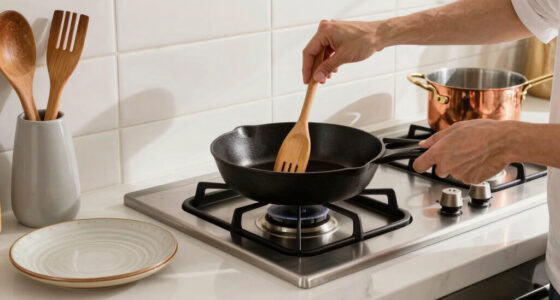
Properly seasoned cast iron has a smooth, dark, glossy surface that releases food easily and resists rust. Regular maintenance and re-seasoning keep it at its best, ensuring durability and non-stick performance.
A properly seasoned cast iron looks dark, glossy, and feels smooth—not sticky or gummy.
Food should slide off easily, indicating a durable polymerized oil layer.
Regular cleaning with hot water and minimal soap preserves the seasoning.
Re-season when food sticks or rust appears—think of seasoning as a living layer that needs upkeep.
Using oven seasoning creates a more even, long-lasting coating compared to stovetop methods.
How to Spot a Perfectly Seasoned Cast Iron in 3 Clear Signs
The first thing to check is the surface appearance. A well-seasoned cast iron looks dark, glossy, and smooth. It’s almost like polished stone—no dull spots or rust patches. When you cook, food should slide right off, not cling. Over time, a rich patina develops—an almost glassy layer that protects and enhances non-stick qualities. The feel of the surface matters too—smooth, slightly slick, not sticky or gummy. If it feels sticky, it means the oil isn’t polymerized properly. Lastly, rust resistance is a dead giveaway. If your skillet resists rusting despite being stored in humid environments, it’s a sign the seasoning is solid.
Understanding why these signs matter is crucial. A dark, glossy surface indicates that the oil has formed a durable polymerized layer, which acts as a non-stick barrier and protects against moisture. Smoothness ensures even heat distribution and prevents food from sticking due to uneven coating, while resistance to rust signifies that the seasoning layer is effectively sealing the metal. These signs collectively reflect a healthy, well-maintained skillet that performs reliably, reducing the need for extensive re-seasoning or scrubbing. Think of it like a well-waxed car—each sign indicates proper care and a protective surface that lasts over time.
As an affiliate, we earn on qualifying purchases.
Why Your Cast Iron Might Stick and How To Fix It
- Check the surface. If it feels sticky or gummy, it’s often because the seasoning layer is uneven or incomplete. This can happen if oil was applied too thickly or if the skillet was not heated enough during seasoning, leading to a sticky residue that attracts food. Think of it like paint that hasn’t fully cured—sticky spots can trap food and moisture, compromising the non-stick qualities.
- Clean the skillet with hot water and a stiff brush—no soap. If stubborn residue remains, scrub with steel wool. This step is crucial because residual sticky oil or old seasoning can interfere with proper re-seasoning. Imagine trying to paint over a sticky wall—without proper cleaning, the new coat won’t adhere correctly.
- Dry thoroughly—water is the enemy of seasoning. Use a towel or heat the skillet on the stove for a few minutes. Moisture can cause rust or create a barrier that prevents new seasoning from bonding properly, similar to how water can cause paint to peel.
- Re-apply a thin layer of high-smoke-point oil—flaxseed or grapeseed work well—and bake it in the oven at 450°F for an hour. Using a thin, even layer ensures the oil polymerizes into a durable coating. Think of it like seasoning a cast iron skillet is akin to seasoning a cast-iron pan—layering multiple thin coats creates a smoother, more resilient surface that improves with each cycle, much like building layers of protective armor.
As an affiliate, we earn on qualifying purchases.
Comparison Table: Oven Seasoning vs. Stovetop Seasoning
| Method | How It Works | Pros | Cons |
|---|---|---|---|
| Oven Seasoning | Apply oil evenly, bake at high heat (450-500°F) for an hour. This method allows the oil to polymerize uniformly over the entire surface, creating a durable, glass-like coating. It’s like baking a protective shell onto your skillet, ensuring even coverage and better longevity. | Creates an even, durable, glossy surface Less hands-on time | Requires oven space and time |
| Stovetop Seasoning | Apply oil, heat skillet on medium-high until smoke point is reached. This quick method heats the oil rapidly, allowing it to bond with the surface in localized areas. It’s ideal for touch-ups or when you need a quick fix, similar to seasoning a pan in a hurry before a meal. | Quick, good for touch-ups | Can be uneven, less durable, and prone to inconsistent layers, especially if not heated evenly or if the oil isn’t spread thinly enough. Imagine trying to paint a wall with a roller that leaves streaks—the result can be patchy and less protective. |
As an affiliate, we earn on qualifying purchases.
How to Maintain Your Cast Iron for Long-Term Performance
- Clean with hot water and a stiff brush—avoid soap unless re-seasoning. This preserves the polymerized layer, much like cleaning a glass surface with only water to avoid stripping off protective coatings.
- Dry immediately—water causes rust. Think of drying as sealing the surface, preventing moisture from penetrating and causing corrosion, similar to drying a freshly painted wall to prevent smudges.
- Apply a thin layer of oil after each use—spread evenly with a paper towel. This ongoing layer acts like a protective wax, reinforcing the seasoning and preventing rust. It’s akin to applying a fresh coat of wax on a car after washing.
- Store in a dry place, preferably with a paper towel underneath to absorb moisture. This extra step is like placing silica gel packs in a box—reducing humidity and preventing rust formation.
- Re-season when food begins to stick or rust spots appear. Recognizing these signs is similar to noticing paint peeling or rust forming on metal—indicators that your skillet needs a refresh to maintain optimal performance.
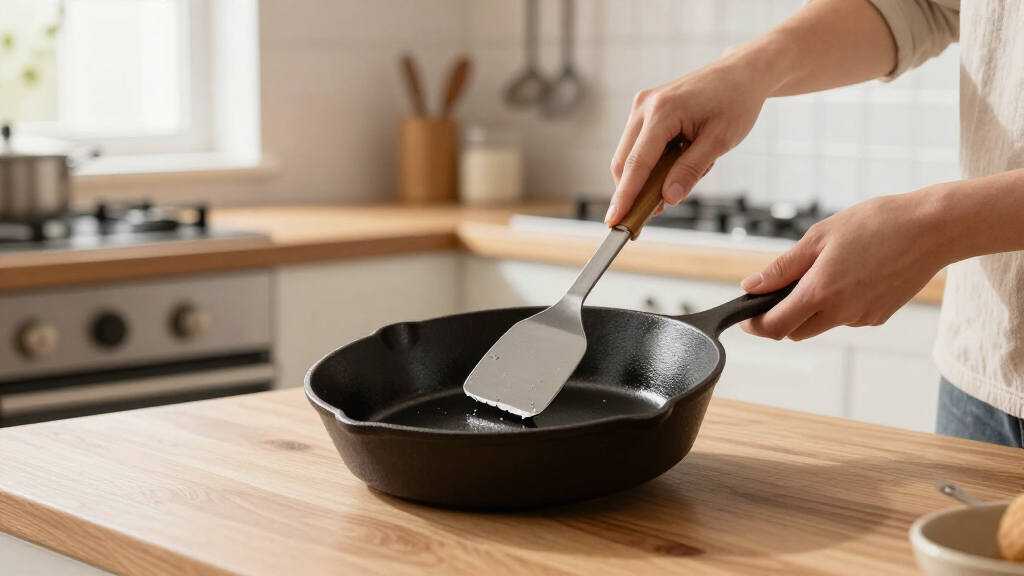
cast iron skillet maintenance tools
As an affiliate, we earn on qualifying purchases.
As an affiliate, we earn on qualifying purchases.
Frequently Asked Questions
How can I tell if my cast iron is properly seasoned?
Look for a dark, shiny, and smooth surface that releases food easily. If it resists rust and food slides right off, it’s well seasoned.Why is my cast iron sticking even after seasoning?
It might need a thorough cleaning or a fresh re-seasoning. Sticky spots indicate uneven or incomplete polymerization of the oil.How often should I re-season my cast iron?
Re-season when food starts sticking, or rust spots appear. Regular maintenance, like applying a thin oil layer after each use, keeps it in top shape.Can I use soap to clean my seasoned cast iron?
Yes, but sparingly. Most experts recommend hot water and a brush. Save soap for deep cleaning after rust removal or re-seasoning.What oils are best for seasoning?
High-smoke-point oils like flaxseed, grapeseed, or vegetable oil create a durable, glossy surface when properly baked onto the skillet.Conclusion
Your cast iron’s seasoning isn’t just a surface coating—it’s a living layer that improves with care. Recognize the signs of a well-seasoned skillet and keep up with simple maintenance to enjoy decades of reliable, non-stick cooking. Treat it right, and it becomes an heirloom that gets better with age.Fall Picks
fall essentials
As an affiliate, we earn on qualifying purchases.