
TL;DR

Get kitchen gear delivered free — and shop member deals
- Fast, free delivery on millions of items
- Access to Prime Big Deal Days deals on October 6–7
- Prime Video, Amazon Music and more included
Brewing coffee off-grid is simple with the right tools and techniques. Portable devices like AeroPress and French press shine, while managing water safety and heat is key. Even open fire can produce great coffee with the right approach.
There’s nothing quite like the smell of fresh coffee awakening your senses in the wilderness. But brewing in the woods, away from power outlets, demands a different approach. This isn’t about fancy espresso machines — it’s about practical, durable methods that work with what’s around you.
Whether you’re backpacking, camping, or living off-grid, knowing how to brew good coffee can turn a simple trip into a memorable experience. This guide covers the best tools, tips, and tricks to craft a satisfying cup, no matter your setup.
The AeroPress offers a quick, lightweight option perfect for backpackers and campers.
Control heat carefully when brewing over open flames to prevent burnt coffee and grounds.
Always filter or boil water to avoid health risks, especially in wild water sources.
Use eco-friendly practices like reusable filters and composting grounds to protect nature.
Matching your brewing method to your environment maximizes flavor and minimizes effort.
Better Camp Coffee Starts With Heat, Water, and the Right Brew Kit
TL;DR: Brewing coffee off-grid is simple when your method matches your terrain. Portable devices like AeroPress and French press shine, open-fire brewing rewards patience, and safe water is the non-negotiable foundation of every good cup.
Minimal gear, clean cup, short steep, easy cleanup.
Grounds, water, and a pot for cowboy coffee.
Boil longer at altitude when water quality is uncertain.
Gentle, indirect heat prevents scorched grounds.
Choose the brewer that fits your trail, stove, and patience level.
Off-grid coffee is a tradeoff between weight, flavor, batch size, cleanup, and how much attention the fire demands. Pick for the morning you actually expect to have.
AeroPress or Pour-Over
Best for: solo trips, backpackers, quick mornings. Compact cones and AeroPress brewers use little fuel and give a clean cup with a medium grind.
French Press
Best for: two or more people. Durable, intuitive, and batch-friendly, though it needs careful packing and a little more cleanup.
Percolator
Best for: fire rings and rugged camp kitchens. It tolerates heat well and makes a robust cup, but over-boiling can turn bitter fast.
Moka Pot
Best for: espresso-style coffee on a camp stove. Small aluminum models travel well and reward steady, controlled heat.
Cowboy Coffee
Best for: minimalists. Boil grounds directly in water, remove from heat, let grounds settle, then pour slowly.
Cold Brew Concentrate
Best for: hot weather or fuel conservation. Prep ahead, then mix with cold water, hot water, or milk at camp.
Four steps to a reliable cup when power outlets are nowhere nearby.
Keep the process boring in the best way: consistent grind, clean water, controlled heat, and a short, intentional brew window.
Grind Medium
Use a texture similar to sea salt. It extracts efficiently without clogging filters or pulling harsh bitterness.
Heat Water
Boil, then let it settle near 200°F. This extracts flavor without scalding the grounds.
Assemble Evenly
Set filter and grounds, then pour steadily. Even saturation prevents weak spots and muddy flavor.
Wait, Press, Pour
Steep or percolate for 1-3 minutes. Shorter is brighter; longer is heavier and stronger.
Every brewing method has a personality. Choose the one with the least friction.
A good camping setup is not the fanciest one. It is the one you will use correctly while hungry, cold, tired, or standing beside a low fire.
| Method | Portability | Flavor | Group Size | Open Fire | Cleanup |
|---|---|---|---|---|---|
| AeroPress | ✓ Excellent | Clean, smooth, adaptable | Solo or pair | ~ Needs separate water heat | ✓ Very easy |
| French Press | ~ Moderate | Full-bodied, rich | Great for groups | ~ Heat water separately | ~ Grounds to pack out |
| Percolator | ~ Bulky but rugged | Bold, classic camp taste | Small to large groups | ✓ Excellent | ~ Moderate |
| Moka Pot | ✓ Compact | Strong, espresso-style | Solo or pair | ~ Needs steady heat | ✓ Easy |
| Cowboy Coffee | ✓ Minimal gear | Rustic, sometimes gritty | Flexible | ✓ Excellent | ✗ Messy grounds |
Pack weight, effort, and flavor intensity rarely move together.
The best off-grid coffee method depends on what you are optimizing for: clean taste, speed, strong body, group quantity, or pure minimalism.
Ease of Brewing
Higher scores favor simple gear, short brew time, and low cleanup burden in a camp setting.
Heat Discipline
Open fire coffee succeeds when flame turns into coals, boiling stays controlled, and the pot comes off heat before bitterness takes over.
Clean water protects your trip. Gentle heat protects your coffee.
Off-grid brewing is half beverage craft and half field safety. Treat wild water before brewing, and keep campfire coffee at a gentle simmer.
Filter First
Pump, squeeze, or gravity filters remove sediment, protozoa, and many biological risks from streams and lakes.
Boil Thoroughly
Use a rolling boil for at least 1 minute, or 3 minutes at higher altitude when water safety is uncertain.
Pack or Compost
Use reusable filters when possible and dispose of grounds responsibly away from waterways and campsites.
Open-Fire Heat Spectrum
The dependable camp cup is a connected system, not a single gadget.
When each link is handled well, even a basic pot can produce coffee that feels like a small wilderness luxury.
What is the easiest method for camping coffee?
AeroPress or French press. Both are portable, quick, and forgiving when your camp kitchen is simple.
Can instant coffee work off-grid?
Yes. It is practical when time, fuel, or gear space is limited. Just add safe hot water.
How do I keep coffee hot outside?
Use an insulated mug or thermos, and pre-warm it with hot water before filling.
How do I avoid burnt campfire coffee?
Use coals or indirect heat, maintain a gentle simmer, and remove the pot before a hard rolling boil continues.
Choose the Right Method: What Off-Grid Coffee Brewing Actually Looks Like
Some methods shine in the wild, blending simplicity with flavor. The key is matching your environment and gear to your taste and needs. Here are the most reliable options:
- Pour-over (AeroPress, collapsible cones): Compact, lightweight, and fast. Ideal for solo trips, works with portable filters.
- French press: Durable, straightforward, can make larger batches. Great if you camp with friends.
- Percolator: Classic, rugged, works directly over open flames. Produces a robust brew, perfect for campfire setups.
- Moka pot: Small, aluminum, makes strong espresso-style coffee. Fits on most camp stoves or over fire.
- Cowboy coffee: Minimal gear, just grounds and water. Boil directly in a pot, then settle grounds before pouring.
Choosing the right method involves weighing factors like portability, flavor profile, and ease of use. For example, the AeroPress is incredibly quick and clean, making it ideal for fast mornings or busy trips. Conversely, cowboy coffee requires no equipment but results in a more rustic, sometimes gritty brew. Understanding these tradeoffs helps you select a method that aligns with your environment and taste preferences.
As an affiliate, we earn on qualifying purchases.
How to Brew Coffee with a Portable Coffee Maker in 4 Simple Steps
- Grind your coffee: Use a medium grind, similar to sea salt. This size strikes a balance—fine enough to extract flavor efficiently but coarse enough to prevent clogging filters or over-extraction, which can lead to bitterness. The grind size impacts both brewing time and flavor clarity, so adjusting based on your device is key.
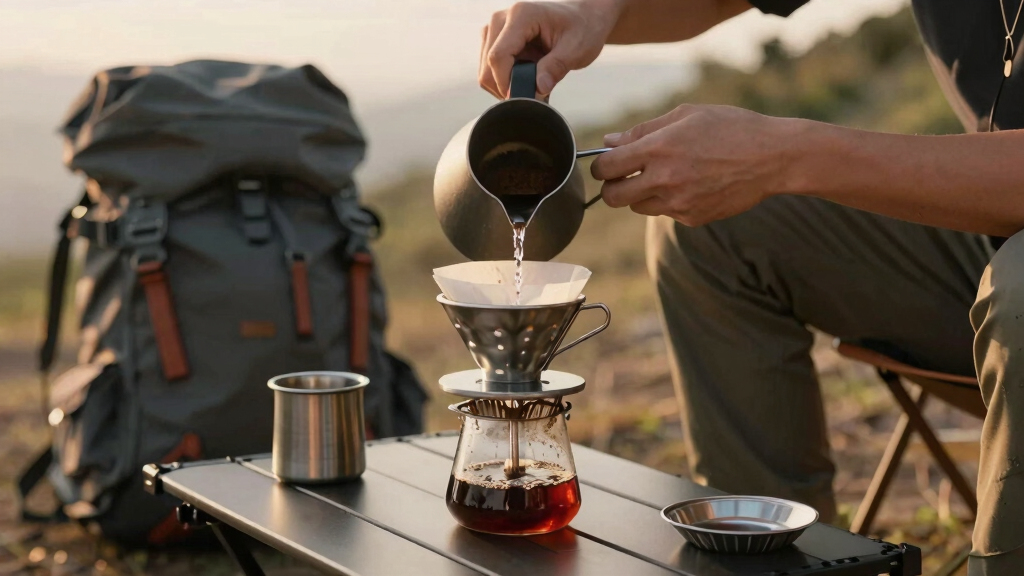
- Heat your water: Boil water over your stove, fire, or portable heater. Aim for around 200°F (93°C), just below boiling, because water at this temperature extracts coffee compounds optimally without scalding the grounds, which can cause bitterness and muddy flavors.
- Assemble your device: Place the filter and grounds (if applicable). Pour hot water evenly over the grounds to ensure uniform extraction. Proper assembly and pouring technique influence the final flavor, preventing channeling or uneven brewing that can produce inconsistent taste.
- Wait and enjoy: Let it steep or percolate for 1-3 minutes, depending on your method. Shorter times yield brighter, more delicate flavors; longer steeping enhances body and strength. Once ready, press or pour carefully into your mug. This step is crucial for controlling extraction and flavor clarity, making your coffee more satisfying and less bitter.
For example, on a recent backpacking trip, using an AeroPress took only 2 minutes to brew a rich, smooth cup over a small camping stove. The quick process preserves the fresh flavors and minimizes cleanup, which is vital in outdoor settings. Mastering these steps ensures a reliable, enjoyable coffee experience regardless of where you are.
As an affiliate, we earn on qualifying purchases.
Open Fire Coffee: How to Brew Over Flames Without Burning Your Grounds
Brewing coffee over an open fire can yield a smoky, hearty flavor that’s hard to replicate with other methods. The key is controlling the heat to avoid burning the grounds or over-extracting bitter flavors. Here’s how:
- Use a stable, heat-resistant pot or percolator: Cast iron or aluminum are durable choices. Ensure the pot is clean and free of rust to prevent off-flavors and ensure safety.
- Build a gentle fire: Instead of a raging blaze, create a bed of hot coals or a low flame. This provides steady, even heat that’s less likely to scorch your coffee.
- Manage heat carefully: Place the pot where the flames are indirect or use a grill grate to distribute heat evenly. Adjust the fire as needed to maintain a gentle simmer rather than a rolling boil, which can lead to burnt grounds and a bitter taste.
- Control boiling: Watch closely. Once the water reaches a steady boil—around 212°F (100°C)—remove the pot from the heat. This prevents over-extraction and keeps the coffee’s flavor balanced.
Imagine sitting beside your campfire, the aroma of coffee mingling with the woodsmoke, as the bubbling gently fills the air. This method imparts a distinctive smoky character that many find appealing. However, it requires patience and attention to heat management to avoid bitterness and burnt grounds. Done correctly, open-fire brewing offers a deeply satisfying, rustic coffee experience that connects you directly with the outdoors.
As an affiliate, we earn on qualifying purchases.
Water Safety and Filtration: Making Sure Your Coffee Isn’t a Health Risk
Good coffee starts with clean water. Off-grid, water safety is paramount because contaminated water can cause serious health issues. If you’re unsure about your water source, here’s what to do:
- Use a portable water filter: Pump, squeeze, or gravity-fed filters remove bacteria, protozoa, and sediments. Investing in a reliable filter is essential for safe brewing, especially from natural sources like streams or lakes.
- Boil water thoroughly: Bring water to a rolling boil for at least 1 minute; at higher altitudes, extend boiling to 3 minutes to ensure pathogen kill. Boiling is one of the simplest and most effective methods for sterilization, crucial when water quality is questionable.
- Carry backup supplies: Chemical tablets or UV sterilizers provide an extra layer of safety when filtration isn’t enough or water sources are highly questionable. Combining methods ensures maximum safety, protecting your health and your coffee experience.
For instance, in remote national parks, a simple pump filter turned cloudy mountain stream water into safe brewing water, preventing illness and ensuring a good start to your day. Skipping water treatment can lead to health risks, and no coffee is worth a stomach bug. Prioritize water safety to enjoy your coffee and your trip without worry.
As an affiliate, we earn on qualifying purchases.
Frequently Asked Questions
What is the easiest method for brewing coffee while camping?
The AeroPress or French press are ideal. They’re portable, quick, and require minimal equipment, making them perfect for off-grid brewing.Can I use instant coffee instead of brewing?
Absolutely. Instant coffee is a practical choice when gear or time is limited. Just add hot water, and you’re set.How do I keep my coffee hot in the wilderness?
Use insulated mugs or thermoses to retain heat longer. Pre-warming your container helps keep your brew hot for longer periods.What’s the best way to brew coffee over a campfire?
Use a stable, heat-resistant pot or percolator, manage the fire’s intensity, and control boiling to avoid burnt grounds for a rich flavor.How can I make my coffee more eco-friendly off-grid?
Opt for reusable filters, biodegradable grounds, and solar or manual gear to reduce waste and environmental impact.Conclusion
Brewing coffee off-grid isn’t about high-tech gadgets — it’s about understanding your tools and environment. With a little practice, you can craft a rich, satisfying cup anywhere, from mountain streams to campfire coals.
Next time you pack your gear, remember: your best brew is just a few simple steps away. Grab your favorite mug, fire up the stove, and enjoy the taste of adventure.
Fall Picks
fall essentials
As an affiliate, we earn on qualifying purchases.