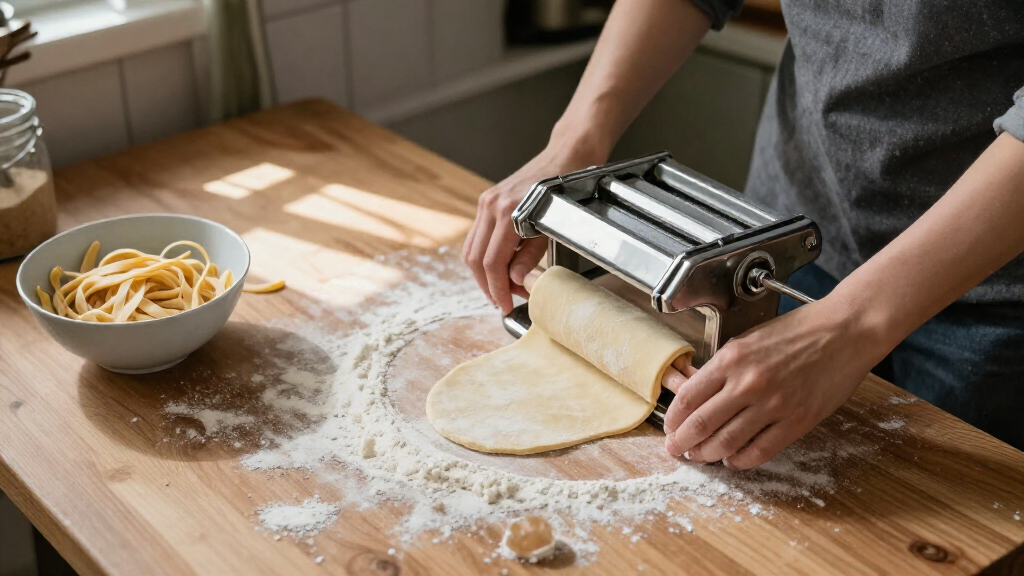
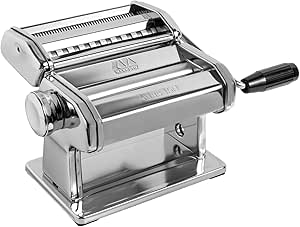
Among these manual pasta makers, I rank the MARCATO Atlas 150 as the best overall for its established design and useful pasta-making range, while the Marcato Atlas 180 suits cooks who want a wider sheet and the YASHE 3-in-1 offers an approachable multi-function option. The main choice is between established machines with a focused set of pasta formats and budget-oriented 3-in-1 models that offer several thickness settings and cutters. Roller width, clamp stability, construction, and how easy a machine is to clean all affect daily use. A larger range of settings can help with different recipes, but it does not automatically make a machine easier to operate. Read on for the full comparison and guidance on matching a machine to your cooking habits.

Get kitchen gear delivered free with Prime
- Fast, free delivery on millions of items
- Prime Video, Amazon Music and more included
- Member-only deals all year
Complete the kit


Key Takeaways
- The Atlas 150 is the strongest all-rounder in this lineup: several Atlas 150 listings offer the same core format, so compare included accessories and finish rather than assuming each listing represents a different machine.
- The Atlas 180’s wider sheet is its clearest distinction: it may suit larger pasta sheets, while the narrower Atlas 150 is a more compact fit for routine batches.
- Many lower-cost 3-in-1 options share a similar pitch: adjustable thickness and multiple cutters are common across YASHE, Sailnovo, MILLETER, Reemix, MZTOGR, and ISILER, making clamp fit and care instructions useful decision points.
- Not every machine is a three-format package: the Imperia IPASTA and Marcato Atlas models take a more established, focused approach, which may appeal to cooks who value a familiar machine design over a broad feature list.
- Included accessories and upkeep matter as much as settings: a cutter or crank in the box adds convenience, but manual rollers still need a stable work surface and dry-brush cleaning rather than washing.




| manual pasta maker | Thickness settings | Brand | Weight | Model |
|---|---|---|---|---|
| YASHE 3-in-1 Manual Pasta Make | 9 | YASHE | — | QF-150 |
| Sailnovo 3-in-1 Manual Pasta M | 9 | Sailnovo | — | — |
| Marcato Atlas 150 Design Manua | 10 | Marcato | 2.3 kg | AT-150-DES |
| Marcato Atlas 180 Classic Manu | 10 | Marcato | 3.16 kg | AT-180-CLS |
| MARCATO Atlas 150 Manual Pasta | 10 | MARCATO | 2.6 kg | 8320 |
| Sailnovo 3-in-1 Manual Pasta M | 9 | Sailnovo | — | Machine1 |
| Nuvantee Manual Pasta Maker wi | 7 | Nuvantee | 2700 g | XK1005 |
| Imperia IPASTA Classic Line Ma | — | Imperia | 3.66 kg | 4100 |
| MARCATO Atlas 150 Machine | — | MARCATO | 2.3 kg | AT-150-RSO |
| MILLETER 3-in-1 Manual Pasta M | 9 | MILLETER | 4 lbs | TZ-MTJ-2 |
| MARCATO Atlas 150 Manual Pasta | 10 | — | 3 lb | — |
| Reemix Manual Pasta Maker with | 9 | — | — | — |
| MZTOGR 3-in-1 Pasta Maker Mach | 9 | — | 6.5 lb | — |
| ISILER 3-in-1 Manual Pasta Mak | 9 | — | 4 lb | — |
| Sur La Table Kitchen Essential | — | — | — | — |
More Details on Our Top Picks
YASHE 3-in-1 Manual Pasta Maker with Adjustable Thickness
The YASHE is a practical choice for buyers who want a broad range of dough thicknesses and the basic tools in one package. Its nine settings span 0.3–3 mm, while the 2 mm and 6.5 mm cutters cover two familiar noodle widths; the roller can also prepare sheets for lasagna or dumpling skins. Compared with the Sailnovo 3-in-1, it has a slightly wider listed second cutter and explicitly includes a brush and cleaning cloth as well as a clamp. That makes its setup feel more complete, though both machines require hand cranking and careful dry cleaning rather than dishwasher cleanup. The aluminum and stainless-steel construction gives it a useful balance of materials, but buyers seeking a wider sheet or a more premium, Italian-made machine should look at the Marcato Atlas 180 Classic instead.
Pros:- Nine thickness settings provide flexibility for thin sheets and thicker dough.
- Includes 2 mm and 6.5 mm cutters for two noodle widths.
- Clamp, hand crank, brush, and cleaning cloth are included.
- Aluminum and stainless-steel construction.
Cons:- Hand cranking takes ongoing effort, especially when rolling larger batches.
- Cleaning requires manual brushing or wiping rather than dishwasher use.
- Its listed cutter selection is narrower than the shape range available from the Marcato Atlas 180 Classic.
Best for: Home cooks who want adjustable sheets, two cutter widths, and cleaning tools included for occasional fresh pasta and dumpling wrappers.
Not ideal for: Buyers who want powered operation, dishwasher-safe parts, or a wider pasta sheet than this compact-style machine is specified to produce.
- Brand:YASHE
- Model:QF-150
- Operation:Manual
- Thickness settings:9
- Sheet thickness range:0.3–3 mm
- Cutter widths:2 mm and 6.5 mm
- Materials:Aluminum and stainless steel
- Included components:Brush, cleaning cloth, noodle roller, detachable noodle cutter, hand crank, fixing clamp
Our verdict“Choose the YASHE if you want a well-equipped manual starter machine with nine thickness settings, but skip it if you need powered rolling or more pasta shapes.”
Sailnovo 3-in-1 Manual Pasta Maker with 9 Thickness Settings, Red
Sailnovo suits cooks who want the familiar roller-and-two-cutter format without paying for a machine built around a wider sheet or accessory expansion. Its nine thickness settings from 0.3 to 3 mm match the YASHE’s range, and the 2 mm and 6.25 mm cutters cover common noodle styles. A detachable design and desk clamp help with storage and steadier cranking, although the listing specifies only the clamp as an included component, while the YASHE also lists a brush and cloth. The red finish gives this model a more distinctive look, but the functional case rests on adjustability and a secured work surface—not a larger set of pasta shapes. Like the YASHE, it needs hand cranking and manual brushing or wiping; buyers who want more included cutters may prefer the Marcato Atlas 180 Classic.
Pros:- Nine adjustable thickness settings suit a range of dough and pasta styles.
- Two cutter widths produce different noodle sizes.
- Detachable design can make handling and storage easier.
- Desk clamp helps hold the machine steady during cranking.
Cons:- The included-components list names a desk clip but does not list cleaning tools.
- Rollers and cutters need manual brushing or wiping and are not described as dishwasher-safe.
- Hand operation can be tiring when preparing larger batches.
Best for: Cooks with a stable counter or table who want a manual roller with nine thickness settings and two cutter widths in a detachable format.
Not ideal for: Buyers who want cleaning tools included, a machine that can go in the dishwasher, or a wider selection of pasta shapes out of the box.
- Brand:Sailnovo
- Color:Red
- Operation mode:Manual
- Thickness settings:9
- Sheet thickness range:0.3–3 mm
- Pasta width settings:2 mm and 6.25 mm
- Materials:Aluminum and stainless steel
- Included components:Desk clip
Our verdict“Pick the Sailnovo for adjustable rolling and a clamp-secured setup, but choose the YASHE if included cleaning tools matter more.”
Marcato Atlas 150 Design Manual Pasta Maker – Chrome Steel (Makes Lasagna, Fettuccine & Tagliolini)
The Atlas 150 Design is the premium pick here for cooks who value a refined, sturdy machine and expect to make pasta regularly. Its chrome-plated steel and anodized aluminum construction, ergonomic handle, and ten thickness settings give it a more substantial feel than the YASHE and Sailnovo, whose appeal centers on nine settings and included basic accessories. The Atlas 150 Design rolls sheets from 0.5 to 4.8 mm and makes lasagna, fettuccine, and tagliolini; optional accessories extend its range, but they are not included. Its 150 mm format is less suited to wide sheets than the Marcato Atlas 180 Classic, which offers a 180 mm working width and a broader included shape selection. This model also demands dry, manual cleaning, so the premium build does not remove routine care.
Pros:- Chrome-plated steel and anodized aluminum construction is suited to repeated home use.
- Ten settings and a 0.5–4.8 mm range allow varied sheet thicknesses.
- Makes lasagna sheets, fettuccine, and tagliolini.
- Optional accessories allow buyers to add pasta shapes as needs change.
Cons:- Additional pasta-shape accessories are sold separately.
- Manual wiping is required; it is not dishwasher-safe.
- Its 150 mm sheet width is narrower than the Marcato Atlas 180 Classic.
Best for: Frequent home pasta makers who want a durable 150 mm machine, ten thickness settings, and the option to add shapes later.
Not ideal for: Cooks who want a wider sheet, multiple cutters included from the start, or dishwasher-safe cleanup.
- Brand:Marcato
- Model:AT-150-DES
- Operation mode:Manual
- Material:Chrome-plated steel, anodized aluminum body, stainless steel blades
- Thickness settings:10
- Sheet thickness range:0.5–4.8 mm
- Weight:2.3 kg
- Dimensions:7.87 × 7.87 × 5.7 in
Our verdict“Choose the Atlas 150 Design for a premium, adaptable 150 mm machine, but opt for the Atlas 180 Classic if wider sheets and more included shapes are priorities.”
Marcato Atlas 180 Classic Manual Pasta Machine – Chrome Steel (Makes Lasagne, Fettuccine & Tagliolini)
The Atlas 180 Classic is the strongest fit for cooks who want a wider rolling surface and several pasta options without buying extra cutters separately. Its 180 mm sheet width gives more room than the 150 mm Marcato Atlas models, while the included eight discs are described as supporting up to eleven pasta shapes. That package is a substantial contrast with the Atlas 150 Design, where additional shapes require optional accessories. The machine has ten thickness settings and a chrome-plated steel body, but its listing contains inconsistent thickness figures: the specs label 7 inches as the minimum and 18 centimeters as the maximum, so I would not rely on those values to compare sheet thickness. At 3.16 kg, it is also heavier and larger than the Atlas 150 models. Hand cleaning is part of ownership.
Pros:- 180 mm maximum sheet width offers more working room than the Atlas 150 models.
- Eight included discs are listed as supporting up to eleven pasta shapes.
- Ten thickness settings provide adjustment across different pasta styles.
- Chrome-plated steel construction and a two-year warranty are specified.
Cons:- The stated minimum and maximum sheet-thickness figures are inconsistent in the listing.
- Its 3.16 kg weight and larger dimensions take more storage space than the Atlas 150 models.
- It requires manual cleaning and is not dishwasher-safe.
Best for: Pasta enthusiasts who want a wider sheet and a broad included shape selection for making several styles at home.
Not ideal for: Small-kitchen users who need a lighter, more compact machine, or buyers who need clearly documented sheet-thickness limits.
- Brand:Marcato
- Model:AT-180-CLS
- Operation mode:Manual
- Material:Chrome-plated steel body, anodized aluminum rollers
- Thickness settings:10
- Discs:8
- Maximum sheet width:180 mm (7 in)
- Weight:3.16 kg
- Warranty:2 years
Our verdict“Choose the Atlas 180 Classic when a wide sheet and multiple included shapes matter more than compact storage or clear thickness specifications.”
MARCATO Atlas 150 Manual Pasta Maker
This Atlas 150 is a straightforward choice for buyers who want a classic Italian-made roller for the core pasta shapes, without paying for the wider format of the Atlas 180 Classic. It makes sheets up to 150 mm wide and includes settings for lasagna, fettuccine, and tagliolini. Its ten thickness settings and chrome-steel build put it in the same more traditional, durable category as the Atlas 150 Design, while the listed 0.8 mm minimum is thicker than that model’s 0.5 mm minimum. The included components are simple: a crank handle, the machine, and a manual. Unlike the Atlas 180 Classic, this model’s additional shapes require separately sold accessories, and its narrower sheet width limits the size of each rolled piece. Dry-brush cleaning is required once dough has dried.
Pros:- Makes sheets up to 150 mm wide for familiar home pasta styles.
- Ten thickness settings accommodate different sheet preferences.
- Chrome-steel construction and Italian manufacture are specified.
- Includes a crank handle and supports lasagna, fettuccine, and tagliolini.
Cons:- Additional pasta shapes require separately sold accessories.
- The 150 mm width is narrower than the Atlas 180 Classic’s 180 mm sheet.
- It is not dishwasher-safe and must be cleaned with a dry brush after dough dries.
Best for: First-time pasta makers who want a classic manual machine for lasagna, fettuccine, and tagliolini, with room to add accessories later.
Not ideal for: Cooks who want a wide working sheet, numerous cutters included, or pasta shapes beyond the core set without buying accessories.
- Brand:MARCATO
- Model:8320
- Operation mode:Manual
- Material:Chrome steel
- Pasta sheet width:Up to 150 mm (6 in)
- Thickness settings:10
- Sheet thickness range:0.8–4.8 mm
- Weight:2.6 kg
- Warranty:2 years against manufacturing defects
Our verdict“Choose this Atlas 150 for a classic, core-shape manual pasta maker, but select the Atlas 180 Classic if width and included shape variety come first.”
Sailnovo 3-in-1 Manual Pasta Maker with 9 Thickness Settings
The Sailnovo stands out for cooks who want more adjustment between thin sheets and thicker dough. Its nine settings span 0.5–3 mm, compared with the Nuvantee’s seven, giving you more steps to tune pasta sheets or dumpling wrappers. The 2.0 mm and 4.5 mm cutters cover two useful noodle widths, though the Nuvantee’s wider 6 mm cutter may suit buyers who prefer broader noodles. A stainless steel body and aluminum rollers keep the materials straightforward, and manual operation means no motor or outlet is needed. The tradeoff is hands-on effort: rolling and cutting take repeated cranking, and the blades must stay dry. Cleanup calls for a brush or wooden stick rather than rinsing, so this is less convenient for anyone who expects washable kitchen equipment.
Pros:- Nine thickness settings give more adjustment steps than the Nuvantee’s seven.
- Two cutter widths handle different pasta styles.
- Manual operation needs no electricity.
- Stainless steel body and compact design suit home kitchens.
Cons:- Cranking requires sustained hand effort.
- Blades cannot be washed in water or a dishwasher.
- The 4.5 mm cutter is narrower than the Nuvantee’s 6 mm option.
Best for: Home cooks who want fine control over sheet thickness for pasta and dumpling wrappers without relying on electricity.
Not ideal for: People who want dishwasher-safe parts, quick powered rolling, or a wide-noodle cutter around 6 mm.
- Brand:Sailnovo
- Model:Machine1
- Operation:Manual
- Thickness settings:9
- Dough thickness range:0.5–3 mm
- Cutting widths:2.0 mm and 4.5 mm
- Materials:Stainless steel body and aluminum rollers
- Included components:Pasta maker, clamp, English manual
Our verdict“Choose the Sailnovo if varied thickness control matters more than low-effort operation or water-friendly cleanup.”
Nuvantee Manual Pasta Maker with 7 Thickness Settings and 2 Cutters
The Nuvantee is a practical pick for cooks who want a manual machine for both noodles and wrapper dough, without needing the most finely divided thickness range. It rolls from 0.5 to 3 mm across seven settings, while the Sailnovo offers nine settings over the same range; the Sailnovo gives more adjustment steps, but the Nuvantee’s 2 mm and 6 mm cutters provide a broader noodle option than the Sailnovo’s 4.5 mm cutter. Its listed 2.7 kg weight and compact dimensions make it a manageable countertop tool, though you still need to secure it and crank by hand. There is also a materials discrepancy: the specifications list aluminum and stainless steel, despite promotional wording that claims full stainless steel. Buyers prioritizing clear material labeling may prefer the Imperia’s stated chromed steel construction.
Pros:- Seven settings cover a useful 0.5–3 mm dough range.
- The 2 mm and 6 mm cutters offer distinct noodle widths.
- Suitable for both pasta sheets and dumpling wrappers.
- Compact listed dimensions make it easier to store than larger equipment.
Cons:- Manual cranking takes effort during larger batches.
- Material information is inconsistent about whether the machine is fully stainless steel.
- Seven settings provide fewer thickness steps than the Sailnovo and MILLETER.
Best for: Home cooks who make dumpling wrappers as well as narrow and wider noodles, and are comfortable with manual cranking.
Not ideal for: Buyers who want nine thickness adjustments, motorized operation, or unambiguous all-stainless-steel construction.
- Brand:Nuvantee
- Model:XK1005
- Operation:Manual
- Thickness settings:7
- Sheet thickness:0.5–3 mm
- Cutter widths:2 mm and 6 mm
- Materials:Aluminum and stainless steel
- Weight:2700 g
- Dimensions:5.39 × 6.89 × 8.5 in
Our verdict“Pick the Nuvantee if wrapper-making and a wider 6 mm cutter matter more than maximum thickness adjustability.”
Imperia IPASTA Classic Line Manual Pasta Maker
The Imperia earns its place for buyers who value a specified build and classic pasta formats over the highest number of thickness settings. Its chromed alloy steel construction and stated Italian manufacture distinguish it from the aluminum-and-steel Nuvantee, while the Sailnovo offers more sheet settings for cooks focused on fine adjustment. Imperia provides six settings across a broad 0.5–5 mm range, plus built-in rollers for fettuccine and tagliolini; that makes it a straightforward choice for familiar long pasta rather than a machine with a broad set of cutting options. The included brush, pouch, non-slip base, and table support add useful setup and storage pieces. Its tradeoffs are manual effort and a 150 mm maximum sheet width. Motor and extra pasta accessories are compatible only if purchased separately; they are not listed as included.
Pros:- Chromed alloy steel construction and stated Italian manufacture.
- Rolls sheets up to 150 mm wide and cuts fettuccine and tagliolini.
- Includes a cleaning brush, storage pouch, non-slip base, and table support.
- Compatible with select motors and additional pasta-making accessories.
Cons:- Six settings offer fewer adjustment steps than the nine-setting Sailnovo and MILLETER.
- Manual cranking can be tiring for large batches.
- Motor and additional pasta accessories are not included.
Best for: Pasta makers who want a chromed-steel machine for sheets, fettuccine, and tagliolini, with a defined set of included setup and cleaning accessories.
Not ideal for: Cooks who want many thickness increments, wider-than-150-mm sheets, or a motor and extra cutters included.
- Brand:Imperia
- Model:4100
- Operation:Manual
- Material:Chromed alloy steel
- Roller settings:6
- Roller thickness range:0.5–5 mm
- Dough sheet width:Up to 150 mm
- Cut widths:Fettuccine: 6.5 mm; tagliolini: 2 mm
- Weight:3.66 kg
Our verdict“Choose the Imperia for its specified chromed-steel build and classic pasta formats, not for the widest range of settings or included accessories.”
MARCATO Atlas 150 Machine, Made in Italy, Red, Includes Pasta Cutter, Hand Crank, and Instructions
The red Marcato Atlas 150 is a compact, pared-back option for cooks who want a manual roller and cutter without a long accessory list. Its listed nine settings give it more thickness steps than the Imperia’s six, and its aluminum body keeps the machine lighter at 2.3 kg. The available product details do not specify the thickness range, cutter widths, or pasta shapes, so buyers comparing it with the Sailnovo or MILLETER have less information about what each setting and cutter produces. That limited specification is a real drawback for shoppers choosing by noodle width. The machine is designed to be wiped with a dry brush or cloth, not washed, which is typical of this style but demands careful cleanup. It comes with a hand crank and instructions; no clamp is listed among the included components.
Pros:- Nine listed settings offer more adjustment steps than the Imperia’s six.
- At 2.3 kg, it is lighter than the listed Imperia IPASTA.
- Anodized aluminum construction with oxidation coloring.
- Dry-brush or cloth cleanup avoids washing the machine.
Cons:- Product details do not specify the dough thickness range or cutter widths.
- Only a hand crank and instruction manual are listed as included components.
- Dry cleaning rules out rinsing or dishwasher cleanup.
Best for: Buyers who want a lightweight, red manual pasta machine with nine settings and a simple listed accessory set.
Not ideal for: Shoppers who need confirmed cutter widths, a specified dough thickness range, or a listed table clamp before choosing.
- Brand:MARCATO
- Model:AT-150-RSO
- Operation:Manual
- Number of settings:9
- Materials:Anodized aluminum and oxidation coloring
- Blade material:Aluminum
- Weight:2.3 kg
- Dimensions:8.11 × 8.27 × 5.9 in
- Included components:Hand crank and instruction manual
Our verdict“Choose this Marcato if a lightweight nine-setting machine matters more than detailed cutter specifications or a listed clamp.”
MILLETER 3-in-1 Manual Pasta Maker with 9 Thickness Settings
The MILLETER is a useful choice for cooks who want nine thickness settings and a clamp included in the box. Its 0.3–2.6 mm range reaches thinner dough than the Sailnovo’s 0.5 mm minimum, while the Sailnovo extends to 3 mm at the thicker end. The cutter pair—2 mm and 6.5 mm—also offers a wider broad-noodle option than the Sailnovo’s 4.5 mm cutter. A table clamp helps keep the machine steady as you feed and crank dough, and the detachable cutter is intended to make cleaning less awkward. It remains a manual machine, so the clamp improves stability rather than reducing the work involved. Buyers also get only two cutting widths; the Imperia, by comparison, specifies classic fettuccine and tagliolini widths and offers compatibility with select extra accessories.
Pros:- Nine thickness settings cover a thin 0.3 mm starting point.
- The 2 mm and 6.5 mm cutters suit narrow and wider noodles.
- Included table clamp helps secure the machine during cranking.
- Detachable cutter makes cleaning easier to access.
Cons:- Manual cranking still takes physical effort.
- Only two cutter widths are available.
- Maximum dough thickness is 2.6 mm, below the Sailnovo’s 3 mm maximum.
Best for: Home pasta makers who want thin-sheet capability, a wide cutter, and a table clamp included for steadier hand-cranking.
Not ideal for: Anyone seeking powered operation, more than two cutter widths, or a machine that reaches thicker dough up to 3 mm.
- Brand:MILLETER
- Model:TZ-MTJ-2
- Operation:Manual
- Thickness settings:9
- Dough thickness range:0.3–2.6 mm
- Cutting widths:2 mm and 6.5 mm
- Materials:Aluminum and stainless steel
- Weight:4 lbs
- Dimensions:7.7 × 7.9 × 6.1 in
Our verdict“Pick the MILLETER if a clamp, thin dough settings, and a wide cutter are your priorities, and two cutter sizes are enough.”
MARCATO Atlas 150 Manual Pasta Machine, Chrome Steel
The MARCATO Atlas 150 is the strongest fit here for cooks who want a straightforward roller with room to expand later. Its 10 thickness settings give finer adjustment than the nine-setting Reemix, while its 6-inch sheet width suits familiar home pasta tasks such as lasagne and ribbon noodles. It makes sheets, fettuccine, and tagliolini, and separately sold attachments and a motor can broaden its options without replacing the machine. That upgrade path is useful, but it also means extra shapes and powered operation require additional purchases. Unlike the MZTOGR, which includes a ravioli attachment and drying rack, this Atlas keeps the package focused on the core machine. I’d pick it for adaptable manual rolling, not for an all-in-one kit. Cleaning is also hands-on: hand washing and manual cleaning are recommended.
Pros:- Ten thickness settings provide more adjustment points than the nine-setting models here.
- Rolls sheets up to 6 inches wide for common home pasta preparations.
- Compatible with separately sold pasta attachments and a motor.
- Made and assembled in Italy.
Cons:- Attachments and the motor are sold separately.
- Hand washing and manual cleaning are recommended.
- The included package is limited to the pasta machine.
Best for: Home cooks who want precise sheet-thickness control and may add pasta attachments or a motor later.
Not ideal for: Buyers who want ravioli-making accessories or a drying rack included, or who prefer machine-cleanable equipment.
- Operation:Manual
- Thickness settings:10
- Maximum sheet width:6 in (150 mm)
- Minimum sheet thickness:0.6 mm
- Materials:Alloy steel and aluminum
- Weight:3 lb
- Dimensions:8 × 5.5 × 8 in
- Country of manufacture:Italy
Our verdict“Choose the Atlas 150 if adjustable rolling and a future upgrade path matter more than bundled accessories.”
Reemix Manual Pasta Maker with 9 Thickness Settings
The Reemix QF-150 covers the core jobs without adding accessories or features that may go unused: it rolls dough and cuts pasta with a manual crank. Its nine thickness settings give cooks a useful range for sheets and noodles, though the MARCATO Atlas 150 offers one more setting and clearly stated support for tagliolini and separately sold attachments. Reemix names spaghetti, fettuccine, and lasagna as possible outputs, but the product details don’t specify which shapes its included cutters make. That leaves less certainty for buyers choosing by noodle width. The stainless-steel body and no-motor operation suit a simple countertop setup, but hand cranking is part of every batch. I’d choose it over the accessory-heavy MZTOGR when the aim is basic rolling and cutting, not a bundled ravioli setup.
Pros:- Nine adjustable thickness settings for different dough needs.
- Combines dough rolling and pasta cutting.
- Manual operation does not require electricity.
- Stainless-steel body.
Cons:- Hand cranking takes effort, especially across repeated batches.
- The included cutter shapes are not specified in the product details.
- No accessory package is listed beyond the machine and user manual.
Best for: Cooks seeking a manual roller and cutter for basic sheets, spaghetti, and fettuccine, without needing an electric motor.
Not ideal for: Buyers who need clearly specified cutter widths or want included ravioli-making and drying accessories.
- Operation:Manual
- Thickness settings:9
- Width settings:2
- Material:Stainless steel
- Dimensions:7 × 9.2 × 10 in
- Included components:Pasta machine and user manual
- EU spare-part availability:2 years
Our verdict“Pick the Reemix for a basic manual rolling-and-cutting setup if the unspecified cutter details are not a concern.”
MZTOGR 3-in-1 Pasta Maker Machine – 9 Thickness Stainless Steel Roller
The MZTOGR 3-in-1 stands apart by bundling more of the pasta-making process: it rolls dough, cuts spaghetti and fettuccine, and includes a ravioli attachment and drying rack. That makes it a more complete starter setup than the MARCATO Atlas 150, whose attachments are sold separately, and more varied than the Reemix, whose cutter shapes aren’t specified. Its nine thickness settings range from 0.5 to 2.5 mm, giving cooks a stated window for adjusting sheets before cutting or filling. The tradeoff is a heavier 6.5-pound body and continued hand-crank effort; neither is ideal if the machine will be moved often or used for large batches. I’d favor this model when included tools matter more than a lighter, simpler manual machine.
Pros:- Includes roller, spaghetti and fettuccine cutters, ravioli attachment, and drying rack.
- Nine settings cover a stated sheet thickness range of 0.5–2.5 mm.
- Manual operation works without electricity.
- Stainless-steel body and rollers.
Cons:- At 6.5 pounds, it is heavier to move and store than the 3-pound MARCATO Atlas 150.
- Manual cranking can become tiring during large batches.
- The added accessories make it a more involved setup than a basic roller and cutter.
Best for: Home pasta makers who want rolling, two noodle cutters, ravioli shaping, and a drying rack in one manual set.
Not ideal for: Cooks who need a lightweight machine for frequent storage or expect to crank out large batches with little effort.
- Operation mode:Manual
- Thickness settings:9
- Sheet thickness:0.5–2.5 mm
- Body material:Stainless steel
- Cutters:2 blades; spaghetti and fettuccine
- Included accessories:Ravioli attachment and drying rack
- Weight:6.5 lb
- Dimensions:8.46 × 3.38 × 3.38 in
Our verdict“Choose the MZTOGR if you want bundled ravioli and drying accessories and can accommodate its heavier, hand-cranked design.”
ISILER 3-in-1 Manual Pasta Maker with 9 Thickness Settings
The ISILER 177-1 is a practical choice for cooks who want the machine to stay put while they guide dough through the rollers. Its included table clamp helps anchor the unit, and the removable cutter makes cleanup more accessible than on a setup with a fixed cutter. The nine thickness settings span 0.3–2.6 mm, while the two cutter widths—2 mm and 6.6 mm—give a clear choice between narrower and broader noodles. Compared with the Sur La Table Va Bene, which specifies spaghetti and fettuccine widths, the ISILER lists different exact widths but similarly limits cutting to two options. It is less feature-rich than the MZTOGR, which adds ravioli shaping and a drying rack. Expect manual effort, and skip it if you want more than two cutting widths.
Pros:- Table clamp helps keep the machine stable during cranking.
- Nine settings cover a 0.3–2.6 mm sheet-thickness range.
- Two stated cutting widths: 2 mm and 6.6 mm.
- Removable cutter allows easier cleaning access.
Cons:- Manual cranking requires ongoing effort.
- Only two cutting widths are provided.
- Does not include the ravioli attachment and drying rack listed with the MZTOGR.
Best for: Home cooks who want a clamped manual machine with defined cutter widths and a removable cutter for cleaning.
Not ideal for: Pasta makers seeking several cutter options, bundled ravioli tools, or an electric assist for frequent large batches.
- Operation mode:Manual
- Thickness settings:9
- Sheet thickness:0.3–2.6 mm
- Cut widths:2 mm and 6.6 mm
- Materials:Aluminum and stainless steel
- Weight:4 lb
- Dimensions:7.87 × 7.67 × 6.1 in
- Included components:Pasta machine, pasta cutter, hand crank, table clamp, and user manual
Our verdict“Pick the ISILER for a stable, clearly specified two-width cutter setup rather than a broad accessory bundle.”
Sur La Table Kitchen Essentials Va Bene Manual Pasta Maker – Stainless Steel / Juniper Green
The Sur La Table Va Bene is a useful match for cooks who plan to make both ribbon noodles and flat sheets for lasagna or dumpling skins. Its detachable shaper cuts 2.0 mm spaghetti and 6.0 mm fettuccine, giving buyers clearer width information than the Reemix, whose included cutter shapes aren’t identified. Nine thickness settings support adjustments for different dough preparations, while the clamp helps hold the machine steady during manual cranking. The ISILER also includes a clamp and two specified cutting widths, but it gives exact sheet-thickness bounds and weighs 4 pounds; the Va Bene’s listed specifications do not state its weight or full dimensions. This model’s stainless-steel construction and juniper-green finish may suit a coordinated kitchen, though hand washing and the reported bulky footprint make it less appealing for frequent storage.
Pros:- Nine adjustable settings for controlling dough thickness.
- Detachable shaper cuts specified spaghetti and fettuccine widths.
- Stainless-steel construction with a clamp included.
- Can roll sheets for lasagna and dumpling skins as well as noodles.
Cons:- Hand washing is required.
- Manual cranking can be tiring for large batches.
- Reported bulky footprint may make storage difficult, and dimensions are not provided in the specs.
Best for: Cooks who regularly make spaghetti, fettuccine, lasagna sheets, or dumpling skins and want a clamped manual machine.
Not ideal for: Small-kitchen users who need a compact, easy-to-store appliance or cooks who want a specified sheet-thickness range and low-effort operation.
- Operation:Manual
- Adjustable settings:9
- Material:Stainless steel
- Color:Juniper green
- Spaghetti cutting width:2.0 mm
- Fettuccine cutting width:6.0 mm
- Included components:Pasta maker, detachable shaper, handle, and clamp
Our verdict“Choose the Va Bene if you want specified spaghetti and fettuccine cutters plus sheet-rolling versatility and have room for a manual machine.”
How We Picked
I compared the listed machines on factors that affect everyday pasta making: roller and cutter versatility, the range of thickness adjustments, listed materials and construction, included accessories, expected counter-space needs, and cleaning requirements. I gave more weight to features that help a buyer produce useful pasta shapes consistently than to a long settings count on its own. I also looked at how clearly each machine’s role differs, such as a wider-sheet format, an established brand model, or a multi-function entry option.
The ranking favors the Atlas 150 as the most balanced choice, with the Atlas 180 and established Imperia option serving buyers with more specific preferences. Multi-function machines rank as practical alternatives, but their shared feature sets make it harder to distinguish them on settings alone. Where product listings describe similar machines with different colors or included accessories, I treat those details as buying variations rather than proof of different performance. I do not infer durability or pasta quality from names or marketing claims that are not supported by the listed specifications.
| manual pasta maker | Brand | Materials |
|---|---|---|
| YASHE 3-in-1 Manual Pasta Make | YASHE | Aluminum and stainless steel |
| Sailnovo 3-in-1 Manual Pasta M | Sailnovo | Aluminum and stainless steel |
| Marcato Atlas 150 Design Manua | Marcato | — |
| Marcato Atlas 180 Classic Manu | Marcato | — |
| MARCATO Atlas 150 Manual Pasta | MARCATO | — |
| Sailnovo 3-in-1 Manual Pasta M | Sailnovo | Stainless steel body and aluminum rollers |
| Nuvantee Manual Pasta Maker wi | Nuvantee | Aluminum and stainless steel |
| Imperia IPASTA Classic Line Ma | Imperia | — |
| MARCATO Atlas 150 Machine | MARCATO | Anodized aluminum and oxidation coloring |
| MILLETER 3-in-1 Manual Pasta M | MILLETER | Aluminum and stainless steel |
| MARCATO Atlas 150 Manual Pasta | — | Alloy steel and aluminum |
| Reemix Manual Pasta Maker with | — | — |
| MZTOGR 3-in-1 Pasta Maker Mach | — | — |
| ISILER 3-in-1 Manual Pasta Mak | — | Aluminum and stainless steel |
| Sur La Table Kitchen Essential | — | — |
Factors to Consider When Choosing Manual Pasta Makers
Choosing among manual pasta makers is less about collecting the most settings and more about finding a machine that fits your recipes, counter, and routine. These broader checks can help you avoid paying for features you will rarely use—or overlooking a practical limitation.
Match Roller Width to the Pasta You Make
Roller width determines the maximum width of a sheet, which affects how easily you can make broad lasagna sheets or cut multiple portions from one pass. A wider machine such as the Atlas 180 can reduce the need to join or trim sheets, but it may take more room to store and handle. A narrower roller is often adequate for tagliatelle, fettuccine, and everyday filled-pasta preparation when you work in manageable strips. A common mistake is choosing by the number of cutters while ignoring the sheet width that feeds them. Check the stated roller width against your recipes and counter space before choosing.
Treat Thickness Settings as a Range, Not a Quality Score
More adjustment steps can make it easier to move gradually from thick dough to a thinner sheet, especially while learning how dough responds to rolling. Still, a larger setting count does not tell you how precise the gaps are or whether the dial is easy to use. Dough hydration, resting time, and gradual rolling also shape the result, so settings cannot compensate for rushed preparation. Look for clearly described adjustment levels and a mechanism you can change without losing your place. If you make only a few pasta styles, a simpler range may be easier to manage than a long list of settings.
Check How the Clamp Fits Your Work Surface
A hand-cranked machine needs a secure attachment point and enough clearance for the handle to turn. Before buying, check whether your countertop thickness and edge shape suit the included clamp, and allow room for dough to pass through without hitting a wall or backsplash. A machine that shifts during cranking can make feeding dough awkward, even if its rollers have plenty of adjustment. Buyers with stone, unusually thick, or rounded counters should verify the clamp’s fit rather than assume a standard design will work. This check can matter more to comfortable use than an extra cutter.
Separate Included Accessories from Long-Term Needs
A cutter included in the package can save a separate purchase and make it easier to switch from rolling sheets to cutting noodles. Compare what is actually included: similar model names may refer to different colors, cutters, or instruction packages. Think about the pasta shapes you will make most often instead of treating every attachment as equally useful. If you expect to make ravioli or specialty shapes, confirm whether the machine supports the needed accessories; a basic cutter set may not cover them. Keep the box contents and accessory compatibility clear before ordering.
Plan for Dry Cleaning and Storage
Manual pasta rollers generally call for careful dry cleaning, since water can remain in the rollers or affect metal parts. Let dough residue dry, then remove it with a brush or cloth according to the manufacturer’s care instructions; avoid assuming the machine can go in a sink or dishwasher. Removable cutters may simplify access, but they also create more parts to store. If you have limited kitchen storage, measure the machine and consider where the crank and attachments will live. Choosing a model you can store and maintain properly is more useful than buying features that rarely leave the cabinet.
Decide When a More Established Model Is Worth It
Paying more can make sense when you want a familiar model family, a particular roller width, or accessories that fit a broader system. It is less compelling if your main goal is occasional fresh noodles and a simpler multi-function machine covers your needs. Brand reputation alone cannot answer whether a particular listing includes the cutter, clamp, or instructions you expect, so compare package details. Also consider replacement-part and accessory availability if you plan to make pasta often. For infrequent use, prioritize a secure setup and straightforward cleaning over features aimed at a more expansive pasta routine.
Frequently Asked Questions
Should I choose the Atlas 150 or the wider Atlas 180?
Choose the Atlas 180 if you regularly make broad sheets and want more width per pass. The Atlas 150 is the more balanced pick for common noodle shapes and smaller work areas. The wider format does not automatically improve pasta texture; dough preparation and steady feeding still matter. Check the space needed for the machine and crank, then compare the included cutters in the exact listing. If you rarely make wide sheets, the Atlas 150’s format is likely enough.
Are 9 thickness settings better than 7?
Not by themselves. Nine settings may allow smaller steps between thicknesses, but the number does not establish how accurate or convenient the adjustment mechanism is. For many home cooks, a clear dial and steady roller matter more than two additional positions. The Nuvantee lists seven settings, while several 3-in-1 options list nine, but your dough technique will affect results across either type. Choose based on the pasta thicknesses you actually need and the clarity of the product instructions.
Can I use a manual pasta maker on any countertop?
No; the clamp must fit the counter edge and hold the machine steady while you turn the crank. Very thick, rounded, or delicate countertops may not work with a standard clamp, and limited edge clearance can obstruct the handle. Check the machine’s clamp dimensions and your counter before ordering. If you cannot clamp it securely, feeding dough may become frustrating and potentially unsafe. A stable table with a compatible edge can be a better workstation than a crowded kitchen counter.
Is a 3-in-1 machine a better choice for a first-time pasta maker?
A 3-in-1 model can be a convenient starting point if you want rolling and more than one cutter in a single purchase. However, extra functions do not guarantee clearer instructions or easier dough handling. Beginners benefit most from stable clamping, understandable thickness adjustments, and care guidance they can follow. If you prefer an established model format and a focused set of pasta shapes, an Atlas or Imperia option may suit you better. Choose the machine that makes your likely first recipes manageable rather than the one with the longest feature list.
How should I clean a manual pasta maker after making dough?
Follow the manufacturer’s instructions, which commonly call for letting dough dry and brushing or wiping residue away. Avoid washing the machine under running water unless its instructions explicitly permit it, since moisture can remain in hard-to-reach areas. Do not force a knife or sharp object between rollers, as that may damage their surfaces. Removable parts can help with access, but check whether they are designed to come off before disassembly. Regular dry cleaning helps keep dough scraps from building up between uses.
Conclusion
For most home cooks, I recommend the MARCATO Atlas 150 as the best overall because it offers a useful balance of familiar formats and everyday versatility. The Sailnovo or another listed 3-in-1 option is the value-minded direction for shoppers who want multiple cutters and adjustable thickness in one machine, while the Atlas 180 is my pick for cooks who specifically want wider sheets. For beginners, I would favor the machine with the clearest instructions, a compatible clamp, and a manageable set of functions—not simply the most settings. The Imperia IPASTA is a strong alternative for someone drawn to a focused, established machine design, and cooks choosing among Atlas 150 listings should compare finish and package contents closely. Start with the pasta shapes you make most, then choose the width and accessories that support them.