The best home water purification systems depend on whether you need to treat drinking water at one tap or water throughout the house. I name the iSpring RCC7AK-BN best overall for its under-sink reverse osmosis design and added remineralization; the Waterdrop G3P600 stands out for a tankless setup, while the Aquasana Rhino targets whole-home treatment with UV and salt-free scale control. Those choices involve different tradeoffs in installation, treated-water volume, maintenance, and coverage. Countertop and gravity systems avoid plumbing work but require manual refilling or batch capacity limits. Read on for the full breakdown and help matching a system to your water and household.

Get kitchen gear delivered free with Prime
- Fast, free delivery on millions of items
- Prime Video, Amazon Music and more included
- Member-only deals all year
Complete the kit


Key Takeaways
- Point-of-use and whole-house systems solve different problems: reverse osmosis and countertop units focus on drinking water, while whole-house models treat water entering the home.
- The iSpring RCC7AK-BN stands out as a balanced drinking-water pick: its six-stage RO design adds remineralization, unlike the simpler APEC ROES-50.
- Convenience comes with format-specific tradeoffs: the tankless Waterdrop G3P600 saves under-sink tank space, while countertop RO models such as the DREO and Bluevua avoid permanent installation but occupy counter space.
- Whole-house coverage varies by treatment approach: the Aquasana Rhino adds UV and salt-free scale control, while the HQUA, Waterdrop WD-WHF21-PG, and Ziwshom use different multi-stage filtration configurations.
- Gravity systems are plumbing-free but batch-based: Purewell’s two 2.25-gallon options and the Dry Element Nano suit buyers who value portability or simple setup over continuous filtered flow.
| iSpring RCC7AK-BN 6-Stage Alkaline Reverse Osmosis Water Filtration System, 75 GPD |  | Best for Alkaline Remineralization | System type: 6-stage reverse osmosis with alkaline remineralization | Installation: Under sink | Certification: NSF/ANSI 58 | VIEW LATEST PRICE | See Our Full Breakdown |
| HQUA WF3-01 3-Stage Whole House Water Filtration System | 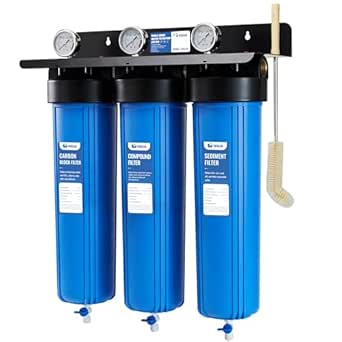 | Best for Whole-Home Filtration | Filter stages: 3 | Filter size: 20 × 5.5 in | Maximum flow rate: 15 gpm | VIEW LATEST PRICE | See Our Full Breakdown |
| DREO Countertop Reverse Osmosis Water Filter with Autofill Pitcher |  | Best for Installation-Free RO | Purification method: Reverse osmosis | Contaminant reduction: Up to 99.9%; includes PFOA, PFOS, chlorine, and fluoride | Testing: Tested by SGS against NSF/ANSI 58 standards | VIEW LATEST PRICE | See Our Full Breakdown |
| Waterdrop G3P600 Tankless Reverse Osmosis Water Filter System with Smart Faucet |  | Best Premium Tankless RO | Filtration stages: 8 | Capacity: 600 GPD | Maximum flow rate: 0.42 gpm | VIEW LATEST PRICE | See Our Full Breakdown |
| APEC Water ROES-50 5-Stage Under Sink Reverse Osmosis System |  | Best Value for Straightforward Under-Sink RO | Filtration stages: 5 | Daily capacity: 50 GPD | Installation: Under sink | VIEW LATEST PRICE | See Our Full Breakdown |
| Purewell 3-Stage Gravity Water Filter System, 2.25-Gallon, Stainless Steel |  | Best for Off-Grid Use | Filtration: 3 stages: hollow-fiber UF membrane, silver-ion membrane, activated carbon block | Filter pore size: 0.01 microns | Capacity: 2.25 gallons | VIEW LATEST PRICE | See Our Full Breakdown |
| Aquasana Rhino Whole House Water Filter System with UV and Salt-Free Scale Control (1 Million Gallons) |  | Best Premium Whole-House Protection | Model: WH-1000-CS-UVS-B | Filtration media: Carbon, copper-zinc KDF, salt-free scale control, and UV | Capacity and filter life: 1,000,000 gallons; stated filter life up to 10 years | VIEW LATEST PRICE | See Our Full Breakdown |
| Bluevua RO100ROPOT-UV Countertop Reverse Osmosis Water Filter System |  | Best Countertop Reverse Osmosis | Filtration: 6-stage reverse osmosis with UV and remineralization | Carafe capacity: 1,700 ml | Flow rate: 0.26 liters per minute | VIEW LATEST PRICE | See Our Full Breakdown |
| Waterdrop Whole House Water Filter System (WD-WHF21-PG) |  | Best Value Whole-House Filter | Model and filtration: WD-WHF21-PG; 2 stages using PP and GAC filters | Maximum flow rate: 15 GPM | Operating pressure: 25–90 PSI | VIEW LATEST PRICE | See Our Full Breakdown |
| Ninja HydraSense Intelligent Water Filtration System, WF1001 |  | Best for Convenient Countertop Dispensing | Model: WF1001 | Filtration method: Specialized ultrafine carbon paper filter | Certifications: NSF/ANSI 42, 53, and 401 | VIEW LATEST PRICE | See Our Full Breakdown |
| Ziwshom 3-Stage Whole House Water Filter System for Well or City Water |  | Best for Whole-House Sediment and Chlorine Filtration | Filtration stages: 3 | Filter types: PP, GAC, CTO | Included cartridges: 9 cartridges (3 sets) | VIEW LATEST PRICE | See Our Full Breakdown |
| Purewell 2.25-Gallon Gravity Water Filter System with Water Level Window |  | Best Gravity Pick for a Visible Water Level | Capacity: 2.25 gallons | Filtration stages: 3 | Filter pore size: 0.01 microns | VIEW LATEST PRICE | See Our Full Breakdown |
| Dry Element Nano Gravity Water Purification System | 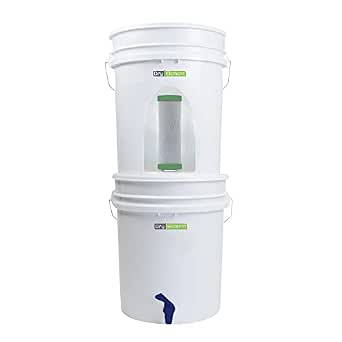 | Best for Emergency and Off-Grid Water Storage | Capacity: Two 5-gallon buckets | Maximum flow rate: 12 gallons per hour, subject to pre-screening and water-source conditions | Purification methods: Activated carbon and nanofiltration | VIEW LATEST PRICE | See Our Full Breakdown |
| home water purification system | Dimensions | Capacity | Filter life |
|---|---|---|---|
| iSpring RCC7AK-BN 6-Stage Alka | 15.5 × 16 × 18 in | — | — |
| HQUA WF3-01 3-Stage Whole Hous | 31 in H × 23 in W × 8 in D | 100,000 gallons | — |
| DREO Countertop Reverse Osmosi | 14.5 × 6.7 × 13.4 in | 3 liters | 6 months |
| Waterdrop G3P600 Tankless Reve | 18.12 in L × 5.67 in W × 17.72 in H | 600 GPD | — |
| APEC Water ROES-50 5-Stage Und | 15.5 in L × 5.25 in W × 17 in H | — | 6–24 months |
| Purewell 3-Stage Gravity Water | — | 2.25 gallons | Up to 3,000 gallons per filter; replace every 6 months for optimum performance |
| Aquasana Rhino Whole House Wat | 46 × 9 × 69 inches | — | — |
| Bluevua RO100ROPOT-UV Countert | — | — | 12 months; claimed range of 12–24 months |
| Waterdrop Whole House Water Fi | — | 50,000 gallons | PP: 3–6 months; GAC: 6 months |
| Ninja HydraSense Intelligent W | 14.37 × 5.07 × 5.07 inches | — | 6 months or 120 gallons |
| Ziwshom 3-Stage Whole House Wa | 14 x 13 x 10 inches | 10,000 gallons | — |
| Purewell 2.25-Gallon Gravity W | — | 2.25 gallons | Up to 3,000 gallons per filter |
| Dry Element Nano Gravity Water | 14 × 14 × 28 inches | Two 5-gallon buckets | — |
More Details on Our Top Picks
iSpring RCC7AK-BN 6-Stage Alkaline Reverse Osmosis Water Filtration System, 75 GPD
I’d choose the iSpring RCC7AK-BN when an under-sink RO system with a remineralization stage is the priority. Its six stages combine reverse osmosis with alkaline treatment, while NSF/ANSI 58 certification applies to the full system. The 75 GPD rating is higher than the APEC ROES-50’s 50 GPD, though both need a storage tank and dedicated under-sink space. Compared with the tankless Waterdrop G3P600, iSpring avoids an electrical connection, but it does not offer that model’s smart faucet or tankless footprint. A transparent first-stage housing makes visible buildup easier to check, and quick-connect fittings plus a top-mounted faucet fastener can simplify installation. The tradeoff is ongoing filter upkeep, with a listed six-month cycle, and a larger setup than a countertop unit.
Pros:- Six-stage treatment includes alkaline remineralization.
- The full system is NSF/ANSI 58 certified.
- Quick-connect fittings and a top-mounted faucet fastener support DIY installation.
- Transparent first-stage housing helps users check visible filter buildup.
Cons:- Requires cabinet space for the system and storage tank.
- Listed filter life is six months, creating recurring replacement and maintenance work.
- The 75 GPD rating is lower than the Waterdrop G3P600’s 600 GPD capacity.
Best for: Households seeking under-sink RO filtration with an alkaline remineralization stage and no electrical connection.
Not ideal for: Renters or people with crowded cabinets who cannot accommodate an under-sink system and storage tank, or buyers who want tankless convenience.
- System type:6-stage reverse osmosis with alkaline remineralization
- Installation:Under sink
- Certification:NSF/ANSI 58
- Daily production capacity:75 GPD
- Power:No power needed
- Operating pressure:70 psi
- Maximum supported TDS:750 ppm
- Dimensions:15.5 × 16 × 18 in
- Included components:RO system, brushed nickel faucet, storage tank, extra tool set
Our verdict“Choose the iSpring if you want certified under-sink RO with alkaline remineralization and can make room for its tank and filter maintenance.”
HQUA WF3-01 3-Stage Whole House Water Filtration System
The HQUA WF3-01 takes a different approach from the under-sink RO picks: it is designed to treat water at a whole-home connection, rather than supply a single dedicated drinking-water faucet. Its three stages are described as reducing heavy metals, chlorine, sediment, and VOCs, while a 15 gpm maximum flow rate is suited to serving multiple household outlets. Built-in pressure gauges and 180-day timers give owners two ways to track maintenance, unlike the simpler cartridge monitoring on the APEC ROES-50. The tradeoff is scale: at 31 inches high and 44 pounds, this unit needs a suitable utility area and sturdy support. It also does not provide the same RO-based purification approach as the iSpring RCC7AK-BN or Waterdrop G3P600, so buyers should match it to their water concerns and installation plan.
Pros:- Designed to reduce heavy metals, chlorine, sediment, and VOCs.
- Built-in pressure gauges and 180-day timers make maintenance tracking more direct.
- 15 gpm maximum flow rate is intended for whole-home use.
- Includes adapters for 3/4-inch or 1-inch NPT connections and bracket or free-standing installation options.
Cons:- The 44-pound unit and 31-inch height require substantial space and sturdy support.
- Cartridges need periodic replacement, typically every 180 days or according to pressure readings.
- Unlike the RO systems in this roundup, it is not specified as a reverse osmosis purifier.
Best for: Homeowners who want a monitored, multi-stage filter at the house water line to treat water across multiple outlets.
Not ideal for: Apartment renters, owners without a suitable utility-space installation point, or buyers specifically seeking reverse osmosis drinking water.
- Filter stages:3
- Filter size:20 × 5.5 in
- Maximum flow rate:15 gpm
- Capacity:100,000 gallons
- Dimensions:31 in H × 23 in W × 8 in D
- Weight:44 lb
- Maximum TDS:500 ppm
- Temperature range:40°F–125°F
- Installation:Whole house or under sink; bracket-mounted or free-standing options
Our verdict“Pick the HQUA if you want whole-home filtration with visible maintenance cues and have the room and plumbing access for its large housing.”
DREO Countertop Reverse Osmosis Water Filter with Autofill Pitcher
For renters or anyone avoiding plumbing work, the DREO DR-KWF002 offers countertop reverse osmosis without an under-sink install. Its included autofill pitcher, touch controls, self-cleaning function, and built-in TDS and filter-life indicators make it more self-contained than the APEC ROES-50 or iSpring RCC7AK-BN, both of which need a faucet and storage tank. DREO reports reduction of up to 99.9% of possible contaminants, including PFOA, PFOS, chlorine, and fluoride, and says the unit was tested by SGS against NSF/ANSI 58 standards. That testing claim is not the same as a listed system certification. The main compromise is capacity: the 3-liter supply can mean frequent refills in a busy household, and filters are listed for six months. Its countertop footprint also takes space that a tankless under-sink model keeps out of sight.
Pros:- Countertop setup requires no plumbing installation.
- Includes an autofill pitcher for serving filtered water.
- TDS meter and filter-life indicator provide at-a-glance status information.
- Self-cleaning feature reduces some routine hands-on upkeep.
Cons:- The 3-liter capacity may require frequent refilling for multiple users.
- Filter replacement is listed every six months.
- Occupies counter space, unlike the under-sink Waterdrop G3P600.
Best for: Renters, small households, and people who want countertop RO without connecting a system to plumbing.
Not ideal for: Large households that need a high-volume supply, buyers who want a certified whole-home system, or kitchens with little counter space.
- Purification method:Reverse osmosis
- Contaminant reduction:Up to 99.9%; includes PFOA, PFOS, chlorine, and fluoride
- Testing:Tested by SGS against NSF/ANSI 58 standards
- Pure-to-drain ratio:3:1
- Maximum supported TDS:1200 ppm
- Capacity:3 liters
- Filter life:6 months
- Dimensions:14.5 × 6.7 × 13.4 in
- Included components:Water filter unit, RO filter, autofill water pitcher
Our verdict“Choose DREO for countertop RO convenience when a modest 3-liter supply is enough and avoiding installation matters most.”
Waterdrop G3P600 Tankless Reverse Osmosis Water Filter System with Smart Faucet
The Waterdrop G3P600 is the strongest fit here for buyers who want high output without a storage tank taking up cabinet room. Its 600 GPD capacity and 0.42 gpm maximum flow rate set it apart from the tank-based iSpring RCC7AK-BN and APEC ROES-50, while the 2:1 pure-to-drain ratio uses less drain water than a less efficient RO setup. The smart faucet displays TDS and filter life, and tool-free filter changes reduce the hassle of routine service. It also carries listed NSF/ANSI 58, NSF/ANSI 372, and NSF 42 certifications. The compromises are practical: the unit needs electricity and 87 psi operating pressure, and its 31-pound body still needs cabinet space despite the tankless design. I’d check the under-sink dimensions and power access before choosing it.
Pros:- 600 GPD capacity and 0.42 gpm maximum flow rate support frequent water use.
- Tankless design saves under-sink space compared with tank-based APEC and iSpring systems.
- 2:1 pure-to-drain ratio limits water sent to the drain.
- Smart faucet tracks TDS and filter life; replacement filters are tool-free.
Cons:- Requires a corded electrical connection and 87 psi operating pressure.
- At 31 pounds and 18.12 inches long, it still needs careful cabinet-space planning.
- A smart faucet and tankless design add features that may be unnecessary for buyers seeking a simpler RO setup.
Best for: Households that use a lot of purified water and want fast tankless RO, filter monitoring, and more open cabinet space.
Not ideal for: Homes without an under-sink outlet or sufficient operating pressure, and buyers seeking a non-electric or countertop purifier.
- Filtration stages:8
- Capacity:600 GPD
- Maximum flow rate:0.42 gpm
- Pure-to-drain ratio:2:1
- Certifications:NSF/ANSI 58, NSF/ANSI 372, NSF 42
- Operating pressure:87 psi
- Maximum TDS:1500 ppm
- Dimensions:18.12 in L × 5.67 in W × 17.72 in H
- Power:Corded electric
Our verdict“Choose the Waterdrop G3P600 if you need high-output, tankless RO and have the power, pressure, and cabinet space it requires.”
APEC Water ROES-50 5-Stage Under Sink Reverse Osmosis System
The APEC ROES-50 is the straightforward under-sink choice for buyers who want reverse osmosis without paying for a smart faucet, tankless design, or extra alkaline stage. Its five-stage system produces up to 50 gallons per day and has listed NSF/ANSI 58 and NSF/ANSI 372 certifications. Color-coded tubing and quick-connect fittings make the installation kit easier to work through than a bare-bones setup, and the package includes a faucet, tank, filters, and hardware. Compared with the iSpring RCC7AK-BN, APEC has fewer stages and no listed alkaline remineralization, but it is also a simpler alternative to maintain and understand. It produces less daily capacity than the iSpring and far less than the Waterdrop G3P600. The 6–24-month filter-life range depends on water quality, so replacement timing is not a single fixed interval.
Pros:- Five-stage RO and carbon filtration with NSF/ANSI 58 and NSF/ANSI 372 certifications.
- Color-coded tubing and quick-connect fittings support DIY installation.
- Kit includes a brushed nickel faucet, storage tank, filters, and installation hardware.
- Accepts input water up to 2000 ppm TDS.
Cons:- 50 GPD capacity is lower than the iSpring RCC7AK-BN and far below the Waterdrop G3P600.
- Requires under-sink space for the system and storage tank.
- Filter life varies from 6 to 24 months depending on water quality, making replacement timing less predictable.
Best for: Homeowners who want a complete, DIY-oriented under-sink RO kit and do not need tankless operation or remineralization.
Not ideal for: Buyers who want high daily output, alkaline remineralization, or a countertop setup that avoids plumbing work.
- Filtration stages:5
- Daily capacity:50 GPD
- Installation:Under sink
- Purification method:Reverse osmosis and activated carbon
- Certifications:NSF/ANSI 372 and NSF/ANSI 58
- Operating pressure:40–85 psi
- Maximum input TDS:2000 ppm
- Filter life:6–24 months
- Dimensions:15.5 in L × 5.25 in W × 17 in H
Our verdict“Pick the APEC ROES-50 for a complete, certified under-sink RO kit when you prefer a simpler setup over higher output or extra stages.”
Purewell 3-Stage Gravity Water Filter System, 2.25-Gallon, Stainless Steel
I’d choose the Purewell 3-Stage when a household wants countertop filtration that can keep working without power or plumbing. Its hollow-fiber membrane, silver-ion membrane, and activated carbon block target sediment, chlorine, organic matter, and some heavy metals, while the 2.25-gallon capacity suits a small household or backup water station. Compared with the Bluevua RO100ROPOT-UV, it is simpler and does not need an outlet, but it does not use reverse osmosis, add remineralization, or reduce TDS. The stainless-steel housing and included stand make it usable indoors or outdoors; the tradeoff is a gravity-fed setup that needs space and careful filling. Avoid topping up the upper chamber when the lower one is full, since that can cause leaking.
Pros:- Works without electricity, making it suitable for outages and outdoor use.
- Three filtration stages combine hollow-fiber UF, silver ion, and activated carbon.
- 304 stainless-steel housing includes a spigot and non-slip stand.
- Includes two filters, each with a stated capacity of up to 3,000 gallons.
Cons:- Does not reduce TDS, unlike the Bluevua reverse-osmosis system.
- Can leak if the upper chamber is filled while the lower chamber is full.
- Gravity filtration requires manual refilling and countertop clearance.
Best for: Campers, renters, and households seeking a power-free countertop filter for treated water or emergency backup.
Not ideal for: Buyers who need lower TDS, reverse-osmosis filtration, or a compact system with no chamber-filling routine.
- Filtration:3 stages: hollow-fiber UF membrane, silver-ion membrane, activated carbon block
- Filter pore size:0.01 microns
- Capacity:2.25 gallons
- Flow rate:Up to 4 gallons per hour
- Filter life:Up to 3,000 gallons per filter; replace every 6 months for optimum performance
- Certifications:NSF/ANSI 42 and NSF/ANSI 372
- Materials and size:304 stainless steel and polypropylene; 8.9 × 8.9 × 20 inches; 8.5 pounds
- Power and installation:Gravity powered; countertop installation; no electricity required
Our verdict“Choose the Purewell if you want a power-free gravity filter for everyday or backup use and do not need TDS reduction.”
Aquasana Rhino Whole House Water Filter System with UV and Salt-Free Scale Control (1 Million Gallons)
The Aquasana Rhino is the broadest household solution in this group: it treats water at the point of entry, pairing carbon and KDF filtration with UV sterilization and salt-free scale control. That makes it a stronger fit for households seeking chlorine reduction and microbial treatment throughout the home than the Waterdrop WD-WHF21-PG, which focuses on sediment, chlorine, lead, and odors without UV. Aquasana also avoids salt refills and backwashing, but its scale control is designed for moderate hardness—under 15 gpg—and it does not soften or demineralize water. The tall installation footprint and powered UV unit add setup constraints that a countertop filter such as the Bluevua RO100ROPOT-UV avoids. I’d choose it for whole-home coverage, not for a simple drinking-water-only upgrade.
Pros:- Combines carbon and KDF filtration with UV treatment for whole-house coverage.
- Salt-free scale control avoids salt bags and does not require backwashing.
- Stated capacity is 1,000,000 gallons or up to 10 years.
- 14.6 GPM flow rate supports simultaneous household water use.
Cons:- Scale control is intended for moderate hardness and specific pH and alkalinity conditions.
- UV sterilization requires electrical power.
- At 69 inches tall, the system needs substantial installation clearance.
Best for: Households of four or more wanting point-of-entry chlorine reduction, UV treatment, and salt-free scale control across multiple taps.
Not ideal for: Homes with hard water above 15 gpg, limited installation space, or no nearby electrical supply for the UV unit.
- Model:WH-1000-CS-UVS-B
- Filtration media:Carbon, copper-zinc KDF, salt-free scale control, and UV
- Capacity and filter life:1,000,000 gallons; stated filter life up to 10 years
- Flow rate:14.6 GPM
- Operating pressure:20–100 psi
- Certifications:NSF/ANSI 42, NSF/ANSI 55 Class B, and NSF/ANSI/CAN 61
- Dimensions:46 × 9 × 69 inches
- Power:Corded electric for UV unit
Our verdict“Choose the Aquasana for broad whole-house treatment when your water conditions, installation space, and electrical access fit its requirements.”
Bluevua RO100ROPOT-UV Countertop Reverse Osmosis Water Filter System
For buyers who want reverse-osmosis water without modifying a sink, the Bluevua RO100ROPOT-UV offers a useful middle ground between an installed RO system and a basic countertop filter. Its six stages include UV treatment and remineralization, and the borosilicate glass carafe avoids storing filtered water in a plastic vessel. Unlike the power-free Purewell 3-Stage, Bluevua reduces TDS through RO, but it needs an outlet and is considerably heavier than a gravity unit. Its 1.7-liter carafe and 0.26-liter-per-minute flow suit drinking and cooking water for a small household better than high-volume whole-home use. The display tracks filter life and TDS, though the system still has a claimed 2:1 pure-to-drain ratio, so some feed water goes to waste.
Pros:- Six-stage RO filtration adds UV treatment and a remineralization filter.
- No plumbing is required, making it practical for rentals and temporary setups.
- Borosilicate glass carafe provides a non-plastic storage option.
- Display provides filter-life and TDS information.
Cons:- Requires corded electrical power.
- At 17.8 pounds, it is less convenient to relocate than the Purewell gravity filter.
- The 1.7-liter carafe and 0.26-liter-per-minute flow are limiting for heavy household demand.
Best for: Renters and small households who want countertop reverse osmosis, a glass carafe, and no plumbing installation.
Not ideal for: Large households needing high-volume dispensing, buyers without an outlet, or anyone seeking a lightweight unit to move often.
- Filtration:6-stage reverse osmosis with UV and remineralization
- Carafe capacity:1,700 ml
- Flow rate:0.26 liters per minute
- Pure-to-drain ratio:2:1
- Filter life:12 months; claimed range of 12–24 months
- Maximum supported water TDS:500 ppm
- Dimensions and weight:10.9 × 15.4 × 14.3 inches; 17.8 pounds
- Power and installation:Corded electric; countertop, no plumbing required
Our verdict“Choose Bluevua if you want countertop RO with UV and remineralization but cannot install an under-sink system.”
Waterdrop Whole House Water Filter System (WD-WHF21-PG)
The Waterdrop WD-WHF21-PG is the more straightforward whole-house pick for municipal water: its PP and coconut-shell GAC stages target sediment, chlorine, lead, and odors while supporting a stated 15 GPM flow rate. Compared with the premium Aquasana Rhino, it skips UV and salt-free scale control, so it offers narrower treatment but takes a less elaborate approach to installation and operation. It needs no electricity, yet it depends on existing water pressure and requires filter changes every three to six months for the PP stage and about every six months for GAC. That maintenance cadence is the main ownership tradeoff. I’d favor it when the goal is improving water throughout the home without adding UV sterilization; well-water users should check suitability because performance can vary.
Pros:- Two-stage PP and GAC filtration targets sediment, chlorine, lead, and odors.
- Stated 15 GPM maximum flow rate is suited to whole-house use.
- Runs without electricity and uses existing plumbing pressure.
- Lead-free housing is tested to NSF/ANSI standards.
Cons:- PP filters need replacement every 3–6 months, with GAC replacement about every 6 months.
- Designed primarily for municipal water; performance may vary with well water.
- Requires at least 25 PSI of operating pressure.
Best for: Homeowners on municipal water who want whole-house sediment and chlorine filtration with a high stated flow rate and no electrical connection.
Not ideal for: Well-water households needing treatment tailored to changing source conditions, or buyers seeking UV treatment and scale control like the Aquasana Rhino.
- Model and filtration:WD-WHF21-PG; 2 stages using PP and GAC filters
- Maximum flow rate:15 GPM
- Operating pressure:25–90 PSI
- Filter life:PP: 3–6 months; GAC: 6 months
- Capacity:50,000 gallons
- Certifications:NSF/ANSI 42, NSF/ANSI 372, and RoHS
- Inlet/outlet:1 inch
- Dimensions and power:14.37 × 7.48 × 15.55 inches; no electricity required
Our verdict“Choose the Waterdrop for practical municipal-water filtration across the home if you can keep up with regular filter changes.”
Ninja HydraSense Intelligent Water Filtration System, WF1001
The Ninja HydraSense WF1001 suits buyers who want a ready-to-dispense countertop reservoir rather than the slower, manual refilling routine of the Purewell 3-Stage. Its 96-ounce capacity, one-touch dispensing, and touchscreen tracking make filtered water convenient for daily drinking, while its carbon-paper filter is stated to target contaminants including microplastics, PFAS, and pharmaceuticals while retaining natural minerals. It is not an RO system like the Bluevua RO100ROPOT-UV, so buyers seeking reverse-osmosis treatment or TDS reduction should look elsewhere. The six-month or 120-gallon filter interval is easy to track, but that capacity can mean more frequent replacement for a busy household. Its countertop footprint and need for an outlet also make it less flexible than a simple gravity system.
Pros:- One-touch dispensing with customizable volume settings simplifies daily use.
- Touchscreen tracks water use and filter life.
- Stated filtration targets over 80 contaminants while retaining natural minerals.
- No plumbing installation is required.
Cons:- Requires an electrical outlet.
- Uses more countertop space than a standard pitcher.
- Filter life is limited to 120 gallons or six months, which may mean frequent replacements in busy homes.
Best for: Households that want convenient, measured countertop dispensing and contaminant reduction without plumbing or reverse osmosis.
Not ideal for: Buyers seeking TDS reduction, a power-free system, minimal counter use, or high-volume filtration beyond the stated 120-gallon filter life.
- Model:WF1001
- Filtration method:Specialized ultrafine carbon paper filter
- Certifications:NSF/ANSI 42, 53, and 401
- Reservoir capacity:96 ounces
- Filter life:6 months or 120 gallons
- Installation and power:Countertop; requires an electrical outlet; no plumbing required
- Dimensions:14.37 × 5.07 × 5.07 inches
- Weight:6.6 pounds
Our verdict“Choose the HydraSense for tracked, one-touch countertop dispensing if convenience matters more than RO filtration or power-free operation.”
Ziwshom 3-Stage Whole House Water Filter System for Well or City Water
The Ziwshom is the lineup’s clearest fit for households that want point-of-entry filtration rather than a dedicated drinking-water purifier. Its PP, GAC, and CTO stages target sediment, chlorine, and odors while preserving minerals, and the stated 15 gpm flow rate suits use across household plumbing. Compared with the HQUA WF3-01, this kit includes three sets of cartridges, so replacements are on hand; its bypass and shut-off valves also simplify servicing. The tradeoff is that it does not reduce TDS, so it is not a substitute for reverse osmosis when dissolved solids are the concern. Installation is listed as under-sink despite the whole-house positioning, so buyers should confirm the intended plumbing layout and available space before choosing it.
Pros:- Three stages target sediment, chlorine, and odors.
- Includes three sets of replacement cartridges.
- Built-in bypass and shut-off valves make filter changes easier.
- Preserves natural minerals rather than lowering TDS.
Cons:- Does not reduce TDS or provide reverse-osmosis filtration.
- Cartridge sets are listed for replacement about every six months.
- Whole-house positioning conflicts with the under-sink installation listing, so buyers should verify fit and application.
Best for: Homeowners on well or city water seeking whole-house sediment, chlorine, and odor reduction while keeping natural minerals.
Not ideal for: Buyers who need TDS reduction or a verified reverse-osmosis drinking-water system, and anyone who cannot confirm that the listed installation setup fits their plumbing.
- Filtration stages:3
- Filter types:PP, GAC, CTO
- Included cartridges:9 cartridges (3 sets)
- Capacity:10,000 gallons
- Cartridge set life:6 months per set
- Plumbing size:3/4 inch
- Dimensions:14 x 13 x 10 inches
- TDS reduction:Does not lower TDS
Our verdict“Choose the Ziwshom for mineral-preserving, whole-house sediment and chlorine filtration, but not for dissolved-solids reduction.”
Purewell 2.25-Gallon Gravity Water Filter System with Water Level Window
The Purewell suits buyers who want countertop filtration without electricity and prefer to see how much water remains without opening the chamber. Its 0.01-micron hollow-fiber membranes work alongside silver ion membranes and activated carbon blocks, giving it a more specified filter design than the Dry Element Nano Gravity system’s listed nanofiltration and carbon approach. The 2.25-gallon capacity and included stand make it a practical indoor setup, while gravity operation also allows use where power is unavailable. The limit is throughput: filtration is listed at up to 4 gallons per hour, far below the Ziwshom’s whole-house flow rate, so this is for drinking water rather than supplying a home’s plumbing. It also does not lower TDS, and the upper chamber can leak if refilled while the lower chamber is full.
Pros:- Water-level window lets users check the lower chamber without opening the system.
- Gravity operation works without electricity.
- Two composite filters combine 0.01-micron hollow-fiber membranes, silver ion membranes, and activated carbon blocks.
- Stainless steel chambers and an included stand suit countertop use.
Cons:- Does not lower TDS.
- Refilling the upper chamber while the lower chamber is full can cause leakage.
- Filter lifespan varies with source-water quality, and the listed replacement interval is every six months.
Best for: Households seeking a countertop, non-electric drinking-water filter with a visible water-level window and stainless steel chambers.
Not ideal for: People who need TDS reduction, high-volume household plumbing filtration, or a system that can be topped up without managing the lower chamber.
- Capacity:2.25 gallons
- Filtration stages:3
- Filter pore size:0.01 microns
- Filter quantity:2
- Filter life:Up to 3,000 gallons per filter
- Maximum flow rate:0.06 gpm
- Power source:Gravity; no electricity required
- Materials:Stainless steel and polypropylene
- TDS reduction:Does not lower TDS
Our verdict“Pick the Purewell for visible, electricity-free countertop filtration, provided you do not need TDS reduction or whole-house flow.”
Dry Element Nano Gravity Water Purification System
The Dry Element Nano Gravity system is the most storage-oriented pick here: its two 5-gallon buckets provide substantially more stated capacity than the Purewell’s 2.25-gallon chamber. Gravity operation needs no power or priming, and the included pre-filtration screen, spigots, and nanofiltration filter make this a portable option for emergency supplies, camping, or locations without dependable electricity. Compared with the Purewell, it favors bulk storage and portability over a finished stainless steel countertop setup with a water-level window. Its tradeoffs are physical: at 28 inches tall, it needs room for both use and storage, and its listed 12-gallon-per-hour flow depends on pre-screening and water-source conditions. The system also does not claim TDS reduction, so buyers seeking dissolved-solids removal should look to reverse-osmosis options in the roundup.
Pros:- Two 5-gallon food-grade buckets provide substantial storage capacity.
- Gravity-fed operation requires no electricity or priming.
- Includes a pre-filtration screen, two spigots, and a nanofiltration filter.
- Portable polypropylene construction suits camping and emergency use.
Cons:- The 28-inch height requires considerable countertop or storage space.
- The listed flow rate depends on pre-screening and source-water conditions.
- Does not provide stated TDS reduction.
Best for: Campers and emergency-preparedness households who want a portable, gravity-fed system with two large storage buckets and no electrical requirement.
Not ideal for: Small kitchens or storage areas, and buyers who need TDS reduction or a compact, polished countertop appliance.
- Capacity:Two 5-gallon buckets
- Maximum flow rate:12 gallons per hour, subject to pre-screening and water-source conditions
- Purification methods:Activated carbon and nanofiltration
- Power source:Gravity
- Maximum supported TDS:1,000 ppm
- Dimensions:14 × 14 × 28 inches
- Weight:8 lb
- Material:Polypropylene
- Set contents:Two buckets, two lids, two spigots, one nanofiltration filter, pre-filtration screen, water-storage solution, and instructions
Our verdict“Choose the Dry Element for large-capacity, power-free emergency or camping filtration if you have room for its tall bucket setup.”
How We Picked
I compared the 13 systems by the job they are designed to do, separating drinking-water filtration from whole-house treatment rather than treating those categories as interchangeable. Within each group, I considered the stated filtration approach, capacity and flow format, installation demands, everyday usability, maintenance needs, and how clearly the design fits a household’s likely water concerns. I also looked at practical differences such as tank versus tankless operation, countertop versus under-sink placement, and gravity-fed batch use.
The ranking favors systems with a clear use case and a useful balance of treatment, convenience, and upkeep—not the longest feature list. The iSpring takes the overall spot for its multi-stage under-sink format and remineralization; the Waterdrop G3P600 ranks highly for a space-saving tankless setup, while the Aquasana Rhino earns a distinct whole-house role. I ranked gravity and countertop models for the buyers they serve, not as substitutes for a home’s main water-treatment system. No system can be judged suitable for every source water, so buyers should match claims to a water test and the manufacturer’s certified performance information.
Factors to Consider When Choosing Best Home Water Purification Systems
Before choosing among these systems, I would start with the water problem and where it occurs—not the number of filtration stages. The same household may need one approach for drinking water and another for sediment, taste, or scale throughout the home. These factors can prevent a mismatch between a system’s design and your actual needs.
Start With a Water Test, Not a Feature List
Test your water source before deciding which contaminants or treatment methods matter. Municipal water reports can provide a useful starting point, but a home test may reveal issues from plumbing or a private well that a city report cannot capture. Match any system claims to the specific substances identified and check whether performance has been independently certified for those claims. A long list of stages does not prove that a unit removes the contaminant you care about. Avoid buying a broad system on the assumption that every filter treats every problem. If your source changes seasonally, ask a qualified lab or water professional how often to retest.
Choose Between One-Tap and Whole-House Treatment
A point-of-use system treats water at a single faucet or serving point, which can make sense when drinking and cooking water are the main concern. A whole-house system treats incoming water for multiple taps and appliances, but it can involve more demanding installation and ongoing filter expenses. Do not assume whole-house treatment is automatically better: it may be unnecessary if the issue is limited to drinking water. Conversely, an under-sink RO unit will not address water used for showers or laundry. Consider how many people use the water and whether the concern affects one tap or the entire home. If you need both kinds of treatment, plan for two compatible systems rather than expecting one unit to cover every use.
Check Flow, Storage, and Daily Demand
Look beyond headline capacity and ask how much treated water is available when your household needs it. Under-sink tank systems store treated water, tankless units produce it on demand, and gravity models filter a batch that must be replenished manually. A small household may find batch filling manageable, while frequent cooking, bottle filling, or several users can make storage and refill habits more important. Whole-house buyers should compare rated flow with the home’s peak simultaneous use, such as a shower running while laundry is on. Ratings can depend on incoming pressure and water conditions, so read the product documentation rather than assuming a quoted figure will match your home. Keep a buffer for busy periods instead of sizing a system exactly to average use.
Plan for Installation and Space Before Ordering
Measure the intended location and identify nearby plumbing, power, drain access, and faucet space before selecting a model. Under-sink RO systems can require room for components and a drain connection, while tankless systems may reduce storage footprint but still need compatible hookups. Countertop units avoid permanent plumbing changes, but they take up workspace and require access to a water source or manual filling. Whole-house filters often need a suitable place on the main line and may require plumbing work; rental homes can limit that option. Check whether the package includes the fittings and faucet you need, and whether the manufacturer calls for professional installation. A system that fits the water-treatment goal but not the home’s layout is likely to become an expensive inconvenience.
Compare Maintenance, Filter Supply, and Ownership Effort
Filter replacement is part of the system’s real workload, so check replacement intervals, component count, and how the correct cartridges are sourced. A multi-stage design can address several treatment steps, but it may also mean tracking more parts. Gravity units may need periodic cleaning and media replacement, while whole-house systems can involve larger cartridges or service tasks that are less convenient to handle. Ask how the system signals or estimates filter life and whether that guidance changes with water quality or usage. Avoid comparing products by initial setup alone; include replacement availability and the time needed to maintain them. If you prefer minimal hands-on care, prioritize straightforward cartridge access and clear maintenance instructions.
Read Certification Claims and Treatment Limits Carefully
Look for independent certification that names the specific contaminant reduction claim, not merely a general statement that a system is tested. Certification applies to defined conditions and does not mean a filter removes every possible substance. Reverse osmosis, carbon filtration, UV treatment, and scale-control media serve different purposes, so a feature should not be treated as a substitute for another treatment method. For example, scale control is not the same as softening, and UV treatment does not remove sediment or dissolved substances by itself. Check whether the manufacturer specifies pretreatment needs, water pressure limits, or restrictions for well water. When a health concern is involved, confirm suitability with a qualified water professional and follow the system’s service schedule.
Frequently Asked Questions
Should I choose a whole-house system or an under-sink reverse osmosis system?
Choose based on where the water issue occurs. A whole-house system treats water entering the home and can address concerns affecting multiple taps, while an under-sink RO unit focuses on drinking and cooking water at one location. The products in this roundup are not interchangeable: the Aquasana Rhino, HQUA, Waterdrop WD-WHF21-PG, and Ziwshom are whole-house options, while the iSpring and APEC are under-sink RO systems. Review a water test and the system’s specific performance claims before deciding. Some homes may need both approaches for different concerns.
Can I install a water purification system in a rental home?
Countertop and gravity-fed systems are usually the easiest formats to consider when permanent plumbing changes are restricted, though each model’s setup requirements still matter. Under-sink systems may require drilling, a dedicated faucet, a drain connection, or changes that need landlord approval. Whole-house systems typically involve work on the incoming water line, making them harder to use in a rental. Check your lease and ask the property owner before modifying plumbing or fixtures. If you move often, favor a unit that can be disconnected and transported without specialized work.
Is reverse osmosis the right choice if my water tastes bad?
Not automatically. Unpleasant taste can come from different causes, and a water test or municipal report can help identify whether reverse osmosis, carbon filtration, or another treatment is relevant. RO systems in this roundup include under-sink models such as the iSpring and APEC, plus countertop options such as the DREO and Bluevua, but their formats and installation needs differ. Check the manufacturer’s documented reduction claims for the substance linked to the taste rather than relying on the term “purification.” If taste changes suddenly or the water has an unusual odor, investigate the source before masking it with a filter.
Do gravity-fed water filters work for a whole household?
Gravity-fed systems can supply filtered drinking water in batches, but they are not designed to treat water flowing to every faucet in a typical home. The Purewell models and Dry Element Nano can suit buyers who want a plumbing-free option or need a portable supply, subject to their capacity and maintenance requirements. A household with high daily demand may find repeated filling inconvenient. They also do not replace a whole-house system when the goal is treating water for bathing, laundry, or appliances. Compare the unit’s stated capacity and treatment claims with your actual use before relying on it as your main source.
How do I know whether a system is suitable for well water?
Start with a laboratory test, since private well water can vary by location and may contain issues that require targeted treatment. Some products in this roundup are presented for well or city water, but that wording alone does not confirm suitability for every well. Compare the test results with the system’s documented contaminant reductions, operating limits, and pretreatment requirements. Sediment, microbial concerns, and dissolved substances may call for different stages or a separate treatment method. Re-test as recommended for your well and maintain the system on schedule, since untreated changes in source water can affect performance.
Conclusion
For the broadest fit among drinking-water options, I recommend the iSpring RCC7AK-BN as best overall, particularly for buyers who want under-sink RO with remineralization. The APEC ROES-50 is my best-value-style pick for shoppers who prefer a more straightforward under-sink RO setup, while the Waterdrop G3P600 is the premium convenience choice for those who want a tankless design and smart faucet. Beginners who want to avoid plumbing can start with a DREO or Bluevua countertop RO unit; buyers who prefer gravity-fed simplicity can compare the two Purewell models and Dry Element Nano. For whole-home coverage, choose the Aquasana Rhino when its UV and scale-control approach fits your test results, or compare the HQUA, Waterdrop WD-WHF21-PG, and Ziwshom based on their stated filtration and installation requirements. Match the final choice to a water test, household demand, and the maintenance you are willing to handle.