
TL;DR

Get kitchen gear delivered free with Prime
- Fast, free delivery on millions of items
- Prime Video, Amazon Music and more included
- Member-only deals all year
Mason jars come in various sizes and lid types, each suited for different uses. Proper sealing is key to safe, long-lasting preservation. Reusable lids and correct techniques boost durability and safety.
Ever opened a jar of preserved food, only to find it’s not sealed tight? That moment of doubt can be nerve-wracking, especially when you’ve invested time in your harvest or batch. Mason jars seem simple, but choosing the right size, lid, and sealing method makes all the difference in food safety and longevity.
In this guide, you’ll learn how to pick the perfect jar size for your needs, understand the differences between lid types, and master sealing techniques that keep your food fresh and safe. Whether you’re a seasoned preserver or just starting out, these practical tips will help you get the most from your mason jars.
Choose jar sizes based on your batch size and storage needs to avoid waste and spoilage.
Always match lid types to your jar and purpose—metal for canning, silicone or plastic for storage.
Proper sealing relies on sterilization, correct processing, and vacuum checking—don’t skip these steps.
Reusing lids is fine for storage, but for canning, always start with new, approved lids.
Stay updated with new lid materials and designs that improve durability, reusability, and eco-friendliness.
Why Picking the Right Mason Jar Size Matters for Your Kitchen
Choosing the correct jar size isn’t just about capacity; it directly impacts your food preservation efficiency and quality. Smaller jars, like quarter pints, are ideal for testing recipes or storing small quantities, which minimizes waste and spoilage. Larger jars, such as quarts or half gallons, are better suited for bulk storage or fermentation, where larger quantities are processed at once. Selecting the right size ensures you’re not left with excess space that can lead to spoilage or compromise the seal, or conversely, a jar that’s too small for your intended batch, forcing multiple processing steps.
For example, if you make small batches of jams or spice mixes, smaller jars prevent overproduction and make portioning easier. Conversely, when fermenting vegetables like sauerkraut or kimchi, larger jars reduce the number of processing cycles needed, decreasing the risk of contamination during handling, and ensuring a consistent environment for fermentation. Therefore, understanding the implications of jar size helps optimize your preservation process, reduces waste, and enhances safety by preventing overfilling or underfilling, which can compromise seals or lead to spoilage.
Common sizes:
- Quarter Pint (4 oz): Small preserves, spices, samples
- Half Pint (8 oz): Jams, jellies, small batches
- Pint (16 oz): Sauces, pickles, beverages
- Quart (32 oz): Bulk preserves, large pickles, fermenting
- Half Gallon (64 oz): Bulk storage, fermenting
As an affiliate, we earn on qualifying purchases.
Lid Types and Which One Fits Your Needs
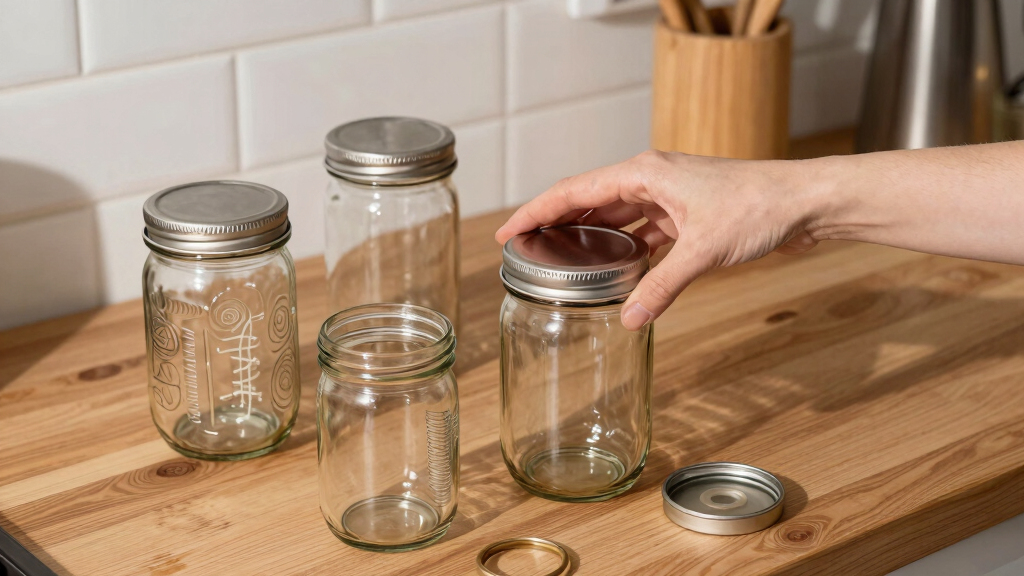
Not all mason jar lids are created equal, and understanding the nuances can significantly impact your preservation success. The most common are two-piece lids: a flat metal lid with a rubber gasket that, when combined with a screw band, creates a vacuum seal during processing. This design is favored in canning because it allows for the creation of a reliable, airtight seal that prevents microbial contamination. The rubber gasket’s compression ensures a tight fit, but over time, the gasket can degrade, which is why replacing lids after each canning session is recommended. Reusing metal lids for storage, however, is generally acceptable, provided the gasket remains intact and the lid is not warped or damaged.
One-piece lids, often made of BPA-free plastic or silicone, are primarily designed for storage rather than processing. They offer convenience with easy on-and-off access but lack the vacuum sealing capability needed for canning. Reusable silicone lids have gained popularity because they provide a tight, reusable seal that reduces waste and is safe for everyday use. Their flexibility allows for a snug fit on various jar sizes, making them versatile for fridge storage or short-term preservation.
Tradeoffs and considerations: When choosing lids, consider the purpose: metal two-piece lids are essential for safe canning due to their ability to form a vacuum, but they are single-use for sealing. Plastic or silicone lids are excellent for daily storage or short-term use but don’t provide the same long-term vacuum seal. Additionally, reusable silicone lids can be a sustainable choice, but they may not withstand high-temperature processing, limiting their use in canning. Matching the lid type to the intended purpose ensures safety, efficiency, and environmental responsibility.
Tip: Always match your lid type to your jar and use case. For canning, opt for new, USDA-approved metal lids. For storage, consider silicone or plastic lids that are durable and reusable, reducing waste and cost over time.
Specialty lids—like flip-top or pour spouts—are designed for convenience, such as pouring liquids or drinking from the jar, but they are not suitable for preservation purposes, as they often lack the necessary sealing features to prevent spoilage during storage.
As an affiliate, we earn on qualifying purchases.
How to Seal Mason Jars Properly for Food Safety
Proper sealing is the backbone of safe food preservation. It’s not enough to just screw on the lid; you need a vacuum seal that’s tight and reliable. The process begins with sterilizing jars and lids—boiling water or a dishwasher cycle works well. Sterilization ensures that no microorganisms are present on the surface, reducing the risk of spoilage or contamination.
When processing, center the lid on the jar, screw the band on finger-tight to avoid pinching the seal, and process according to your food type—water bath for high-acid foods, pressure canning for low-acid foods. This step is crucial because it applies heat and pressure, forcing air out of the jar and creating a vacuum as it cools. The temperature and processing time are calibrated to destroy pathogens and enzymes that cause spoilage, but improper processing can compromise the seal and safety.
Once cooled, check the seal by pressing the center of the lid—if it stays down and doesn’t pop back up, you’ve achieved a proper vacuum. A concave lid is another sign of a good seal, indicating that the air has been effectively removed. If the lid flexes or pops when pressed, it means the seal is compromised, and the jar should be refrigerated or reprocessed.
Common pitfalls: Rushing the process, reusing old lids, or not sterilizing thoroughly can lead to weak seals. Improper temperature control or overfilling jars can also cause seal failures. Regularly inspecting seals and practicing proper techniques ensures safety and prolongs shelf life.
Pro tip: Store jars in a cool, dark place, as heat and light can weaken seals over time, leading to spoilage even if the jar was initially sealed correctly.
As an affiliate, we earn on qualifying purchases.
Frequently Asked Questions
Can I reuse the metal lids for canning multiple times?
Generally, metal lids with a sealing compound are designed for single use in canning. Reusing them can risk a compromised seal, so it’s best to use new lids each time you process food to ensure safety.How do I tell if my jar is sealed properly after processing?
After cooling, press the center of the lid—if it stays down and doesn’t pop back up, it’s sealed. You’ll also notice a concave shape, indicating a vacuum. If unsure, test again or reseal.Can I store non-food items in mason jars?
Yes, mason jars are versatile storage containers for craft supplies, coins, or small tools. Just ensure the lids are appropriate for non-food use, especially if you plan to reuse them frequently.What’s the best way to prevent jars from cracking during processing?
Use jars free of cracks or chips, and avoid sudden temperature changes—like pouring boiling liquid into a cold jar. Also, process at recommended temperatures and handle jars gently.As an affiliate, we earn on qualifying purchases.
Conclusion
Getting Mason jar sealing right isn’t just about preserving food—it’s about protecting your effort and investment. A good seal keeps bacteria and mold out, ensuring your harvest stays safe and tasty for months.
Remember, the key is matching the jar and lid to your purpose and following proper sealing steps. With a little care, your jars become reliable vaults of flavor and nutrition—ready for off-grid adventures or cozy pantry shelves.
Columbus Day / Indigenous Peoples' Day Picks
long weekend sales
As an affiliate, we earn on qualifying purchases.