
TL;DR

Get kitchen gear delivered free with Prime
- Fast, free delivery on millions of items
- Prime Video, Amazon Music and more included
- Member-only deals all year
A Good Housekeeping report outlines a hand-washing routine for wooden cutting boards and warns that dishwasher heat, prolonged water exposure and detergent can damage them. After raw meat, the report recommends washing the board, sanitizing it with a food-contact-safe product or a diluted bleach solution, rinsing and drying it fully.
A Good Housekeeping report says wooden cutting boards should generally be hand-washed with warm water and dish soap, not put through a dishwasher. The outlet’s Home Care & Cleaning Lab analyst Noah Pinsonnault says extended exposure to water, high heat and dishwasher detergent can cause wood to swell, warp or crack, and can weaken glue joints in boards assembled from multiple pieces.
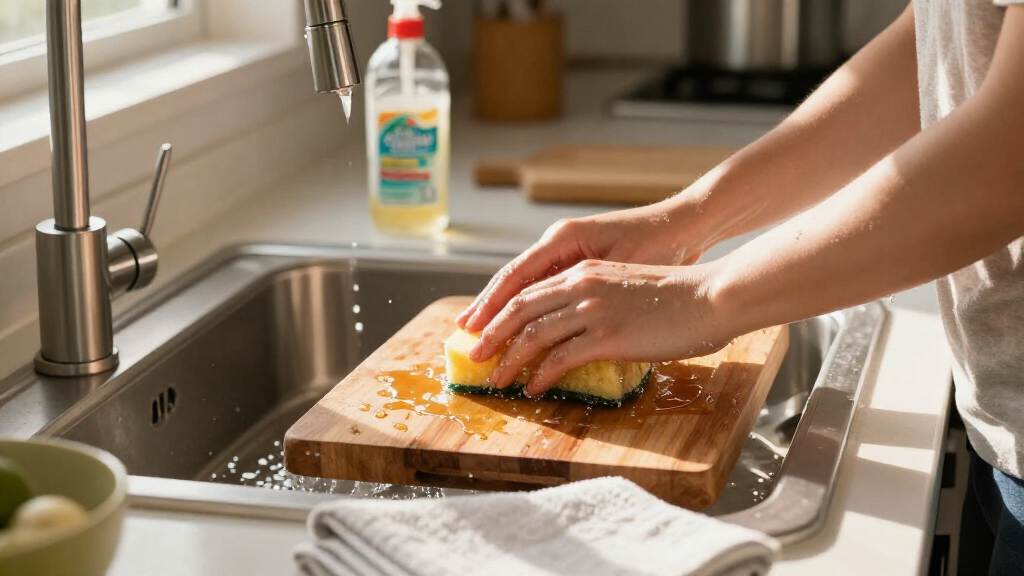
Pinsonnault’s recommended routine is brief: wash the board with warm water and dish soap, using a sponge or brush, and do not leave it soaking. After washing, dry it promptly. The report recommends standing the board upright so air can reach both sides as it dries.
The warning covers edge-grain and end-grain wooden boards, as well as bamboo boards, according to the report. Some wood-fiber composite boards are different: Pinsonnault says certain products are designed to be dishwasher-safe. Owners should check the manufacturer’s care instructions rather than assume every composite or wood-based board can go in a dishwasher.
For a board used to cut raw meat, the report advises washing it thoroughly and then sanitizing it with a food-contact-safe sanitizer, following the product label. It also cites USDA guidance for a homemade solution: mix one tablespoon of unscented liquid chlorine bleach per gallon of water. Rinse the board thoroughly after sanitizing and let it dry completely.
Keeping Boards Usable and Food-Safe
The advice addresses two everyday concerns: preserving a wooden board and cleaning it appropriately after it contacts raw meat. Dishwashers are designed to expose dishes to hot water and detergent for an extended cycle; Pinsonnault says that combination can damage wood and, in glued boards, the joints holding pieces together. Hand-washing limits that exposure.
Sanitizing after raw meat is a separate step from ordinary washing in the report’s guidance. Following the sanitizer’s directions, using the stated bleach dilution if choosing that method, rinsing thoroughly and letting the board dry completely gives readers a defined routine without treating a quick rinse as sufficient care.
Products Worth Considering

Instant Pot InstantChill Ice Cream Maker with Rolled Ice Cream, No Pre-Freezing, 2-Pint

KitchenAid Artisan 5-Quart Tilt-Head Stand Mixer, Almond Cream

KitchenAid 5.5-Qt Bowl-Lift Stand Mixer, Porcelain White (KSM55SXXX)
As an affiliate, we earn on qualifying purchases.
Why Dishwasher Cycles Can Harm Wood
The report’s explanation centers on how wood responds to water and heat. Prolonged moisture can make wood swell; as it changes shape, a board may warp or crack. High temperatures and dishwasher detergent add to the stress, Pinsonnault says. Boards made of several glued pieces may also have vulnerable joints that can weaken over repeated cycles.
The distinction is not simply between wooden boards of different grain patterns: the report says the dishwasher warning applies to both edge-grain and end-grain boards. Bamboo is included in its caution as well. By contrast, some wood-fiber composite products are manufactured for dishwasher use, so their care instructions may differ from those for solid wood.
“Mix one tablespoon of unscented liquid chlorine bleach per gallon of water.”
— U.S. Department of Agriculture guidance, as cited by Good Housekeeping
Care Depends on Board Materials
The report does not identify every board or product that can safely go in a dishwasher. Its exception applies to some wood-fiber composite boards, not automatically to all boards marketed as bamboo, wood-based or composite. The specific product’s manufacturer instructions remain the guide.
The source also does not provide comparative test results, a recommended washing temperature beyond “warm water,” or a drying time. It describes the risks and routine attributed to Pinsonnault but does not quantify how many dishwasher cycles might cause damage. Readers should not interpret the warning as a precise prediction of when a particular board will fail.
Check Labels Before Washing
For routine care, the report’s next step for readers is practical: hand-wash solid wooden and bamboo boards, avoid soaking them, and dry them upright. After raw meat, wash first and then use a food-contact-safe sanitizer according to its instructions, or follow the cited bleach dilution; rinse and dry the board fully.
Before putting any wood-fiber composite board in a dishwasher, check its care label or manufacturer guidance. The source does not announce a new rule or future policy change; it offers household-care recommendations. No additional tests or updates are specified.
Key Questions
Can I wash a wooden cutting board in the dishwasher?
The Good Housekeeping report advises against it for ordinary wooden boards. Analyst Noah Pinsonnault says prolonged water exposure, high temperatures and detergent can cause swelling, warping or cracks, and may weaken glue joints.
What is the recommended way to wash a wooden board?
Wash it by hand with warm water and dish soap, using a sponge or brush. Do not soak it; dry it promptly, preferably standing upright so air can circulate around both sides.
How should I sanitize the board after cutting raw meat?
Wash it thoroughly, then use a food-contact-safe sanitizer according to its directions. The report also cites USDA guidance for one tablespoon of unscented liquid chlorine bleach per gallon of water. Rinse thoroughly and let the board dry completely.
Are any wood-based cutting boards dishwasher-safe?
Some wood-fiber composite boards are designed to be dishwasher-safe, according to Pinsonnault. Check the specific manufacturer’s care instructions; the exception does not apply to every wooden, bamboo or composite board.
Source: goodhousekeeping.com