
TL;DR

Get kitchen gear delivered free — and shop member deals
- Fast, free delivery on millions of items
- Access to Prime Big Deal Days deals on October 6–7
- Prime Video, Amazon Music and more included
Cast iron mistakes like improper seasoning, cleaning with soap, and cooking acidic foods can damage your skillet. This guide shows how to avoid these pitfalls to keep your pan rust-free, non-stick, and long-lasting.
If you’ve ever cooked in cast iron, you know it’s a tough, reliable workhorse. But even seasoned veterans make mistakes. A little misstep can lead to rust, sticking, or even warping. Knowing common pitfalls helps you avoid costly repairs and keeps your skillet performing at its best.
This guide breaks down the typical mistakes, with real-world examples and simple tips. Whether you’re just starting or have years of experience, you’ll find practical ways to care for your cast iron so it lasts for generations.
Build up a thin, even layer of seasoning on your cast iron and bake it regularly at high heat.
Always dry your skillet immediately after washing to prevent rust formation.
Use gentle, non-metal utensils to protect your seasoning layer.
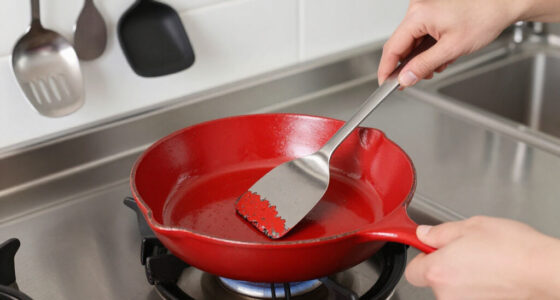
Limit cooking acidic foods in traditional cast iron, or opt for enameled versions.
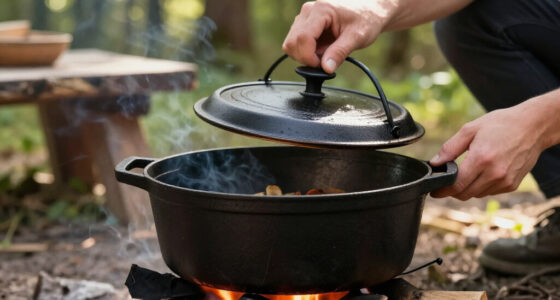
Preheat your cast iron slowly—avoid sudden temperature changes that can cause warping.
Why Your Seasoning Might Be Failing and How to Fix It
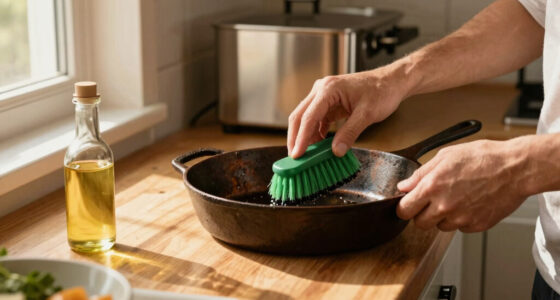
Poor seasoning is the most common reason cast iron sticks or rusts. If your pan’s surface looks dull or flaky, it’s a sign your seasoning needs attention. The trick is to build up a thin, even layer of polymerized oil that bonds to the metal.
Start by cleaning your skillet thoroughly—scrape off any rust or food residues. Then, apply a thin coat of high-smoke-point oil like flaxseed or vegetable oil. Bake it at 450°F (232°C) for an hour, then let it cool. Repeat regularly, especially after each deep cleaning.
As an affiliate, we earn on qualifying purchases.
The Day-to-Day Mistake That Leads to Rust and Food Sticking
Not drying your cast iron properly is a subtle but critical mistake that can cause significant damage over time. When moisture remains on the surface, it reacts with the iron, leading to rust, which can eat away at your skillet’s surface and compromise its non-stick properties. Additionally, residual water can cause sticking issues during cooking, as the seasoning layer is weakened or disrupted by rust formation.
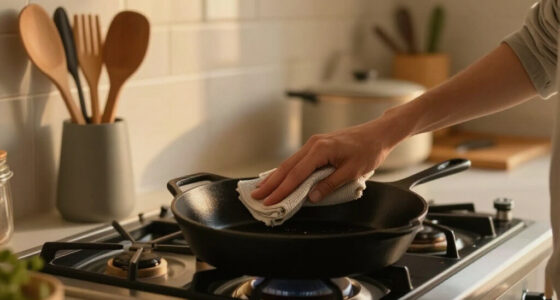
By immediately drying your skillet after washing—using a towel or heat—you’re actively preventing these issues. Warming it briefly on the stove ensures all moisture evaporates, creating a dry, sealed surface that maintains the integrity of your seasoned layer. Skipping this step might seem insignificant, but over time, it can lead to pitted surfaces, flaky seasoning, and the need for reconditioning, which can be time-consuming and costly.
This simple habit of thorough drying and warming is a small investment of time that preserves the skillet’s lifespan and keeps your cooking consistent and safe.
As an affiliate, we earn on qualifying purchases.
Cooking Acidic Foods Without Ruining Your Pan
Cooking highly acidic foods like tomatoes or vinegar-based sauces in cast iron for too long can strip the seasoning and damage the pan’s surface. This process not only reduces the non-stick properties but can also cause metallic flavors to leach into your food, altering taste and potentially causing health concerns over time. The acidity reacts with the iron, breaking down the seasoned layer and creating rust-prone spots, especially if the pan isn’t properly maintained afterward.
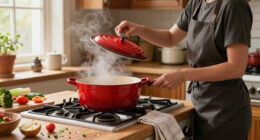
For enthusiasts who love tomato-based dishes or vinegar-heavy recipes, enameled cast iron is a safer choice because its glazed surface resists acid damage. If you prefer traditional cast iron, limit the cooking time of acidic ingredients. For instance, sauté onions first, then add tomatoes in the last 10-15 minutes, which minimizes the contact time with the seasoning. This approach preserves the seasoning’s integrity, maintains a non-stick surface, and prevents metallic flavors from seeping into your dish.
Understanding this tradeoff helps you decide when to switch cooking vessels or adapt your recipes, ultimately extending the life of your cast iron and ensuring optimal flavor.
As an affiliate, we earn on qualifying purchases.
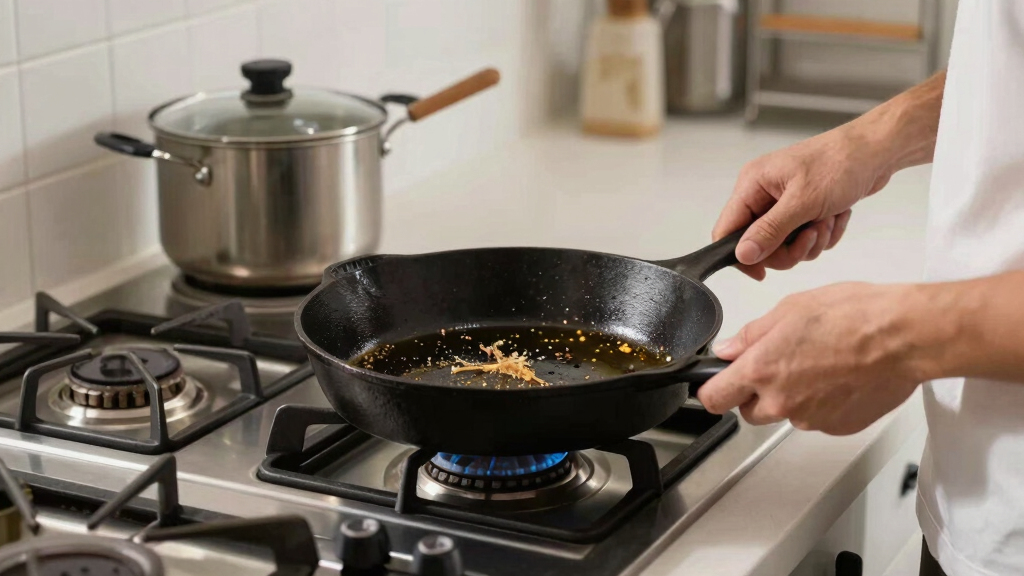
Heating Your Cast Iron the Wrong Way and How to Do It Right
Heating cast iron too quickly or unevenly can cause warping, cracking, or even structural damage. When you place a cold skillet on a hot burner, thermal shock occurs because the sudden temperature change stresses the metal, leading to warping or, in extreme cases, cracking. This not only affects the appearance but can compromise the pan’s cooking performance and durability.
Instead, warming your skillet gradually over medium heat allows the metal to expand evenly, reducing stress. This gentle ramp-up in temperature helps maintain the integrity of the cast iron, preventing hot spots that can burn food or cause warping. When the pan is warm and slightly shimmering, it’s ready for oil or ingredients. This method ensures even heat distribution, better searing, and longer lifespan for your skillet. Ignoring proper heating can lead to costly repairs or replacement, so taking the time to preheat correctly is a small but impactful practice.
In essence, patience during preheating preserves the structural and functional quality of your cast iron, ensuring consistent cooking results and longevity.
As an affiliate, we earn on qualifying purchases.
The Simple Step That Protects Your Cast Iron from Rust and Damage
Drying your cast iron thoroughly is often overlooked but is vital. Moisture left on the surface leads to rust, especially if the pan sits unused for a while. When water remains on the surface, it reacts with the iron, forming rust patches that weaken the skillet’s structure and compromise the seasoning. Over time, this can lead to pitted surfaces, flaky seasoning, and increased susceptibility to further corrosion.
Wiping down with a towel immediately after washing, then warming the pan on the stove or in the oven to evaporate residual water, creates a dry, sealed surface that prevents rust from forming. This process is especially important in humid environments or if the pan is stored in a damp area. Skipping this step might seem minor, but it significantly extends the lifespan of your skillet, reducing the need for re-seasoning or rust removal. Think of it as a protective barrier—keeping your cast iron in top condition with minimal effort.
In essence, proper drying and warming are the simplest, most effective ways to safeguard your investment in cast iron cookware.
Why Metal Utensils Damage Your Seasoning and What to Use Instead
Metal utensils can scratch and strip your seasoning layer, which is essentially a polymerized oil film that gives your cast iron its non-stick qualities. When you use sharp or hard metal tools, they can gouge or scrape away this delicate layer, exposing raw iron underneath. This not only diminishes the non-stick surface but also creates tiny nicks and scratches that trap food and moisture, accelerating rust formation and making future cleaning more difficult.
Choosing gentle utensils like wooden spatulas, silicone, or heat-resistant plastic tools helps preserve the seasoning. These materials are softer and less likely to cause damage, allowing the seasoning to build up and improve over time. For example, flipping burgers with a wooden spatula prevents scratches, maintaining a smooth, non-stick surface that improves with use. This tradeoff between durability and gentleness is crucial for long-term maintenance, as the right utensils directly influence the lifespan and performance of your skillet.
Investing in quality, appropriate utensils ensures your cast iron remains in optimal condition, avoiding the costly process of re-seasoning or repairing damaged surfaces.
Rust Happens—Here’s How to Fix It Fast and Keep Your Pan in Top Shape
Rust is a clear sign that your cast iron needs immediate attention. It indicates that the protective seasoning layer has been compromised, exposing raw iron to oxygen and moisture, which accelerates deterioration. If left untreated, rust can deepen and cause pitting, weakening the overall structure and making the pan more prone to cracks or warping. Addressing rust promptly by scrubbing with steel wool or abrasive pads removes the corrosion, but it also strips away the seasoning layer. To restore the pan’s protective coating, re-season it thoroughly afterward—applying a thin layer of oil and baking it at high heat. Regular maintenance, including timely rust removal, prevents recurring issues and extends the life of your skillet significantly.
Think of rust as a warning sign—ignoring it can lead to irreversible damage. Acting quickly not only preserves the pan’s functional surface but also saves you from more extensive repairs or replacements down the line. Proper care, including rust removal and re-seasoning, keeps your cast iron in top condition, ready for years of use.
Comparing Enameled vs. Traditional Cast Iron—Which Is Better for You?
| Feature | Enameled Cast Iron | Traditional Cast Iron |
|---|---|---|
| Ease of cleaning | Very easy, just soap and water | Requires more care, avoid soap |
| Cooking acidic foods | Perfectly safe | Can cause seasoning damage |
| Durability | Very durable, but prone to chipping | Lasts forever with care |
| Cost | Typically more expensive | More affordable |
If you want low maintenance and versatile cooking, enameled cast iron is great. But if you prefer a skillet that ages beautifully and can last for generations, traditional cast iron wins.
Frequently Asked Questions
How do I properly season my cast iron skillet?
Start with a clean, dry skillet. Apply a thin layer of high-smoke-point oil (like flaxseed or vegetable oil). Bake at 450°F (232°C) for an hour, then let it cool. Repeat the process a few times for a strong, non-stick surface.
Can I cook all types of food in cast iron?
Most foods are fine, but avoid cooking long, acidic dishes on traditional cast iron—these can damage the seasoning. For those, enameled cast iron is a better choice.
How do I remove rust from my cast iron pan?
Scrub rust spots with steel wool or an abrasive scrubber until smooth. Rinse, dry thoroughly, then re-season with oil and bake. Regular maintenance prevents rust from returning.
Is it safe to cook acidic foods in cast iron?
Yes, but only in enameled cast iron or for short periods in traditional pans. Long cooking with acids can strip seasoning and impart a metallic taste.
How often should I re-season my cast iron?
If the surface looks dull, sticky, or rusty, it’s time to re-season. Regular use actually improves the seasoning over time—about every few months with heavy use.
Conclusion
Your cast iron skillet is a workhorse, not a magic bullet. Treat it with care—season wisely, dry thoroughly, and cook smartly—and it will serve you for decades.
Think of it as a relationship—respect it, nurture it, and it’ll reward you with perfect sears and years of service. Every time you use your skillet, you’re building a piece of kitchen history. Keep it in good shape, and it will keep you cooking for a lifetime.
Halloween Picks
halloween
As an affiliate, we earn on qualifying purchases.