
TL;DR

Get kitchen gear delivered free — and shop member deals
- Fast, free delivery on millions of items
- Access to Prime Big Deal Days deals on October 6–7
- Prime Video, Amazon Music and more included
Descaling your stovetop espresso maker removes calcium and lime deposits, restoring flavor and flow. Use vinegar or descaling products every 1-3 months to keep your device in top shape.
Descaling every 1-3 months prevents mineral buildup and preserves flavor.
Vinegar is a cheap, effective descaler but must be rinsed thoroughly to avoid residual taste.
Regular cleaning of removable parts helps maintain water flow and prevents crust formation.
Using filtered water significantly reduces the frequency of descaling needed.
Watch for signs like slow brewing or white deposits—these mean it’s time to descale.
Bring Your Moka Pot Back to a Bold, Clean Flow
Descaling dissolves calcium and lime deposits that slow brewing, flatten flavor, and strain the tiny water channels inside a stovetop espresso maker. Use diluted vinegar, citric acid, or a compatible descaler every 1-3 months to keep each brew rich, bright, and steady.
Slow brew, bitter taste, or white crust means it is time to descale.
Scale acts like plaque in the brew path.
Calcium and lime from hard water collect inside the lower chamber, filter plate, funnel, and narrow channels. That layer blocks pressure, slows extraction, and can turn a rich cup into a weak, sour, or bitter one.
Cleaner extraction
Removing mineral buildup helps hot water move evenly through the coffee bed, restoring strength and reducing flat or metallic notes.
Faster flow
Clear channels reduce sputtering, slow brewing, and uneven pressure that can make the maker feel like it is struggling.
Less corrosion risk
Routine descaling prevents thick crust from trapping moisture, stressing seals, or contributing to leaks over time.
Run the solution, pause, rinse until neutral.
The goal is simple: dissolve the scale, carry it through the maker, then remove every trace of descaler before brewing coffee again.
Fill
Add half vinegar and half water, citric acid solution, or a compatible commercial descaler to the water chamber.
Brew
Assemble the maker without coffee grounds and run one cycle so the solution reaches all internal parts.
Rest
Let the warm solution sit for about 15 minutes when flow is slow, flavor is off, or deposits look stubborn.
Rinse
Disassemble, rinse every part under running water, then run plain water to clear lingering taste.
Vinegar is cheap; citric acid is tidy; commercial descaler is strongest.
All three approaches can work. The best choice depends on how much scale you have, how sensitive you are to residual taste, and whether your maker’s manufacturer recommends a specific product.
| Option | Effectiveness | Ease of Use | Cost | Watchout |
|---|---|---|---|---|
| White vinegar | High | Simple: dilute 1:1 and run | Low | Rinse thoroughly to prevent taste. |
| Citric acid | High | Easy: dissolve in water | Moderate | Avoid overly strong mixes. |
| Commercial descaler | Very high | Follow label directions | Higher | Use only compatible products. |
Hard water shortens the maintenance clock.
Think of descaling like changing oil: the rougher the conditions, the shorter the interval. Heavy mineral water creates buildup faster, while filtered or soft water buys you more time.
More minerals, more descaling.
Your coffee maker starts sending distress signals.
Catching scale early prevents deeper problems like clogged channels, leaks, corrosion, and expensive replacement parts.
Slow or uneven water flow
If brewing takes noticeably longer or water sputters, deposits may be blocking pressure inside the maker.
Bitter, weak, or off-tasting coffee
Scale disrupts extraction and can leave minerals behind that dull the bold character of the brew.
White crust inside the chamber
Visible chalky deposits are hardened calcium and lime. Treat them before the layer thickens.
Unusual noises or leaks
Pressure fighting against blocked passages can reveal itself as sputtering, strange sounds, or seepage.
Small habits keep the brew path clear.
Descaling works best when paired with routine cleaning. Remove grounds, dry the parts, and reduce the minerals entering the chamber in the first place.
Use filtered water
Lower mineral content means slower scale formation and fewer emergency cleaning sessions.
Clean weekly
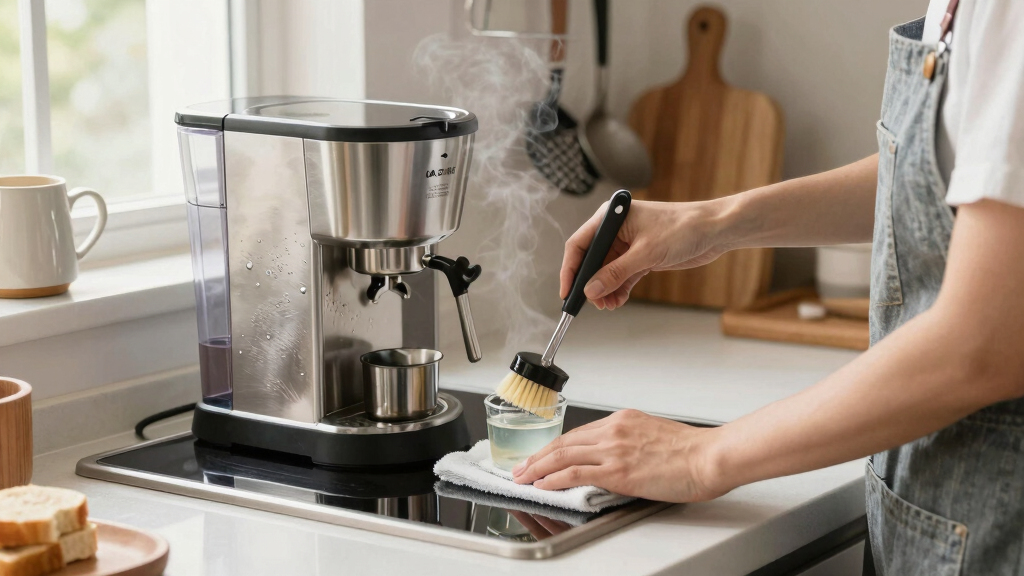
Wash removable parts with warm water and a brush to prevent crust from forming around edges.
Do a quick rinse
A monthly diluted vinegar rinse can keep buildup from hardening into a stubborn layer.
Store dry
Let parts air-dry before reassembly to reduce trapped moisture and corrosion risk.
Quick answers before you start.
Can I use vinegar?
Yes. Use a 1:1 mix of white vinegar and water, run it through the maker, then rinse thoroughly so no vinegar flavor remains.
Can natural agents damage metal?
Risk is low when diluted and rinsed. Avoid concentrated vinegar or citric acid, and do not let acidic solution sit for too long.
Do commercial products harm the maker?
Compatible products are safe when label directions are followed. Always rinse afterward to remove residue that could affect flavor.
Does descaling improve taste?
Proper descaling removes mineral layers that interfere with extraction, helping coffee taste stronger, cleaner, and more balanced.
Why Descaling Matters — Keep Your Coffee Tasting Rich
Mineral deposits like calcium and lime from hard water gradually accumulate inside your espresso maker. Over time, these deposits clog the tiny channels that deliver water, making your coffee taste flat or bitter. For instance, if you notice your brew has become weaker or the water seems to flow slowly, it’s a clear sign of buildup. This mineral layer acts like a barrier, reducing water pressure and flow, which can lead to under-extraction and dull flavors. Regular descaling not only restores proper water flow but also prevents these deposits from becoming thick enough to cause leaks or damage, much like how plaque buildup affects arteries. The tradeoff here is that neglecting descaling shortens your device’s lifespan and diminishes coffee quality, turning your rich espresso into a weak, sour brew.
stovetop espresso maker descaling solution
As an affiliate, we earn on qualifying purchases.
As an affiliate, we earn on qualifying purchases.
How to Descale Your Espresso Maker in 4 Easy Steps
- Fill the water chamber with a descaling solution—either half vinegar, half water, or a commercial product.
- Assemble the maker and run a brew cycle, allowing the solution to pass through all parts.
- Let it sit for 15 minutes to loosen stubborn deposits, especially if you notice slow flow or off-tastes.
- Disassemble, rinse all parts thoroughly under running water, and run plain water to clear residual taste.
As an affiliate, we earn on qualifying purchases.
Choosing Between Vinegar, Citric Acid, and Commercial Products
| Option | Effectiveness | Ease of Use | Cost |
|---|---|---|---|
| White Vinegar | High | Simple; just dilute and run | Low |
| Citric Acid | High | Easy; dissolve in water | Moderate |
| Commercial Descaler | Very high | Follow manufacturer instructions | Higher |
commercial descaling products for espresso maker
As an affiliate, we earn on qualifying purchases.
As an affiliate, we earn on qualifying purchases.
How Often Should You Descale?
If you live in an area with hard water, plan to descale every 1 to 2 months. In softer water regions, every 3 months may suffice. Think of it like maintaining a car’s oil: more mineral-laden water means faster buildup, so more frequent descaling prevents clogs that could cause leaks or damage. For example, in a city with hard tap water, neglecting to descale for several months can lead to a thick mineral crust that not only affects taste but might also cause internal corrosion over time. Regular maintenance acts like flushing out the engine, ensuring the espresso maker runs smoothly and lasts longer.
As an affiliate, we earn on qualifying purchases.
Warning Signs You Need to Descale ASAP
Notice a sluggish flow of water? Coffee tasting off or bitter? White crusty deposits inside the chamber? These are clues that mineral buildup is interfering with your espresso maker’s performance. For example, if your espresso takes noticeably longer to brew or the water sputters out unevenly, it’s like your machine is fighting against a slow-clogging artery. White deposits are akin to plaque—visible signs that minerals are hardening inside. Addressing these early can prevent more serious issues, such as internal corrosion or leaks, which could necessitate costly repairs. Think of it as early intervention for your coffee’s health—catching the signs early keeps your brew smooth and your machine running efficiently.
Prevent Future Buildup — Tips for Easy Maintenance
- Use filtered or soft water to cut down mineral content, much like using a water softener to prevent pipe buildup in plumbing.
- Clean removable parts weekly with warm water and a brush, similar to how you might clean a reusable water bottle to prevent mold.
- Perform a quick vinegar rinse every month as a preventive measure, like flushing your car’s radiator to prevent mineral deposits.
- Store your espresso maker in a dry place to avoid corrosion, akin to keeping metal tools in a dry toolbox to prevent rust.
Frequently Asked Questions
How often should I descale my stovetop espresso maker?
In areas with hard water, every 1-2 months works well. Softer water regions may only need it every 3 months. Regular checks help you stay ahead of buildup.Can I use vinegar to descale my espresso maker?
Yes, vinegar is a natural, inexpensive option. Use a 1:1 ratio of vinegar and water, run it through the machine, then rinse thoroughly to avoid residual taste.Are there risks in using natural descaling agents?
Minimal if diluted properly. Overuse or concentrated vinegar can corrode metal parts over time. Always rinse well after descaling to prevent damage and ensure a clean flavor.What are the signs I need to descale now?
Slow water flow, white crusty deposits, strange noises, or a bitter taste in your coffee indicate it’s time for a cleaning. Recognizing these signs early helps prevent more serious issues like internal corrosion or leaks, which could lead to costly repairs or reduced lifespan of your espresso maker.Does using commercial descaling products harm my machine?
If you follow manufacturer instructions and choose compatible products, they effectively clean without damage. Always rinse thoroughly afterward to remove any residues that could affect flavor or cause corrosion.Conclusion
A clean stovetop espresso maker brews better coffee and lasts longer. Regular descaling dissolves stubborn mineral deposits, ensuring your brew stays rich and flavorful. Keep an eye on buildup signs, and don’t skip the routine—your taste buds will thank you. Now, grab that vinegar or descaler, and give your coffee the freshness it deserves.Fall Picks
fall essentials
As an affiliate, we earn on qualifying purchases.