TL;DR

Get kitchen gear delivered free with Prime
- Fast, free delivery on millions of items
- Prime Video, Amazon Music and more included
- Member-only deals all year
Food Safety News published hurricane-recovery guidance on Oct. 9, 2026, warning that floodwater and extended power outages can make food and food-contact items unsafe. It advises discarding food exposed to floodwater and food kept in a refrigerator or freezer during a power outage lasting several days.
Food Safety News published hurricane-recovery guidance on Oct. 9 advising households to discard foods that may have contacted floodwater and to throw away refrigerator and freezer contents if power has been out for several days. The advice addresses two common post-storm hazards—contaminated floodwater and extended outages—that can make food unsafe even when spoilage is not obvious.
The report says people should never taste food to test whether it is safe. If electricity has been out for several days, it advises discarding all food in the refrigerator and freezer. It refers readers to a food-safety chart for decisions after a prolonged outage, but the source material does not reproduce the chart or give specific temperature and time thresholds.
For drinking, the guidance says to use bottled water or other beverages that have not touched floodwater. Discard bottled drinks that may have been exposed: screw caps are not waterproof. If bottled water is unavailable, the report directs readers to learn how to boil or disinfect water safely.
Food that may have contacted floodwater should be discarded unless it is in an eligible, undamaged commercial package. The report says all-metal cans and retort pouches may be saved if they are undamaged and handled according to the U.S. Department of Agriculture Food Safety and Inspection Service’s severe-storm guidance. It says screw-cap, snap-lid, pull-top and crimped-cap packages are not waterproof.
Food and utensils after flooding
Storm cleanup can expose food, drinks and kitchen equipment to water that may carry contamination, while a long outage can leave refrigerated and frozen food without reliable temperature control. The guidance gives households a practical way to separate items that may be recoverable from those it says to discard, reducing the chance of relying on appearance or taste to judge safety.
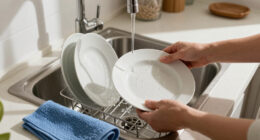
The advice also covers reusable kitchenware. Metal pans, utensils and ceramic dishes that contacted floodwater should be washed thoroughly with hot, soapy water, rinsed and then sanitized. The report lists two methods: boiling the items in clean water or immersing them for 15 minutes in a solution of one tablespoon of unscented liquid chlorine bleach per gallon of drinking water.
Some items should not be reused after floodwater contact. The report says to discard wooden cutting boards, plastic utensils, baby bottle nipples and pacifiers, which it says cannot be saved. This is especially relevant for caregivers preparing food or bottles for infants.
food safety refrigerator freezer after power outage
As an affiliate, we earn on qualifying purchases.
As an affiliate, we earn on qualifying purchases.
The two post-storm hazards
The Food Safety News report frames its advice around flooding and prolonged power outages after hurricanes. Floodwater can reach food packages, beverages and utensils; outages can affect refrigerated and frozen food. The source does not describe a particular hurricane or identify a specific affected area. It presents the recommendations as general recovery guidance.
For further help, the report lists the USDA Meat and Poultry Hotline at 1-888-674-6854, open Monday through Friday from 10 a.m. to 6 p.m. Eastern time, with service in English or Spanish. It also lists the email address MPHotline@usda.gov and the Ask USDA live chat.
“Never taste a food to determine its safety.”
— Food Safety News report
As an affiliate, we earn on qualifying purchases.
Outage details and local conditions
The report does not specify how many hours or days of outage make particular refrigerated or frozen foods unsafe, nor does the provided material include the referenced discard chart. It also does not assess water quality in any particular community or describe local recovery conditions. Households facing different outage lengths or uncertain flood exposure may need the USDA’s additional guidance or advice from local public-health officials.
The material provides general recommendations, not an inspection of any individual food item or home. Whether a packaged product is eligible to be cleaned and kept depends on its packaging being undamaged and commercially prepared, as well as following the cited FSIS instructions.
food-grade metal can safe for floodwater contact
As an affiliate, we earn on qualifying purchases.
As an affiliate, we earn on qualifying purchases.
Where to get food-safety help
People with questions can contact the USDA Meat and Poultry Hotline at 1-888-674-6854, Monday through Friday from 10 a.m. to 6 p.m. Eastern time, or use MPHotline@usda.gov and Ask USDA live chat. The report also directs readers to FSIS’s severe-storm and hurricane consumer guide for instructions on handling eligible metal cans and retort pouches.
As cleanup continues, households should check food and kitchen items for possible floodwater contact, discard items identified as unsafe, and avoid tasting food to make the decision. The source material does not announce a later update or provide a schedule for new guidance.
food safety disinfectant for kitchen utensils
As an affiliate, we earn on qualifying purchases.
As an affiliate, we earn on qualifying purchases.
Key Questions
Should I keep refrigerated food after a power outage?
Food Safety News advises discarding all refrigerator and freezer food if power has been out for several days. Its report points readers to a separate chart for outage decisions but does not include specific time or temperature thresholds.
Can bottled drinks exposed to floodwater be used?
No, the report advises discarding beverages that may have contacted floodwater. It says screw caps are not waterproof. Use bottled water or other drinks that have not been exposed.
Can any food packaging be saved after floodwater contact?
The report says undamaged, commercially prepared food in all-metal cans or retort pouches may be saved by following the FSIS severe-storm instructions. It says containers with screw caps, snap lids, pull tops or crimped caps are not waterproof.
How should dishes and utensils exposed to floodwater be handled?
Wash metal pans, utensils and ceramic dishes with hot, soapy water, rinse, then sanitize by boiling in clean water or immersing for 15 minutes in a solution of one tablespoon of unscented liquid chlorine bleach per gallon of drinking water. Discard wooden cutting boards, plastic utensils, baby bottle nipples and pacifiers that may have contacted floodwater.
Source: rss
Columbus Day / Indigenous Peoples' Day Picks
long weekend sales
As an affiliate, we earn on qualifying purchases.