
TL;DR

Get kitchen gear delivered free — and shop member deals
- Fast, free delivery on millions of items
- Access to Prime Big Deal Days deals on October 6–7
- Prime Video, Amazon Music and more included
A Good Housekeeping report quoting University of Maine blueberry pathologist Seanna Annis says one moldy blueberry does not automatically mean the whole carton must be discarded. Remove the affected berry, inspect the others and discard the carton if most or all show mold or rot.
One moldy blueberry does not automatically make the rest of the carton unsafe to eat, according to University of Maine mycology professor and blueberry pathologist Seanna Annis, quoted in a Good Housekeeping report. She advises discarding the visibly moldy berry, spreading out the remaining fruit to check for other signs of mold and tossing the carton if most or all of its berries are moldy or rotten.
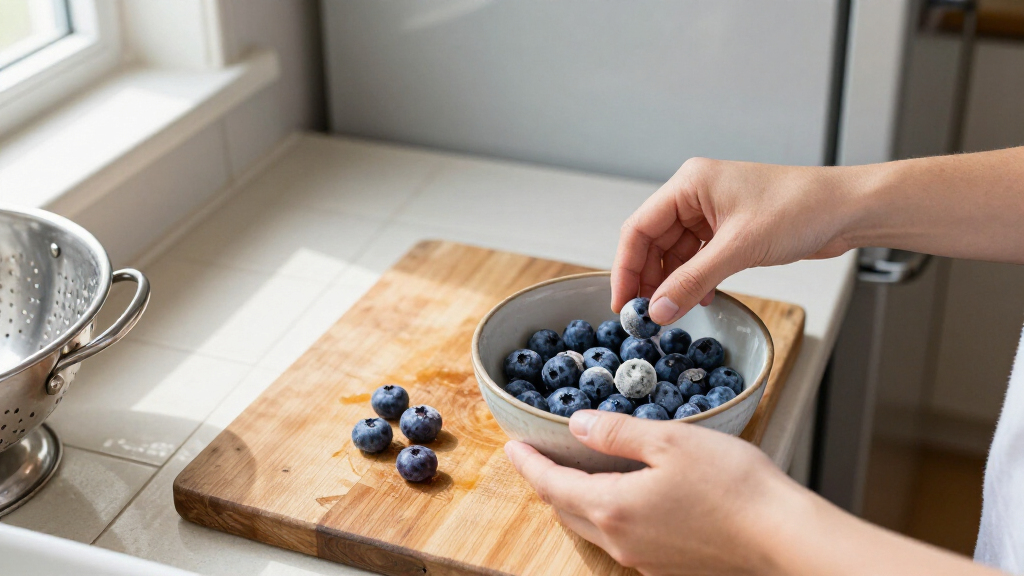
Annis recommends removing the affected fruit first, then placing the blueberries on a paper towel so they can be examined individually. The aim is to find and discard other berries with visible mold or rot before the problem spreads. She says spread is more likely when berries have been sitting together for a while.
Some berries could be affected without visible mold or rot, Annis said, but she described the fungi found on blueberries as unlikely to cause human illness. In her assessment, berries that remain firm and apparently uncontaminated are probably okay to eat. That is her expert guidance as quoted by Good Housekeeping, not a guarantee that every berry in a carton is free of contamination.
The advice changes when damage is widespread: if most or all of the berries show mold or rot, Annis recommends composting the carton. The report does not give a numerical threshold for what counts as “most,” so readers must judge the extent of visible spoilage across the fruit.
How to Salvage Sound Berries
The advice offers a way to avoid discarding an entire carton after finding one spoiled berry, while still removing fruit with visible mold. Checking berries individually matters because mold and rot can spread among fruit that has been stored together, according to Annis.
The distinction also gives shoppers a practical standard: remove berries with visible growth or rot, assess the rest, and discard the carton if spoilage is widespread. The report does not claim that appearance can detect every possible contamination. Annis’s assessment is that firm berries without apparent contamination are probably safe, while acknowledging that some infection could be invisible.
Keeping Blueberries Dry and Separate
Annis also advises keeping blueberries dry for as long as possible. She recommends washing them just before eating or using them, rather than before putting them away. In her account, moisture can make it easier for fungi that may already be present to grow and spread.
Freezing is an exception to the advice to delay washing: the report says berries should be washed before they are frozen. Annis also points to storage near other fruit. Blueberries are sensitive to ethylene, a plant hormone that prompts ripening; bananas and apples are examples of ethylene emitters named in the report. Storing blueberries near those fruits may cause them to ripen and rot sooner, she said.
The report frames this advice around preserving berries and limiting spoilage. It does not provide a specific storage temperature, shelf life or food-safety test for determining whether a berry with no visible mold has been affected.
Limits of a Visual Check
Annis says a berry may be infected without visible mold or rot, so inspection cannot establish that every apparently sound berry is unaffected. She also says the fungi found in blueberries are unlikely to cause human illness and that firm berries without apparent contamination are probably okay to eat. The report supplies no testing method, risk estimate or precise threshold for discarding a carton when only some berries are spoiled. It also does not identify the particular fungi in any individual carton.
Inspect Before Serving or Storing
For a carton with one moldy berry, discard that berry, spread the remaining fruit on a paper towel and inspect it for other moldy or rotten berries. Remove any that show spoilage; if most or all are affected, Annis advises composting the carton. Keep the remaining berries dry in storage and wash them shortly before use. If freezing them, wash them first, and store them away from ethylene-producing fruit such as apples and bananas.
Key Questions
Do I need to throw away the whole carton if one blueberry is moldy?
No, not automatically. Annis advises throwing away the moldy berry and checking the rest individually. If most or all are moldy or rotten, she says to compost the carton.
Can I eat blueberries that look fine?
Annis says berries that are firm and do not seem contaminated are probably okay to eat. She notes that infection can sometimes be present without visible mold or rot, so this is not a guarantee.
Should I wash blueberries before refrigerating them?
Annis recommends waiting until just before use to wash them, since wet berries may give fungi an easier opportunity to grow and spread. The report says to wash berries before freezing them.
Can nearby fruit make blueberries spoil sooner?
According to Annis, blueberries are sensitive to ethylene, a hormone that prompts ripening. The report names apples and bananas as ethylene emitters that may speed ripening and spoilage when stored nearby.
Source: rss
Fall Picks
fall essentials
As an affiliate, we earn on qualifying purchases.