🔍 Read the full analysis: Guanciale, Pancetta, Lardo: Italy's Cured Pork Fat Family Explained on Mad Tasting

Get kitchen gear delivered free — and shop member deals
- Fast, free delivery on millions of items
- Access to Prime Big Deal Days deals on October 6–7
- Prime Video, Amazon Music and more included
TL;DR
Guanciale, pancetta, and lardo are all Italian cured pork products, but they come from different cuts — jowl, belly, and back fat respectively — which determines their texture, flavor, price, and correct use. Guanciale is the traditional fat base for Roman pastas like carbonara and amatriciana, pancetta is the widely available all-purpose cooking cure, and lardo is eaten raw in thin slices rather than cooked.
Guanciale, pancetta, and lardo are all cured pork fat, but each comes from a different part of the pig — jowl, belly, and back fat — and according to a new guide from Mad Tasting, that single anatomical difference explains nearly everything about how the three are seasoned, cooked, and eaten. The guide walks through the correct use of each product, the protected naming labels to look for at the counter, and why substituting one for another changes a finished dish more than many cooks expect.
The core distinction is the cut. Guanciale is pork jowl (cheek), with dense, firm fat threaded with streaks of muscle; the name derives from guancia, the Italian word for cheek. Pancetta is pork belly, the same cut as streaky bacon, but cured with salt and aromatics rather than smoked. Lardo is back fat, nearly pure fat, cured with herbs and soft enough, as the guide puts it, to slice like butter.
Those cuts behave differently under cure and under heat. According to Mad Tasting, fat is where flavor compounds concentrate during aging, so fattier cuts like back fat become more aromatic and delicate, while muscle-threaded cuts like jowl develop a deeper, more savory character. In the pan, the lean streaks brown and provide bite while pure fat melts away — which is why guanciale leaves golden, chewy strips swimming in rendered fat, pancetta leaves crisp-edged nuggets, and lardo, the guide notes, would essentially vanish if a cook tried to fry it.
The guide is explicit that none of the three is better than the others; each has a job. Guanciale offers the richest rendering fat but costs more and is the hardest to find outside Italy, reflecting how little jowl each pig yields. Pancetta is cheap and widely available but leaner. Lardo is the most delicate of the three but, by design, is not a cooking fat at all — it is sliced paper-thin and eaten raw on warm bread, crostini, or vegetables.
Why the Cut Determines the Dish
The distinction matters most in Rome’s four classic pastas. Guanciale is the defining ingredient of carbonara, amatriciana, and gricia, and the guide explains the reasoning in physical terms: jowl fat renders at a lower temperature than belly fat and carries a deeper, almost sweet savoriness. In carbonara, which contains no cream and no oil, the rendered guanciale fat is the sauce — the emulsion of egg, pecorino, and pork fat only works if the fat is flavorful and melts smoothly. Belly fat renders thinner and cleaner but less aromatic; the emulsion still comes together, but the finished plate, according to the guide, tastes noticeably flatter.
Technique follows from the cut. The classic method calls for cutting guanciale into matchstick-width strips and cooking it slowly in a cold, dry pan over low heat for ten minutes or more. The reasoning is practical rather than fussy: fat renders gradually as temperature rises, while muscle fibers seize and brown quickly. Starting hot browns the exterior before the fat has melted, producing greasy, rubbery strips and little fat to emulsify.
The guide also frames the practical tradeoff for home cooks: pancetta is described as a defensible substitute for a weeknight meal, but guanciale is the only ingredient that answers why Romans consider carbonara theirs. A Roman cook, the guide notes, would no more fry lardo for carbonara than a Tuscan would melt guanciale over warm crostini.
Top picks for "guanciale pancetta lardo"
As an affiliate, we earn on qualifying purchases.
From Testaccio to Amatrice
Mad Tasting grounds the guanciale tradition in Testaccio, Rome’s old slaughterhouse district, where cooks render the jowl strips in a dry pan — no olive oil, no butter — until the fat pools and the strips turn golden at the edges while staying tender in the middle. Amatriciana follows the same principle, then adds tomato and chili; the sauce takes its name from Amatrice, a hill town in the Lazio region.
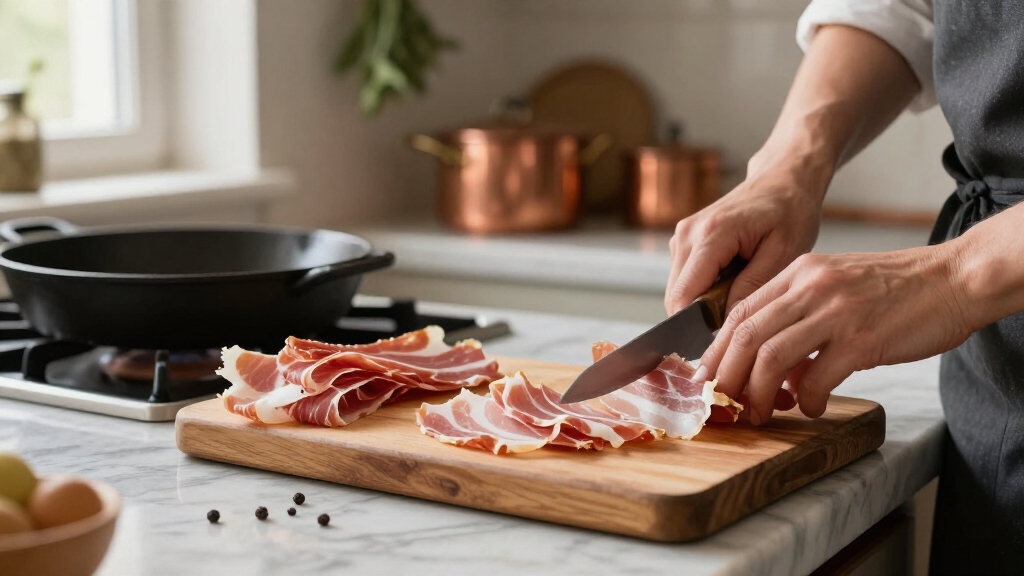
For pancetta, the guide highlights the difference from bacon: pancetta is the same belly cut but cured in the Italian style with salt and aromatics rather than smoked, and smoke, as the guide puts it, is a loud flavor that announces itself. Pancetta is sold either rolled (arrotolata) or flat (stesa) and is used diced in pasta, soups, sauces, and braises. The guide also advises shoppers to look for DOP and IGP labels — European protected-designation marks — which certify that a product comes from its traditional region and production method.
“Pancetta won’t do?”
— Mad Tasting guide
What the Guide Leaves Open
As an explainer rather than a report on a specific event, the guide does not address several practical questions directly: precise curing times for each product, specific brand or producer recommendations, nutritional comparisons, or exactly how the DOP and IGP designations map onto each of the three cures. It also does not specify pricing beyond noting that guanciale is often the priciest and hardest to find of the three outside Italy. Storage guidance is mentioned as a topic but the source material provided does not include the detailed recommendations.
At the Salumi Counter
For readers applying the guide, the next step is simple: identify the cut you need before reaching the counter. If the goal is a Roman pasta where the rendered fat forms the sauce, ask for guanciale; for general cooking, pancetta; for slicing over warm bread, lardo. The guide’s own memory aid — that guanciale comes from guancia, ‘cheek’ — is offered as the quickest way to avoid confusion at the glass. Shoppers seeking certified products should check labels for DOP or IGP marks before buying.
Key Questions
What is the main difference between guanciale, pancetta, and lardo?
The cut of the pig. Guanciale is pork jowl (cheek), pancetta is pork belly, and lardo is cured back fat. Everything else — texture, flavor, price, and correct use — follows from those three cuts.
Can I substitute pancetta for guanciale in carbonara?
According to the guide, pancetta is a defensible substitute for everyday cooking, but jowl fat renders at a lower temperature and carries more savoriness, so the egg-and-pecorino emulsion comes together with a noticeably flatter result.
Why is lardo not used for cooking?
Lardo is almost pure back fat. It has no lean streaks to brown, so it melts away to nearly nothing in a pan. It is meant to be sliced paper-thin and eaten raw on warm bread, crostini, or vegetables.
How should guanciale be cooked for Roman pasta?
Cut it into matchstick-width strips and cook it slowly in a cold, dry pan over low heat for ten minutes or more, so the fat renders before the muscle fibers brown. No olive oil or butter is added — the pork fat is the sauce base.
What do DOP and IGP labels mean on these products?
They are European protected-designation marks certifying that a product is made in its traditional region using traditional methods. The guide recommends looking for these labels when buying guanciale, pancetta, or lardo.
Source: Mad Tasting
Fall Picks
fall essentials
As an affiliate, we earn on qualifying purchases.