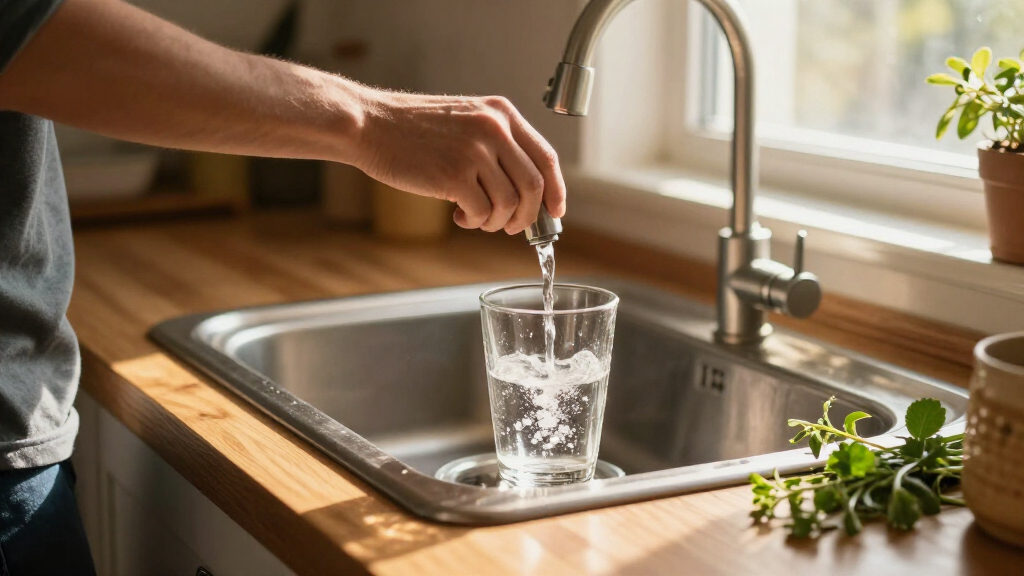

The best home water filtration systems depend on what is in your water and whether you want to treat one tap or the whole house. I rank the Waterdrop G3P600 as the best overall pick for its tankless under-sink reverse osmosis design, while the Waterdrop 10UA is a simpler choice for basic under-sink filtration and the iSpring WGB32BM targets homes concerned about iron and manganese. The main tradeoffs are filtration scope, installation effort, ongoing filter changes, and the water a system sends to drain. A countertop unit can avoid plumbing work, while whole-house systems treat water at multiple taps but call for more space and setup. Read on for the full comparison and help matching a system to your home.

Get kitchen gear delivered free — and shop member deals
- Fast, free delivery on millions of items
- Access to Prime Big Deal Days deals on October 6–7
- Prime Video, Amazon Music and more included
Complete the kit


Key Takeaways
- Under-sink reverse osmosis dominates the lineup for drinking-water treatment: the Waterdrop G3P600 and G3P800 offer tankless designs, while the iSpring RCC7 models and APEC ROES-50 use more traditional multi-stage setups.
- Whole-house filtration solves a different problem from drinking-water systems: the iSpring WGB32B, WGB32BM, WF3-03, and Express Water models treat water entering the home rather than focusing on a single drinking tap.
- Waterdrop 10UA and TSA are simpler under-sink options: they avoid the more involved reverse osmosis approach, but buyers should match their filtration claims to a water test and specific contaminants.
- Countertop RO models trade installation for counter space: DREO‘s pitcher and tank configurations and the Bluevua RO100ROPOT-UV suit renters or people who want a standalone unit, with capacity and refill routines shaping the choice.
- Specialized needs change the ranking: iSpring WGB32BM is aimed at iron and manganese, while Kind E-3000 adds salt-free scale treatment; neither should be treated as a universal substitute for contaminant-specific filtration.
| Waterdrop G3P600 Tankless Reverse Osmosis Water Filter System, 600 GPD |  | Best for High-Use Kitchens | Filtration stages: 8 | Purification method: Reverse osmosis and carbon block | Capacity: 600 gallons per day | VIEW LATEST PRICE | See Our Full Breakdown |
| DREO Countertop Reverse Osmosis Water Filter with Two Autofill Pitchers |  | Best for No-Install Convenience | Type: Countertop reverse osmosis water filter | Filtration: 7-in-1 | Contaminant reduction claim: Filters out 99.9% of possible contaminants, including PFOA, PFOS, chlorine, and fluoride | VIEW LATEST PRICE | See Our Full Breakdown |
| Waterdrop 10UA Under Sink Water Filter System | 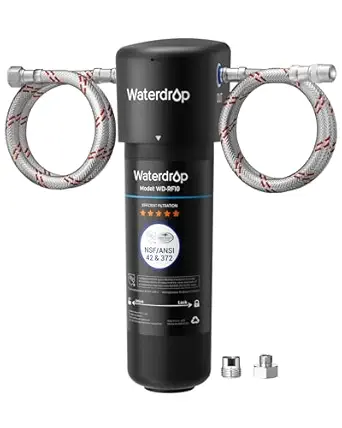 | Best Value for Municipal Tap Water | Filter type: Activated carbon made from coconut shells | Certification: NSF/ANSI 42 and 372 | Water source: Cold municipal tap water | VIEW LATEST PRICE | See Our Full Breakdown |
| iSpring WGB32BM Whole House Water Filter System for Iron and Manganese |  | Best for Iron and Manganese | Model: WGB32BM | Iron removal limit: 3.0 ppm | Manganese removal limit: 1.0 ppm | VIEW LATEST PRICE | See Our Full Breakdown |
| WF3-03 3-Stage Whole-House Water Filtration System with UV | 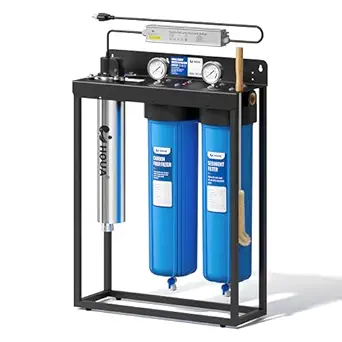 | Best Whole-House Pick with UV | Stages: 3 | UV filter: HQUA TWS-12, 12 GPM, 55W | Filter sizes: Two 20 × 5.5 in filters | VIEW LATEST PRICE | See Our Full Breakdown |
| Express Water 3-Stage Whole House Water Filter System |  | Best for Whole-Home Chlorine and Scale Control | Filtration: 3 stages: activated carbon, KDF, and polyphosphate | Maximum flow rate: 17 GPM | Connections: 1 inch | VIEW LATEST PRICE | See Our Full Breakdown |
| Bluevua RO100ROPOT-UV Countertop Reverse Osmosis Water Filter System |  | Best Countertop RO with UV and Glass Carafe | Filtration: 6 stages: reverse osmosis, UV light, and remineralization | Carafe: 1,700 ml borosilicate glass | Flow rate: 0.26 liters per minute | VIEW LATEST PRICE | See Our Full Breakdown |
| Waterdrop TSA 3-Stage Under-Sink Water Filter System |  | Best for Simple Municipal Tap Filtration | Filter configuration: 3 filters; 8-stage filtration | Maximum flow rate: 1.5 GPM | Connections: 1/2-inch or 3/8-inch cold-water lines | VIEW LATEST PRICE | See Our Full Breakdown |
| Waterdrop G3P800 Tankless Reverse Osmosis Water Filter System, 800 GPD |  | Best High-Capacity Tankless RO | Filtration: 10-stage reverse osmosis | Pure-to-drain ratio: 3:1 | Certifications: IAPMO R&T certified to NSF/ANSI 42, 53, 58, and 372 | VIEW LATEST PRICE | See Our Full Breakdown |
| iSpring RCC7-BN NSF Certified 5-Stage Under Sink Reverse Osmosis Water Filter with Brushed Nickel Faucet |  | Best Certified RO for a Traditional Under-Sink Setup | Model: RCC7-BN | Filtration: 5-stage reverse osmosis | Certification: NSF/ANSI 58 | VIEW LATEST PRICE | See Our Full Breakdown |
| APEC Water ROES-50 5-Stage Under-Sink Reverse Osmosis System, 50 GPD |  | Best Traditional Under-Sink RO | Filtration stages: 5 | Daily production capacity: 50 gallons | Purification method: Activated carbon and reverse osmosis | VIEW LATEST PRICE | See Our Full Breakdown |
| iSpring WGB32B Whole House Water Filter System |  | Best Whole-House Chlorine Filtration | Model: WGB32B | Filtration stages: 3 | First stage: 5-micron sediment filter | VIEW LATEST PRICE | See Our Full Breakdown |
| Kind Water Systems E-3000 Whole House Salt-Free Water Softener & Filter | 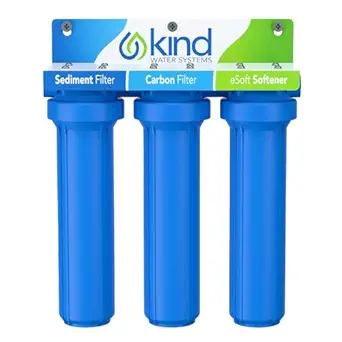 | Best Salt-Free City-Water System | Model: E-3000 | System type: Whole-house salt-free water softener and filter | Water source: City water | VIEW LATEST PRICE | See Our Full Breakdown |
| DREO Countertop Reverse Osmosis Water Filter System with 3L Tank | 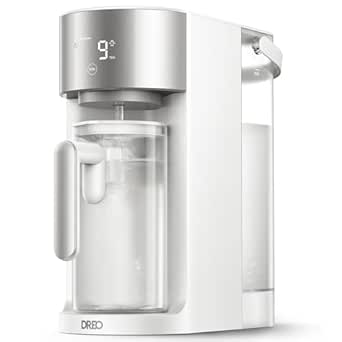 | Best Countertop RO Convenience | Purification method: Reverse osmosis | Filtration: 7-in-1; reduces 99.9% of listed contaminants | Pure-to-drain ratio: 3:1 | VIEW LATEST PRICE | See Our Full Breakdown |
| iSpring RCC7AK-BN 6-Stage Alkaline Reverse Osmosis Water Filtration System, 75 GPD |  | Best Under-Sink RO with Remineralization | Model: RCC7AK-BN | Filtration stages: 6 | Purification methods: Reverse osmosis, alkaline, activated carbon, carbon block | VIEW LATEST PRICE | See Our Full Breakdown |
More Details on Our Top Picks
Waterdrop G3P600 Tankless Reverse Osmosis Water Filter System, 600 GPD
The Waterdrop G3P600 suits households that want reverse osmosis water on demand without giving up cabinet space to a storage tank. Its stated 600 GPD capacity and 0.42 GPM maximum flow rate make it a stronger fit for frequent kitchen use than the 50 GPD APEC Water ROES-50, though actual output depends on operating conditions. The smart faucet shows TDS and filter life, giving you a quick way to check system status, and tool-free filter changes simplify routine upkeep. Its 2:1 pure-to-wastewater ratio also limits drain water compared with less efficient RO designs. The tradeoff is an under-sink system that needs electricity and enough cabinet clearance; shoppers seeking a countertop setup can avoid plumbing work with the DREO Countertop Reverse Osmosis Water Filter with Two Autofill Pitchers.
Pros:- Up to 600 gallons per day suits frequent household demand
- Tankless layout saves space compared with an RO system using a storage tank
- Smart faucet displays TDS and filter life
- Tool-free filter changes simplify replacement
Cons:- Requires a corded electrical connection under the sink
- The 18.12 × 5.67 × 17.72 inch unit still needs a cabinet fit check
- RO filtration sends wastewater to the drain despite its 2:1 ratio
Best for: Households that use filtered water throughout the day and have an under-sink outlet and room for a tankless system
Not ideal for: Renters or kitchens without under-sink electricity, and anyone whose cabinet cannot fit the listed dimensions
- Filtration stages:8
- Purification method:Reverse osmosis and carbon block
- Capacity:600 gallons per day
- Pure-to-wastewater ratio:2:1
- Maximum flow rate:0.42 gpm
- Operating pressure:87 psi
- Supported maximum TDS:1500 ppm
- Dimensions:18.12 × 5.67 × 17.72 in
- Certifications:NSF/ANSI 42, 58, and 372
Our verdict“Choose the G3P600 if you want high stated RO capacity and live monitoring in a tankless under-sink system, and can provide power and cabinet space.”
DREO Countertop Reverse Osmosis Water Filter with Two Autofill Pitchers
The DREO countertop RO system is the easiest fit for someone who wants filtered water without connecting equipment to a faucet or supply line. Its two autofill pitchers provide a ready reserve, while TDS and filter-life displays make routine checks straightforward. The listed 3:1 pure-to-drain ratio is more water-efficient than the Waterdrop G3P600’s 2:1 ratio, based on the product data, though neither avoids producing drain water. Compared with the under-sink G3P600, DREO trades a permanent installation for a countertop footprint and pitcher refills. Its description says SGS tested it to meet NSF/ANSI 58 standards and claims 99.9% contaminant filtration; buyers should review the exact tested reduction claims for their concerns. The system also needs counter space and ongoing cleaning despite its self-cleaning feature.
Pros:- Install-free countertop setup avoids under-sink plumbing changes
- Two autofill pitchers provide filtered water on hand
- TDS and filter-life displays show system status
- Self-cleaning feature reduces some routine maintenance
Cons:- Uses counter space and requires pitcher refills
- RO filtration produces drain water even with the stated 3:1 ratio
- The supplied description does not provide real-world performance data
Best for: Renters and households that want countertop RO filtration with pitcher storage and no plumbing installation
Not ideal for: Kitchens with limited counter space or buyers who need a direct faucet connection and do not want to refill pitchers
- Type:Countertop reverse osmosis water filter
- Filtration:7-in-1
- Contaminant reduction claim:Filters out 99.9% of possible contaminants, including PFOA, PFOS, chlorine, and fluoride
- Pure-to-drain ratio:3:1
- Pitchers:2 autofill pitchers
- Installation:Install-free countertop
- Maintenance:Self-cleaning
- Displays:TDS and filter life
- Testing statement:Description says tested by SGS to meet NSF/ANSI 58 standards
Our verdict“Pick DREO if easy setup and two ready-to-use pitchers matter more to you than a built-in under-sink connection.”
Waterdrop 10UA Under Sink Water Filter System
The Waterdrop 10UA is a practical choice when you want to reduce selected contaminants without removing dissolved minerals or adding an RO drain line. Its activated carbon filter is designed for cold municipal water and targets chlorine, PFAS, and PFOA/PFOS; the product data also lists NSF/ANSI 42 and 372 certification. That makes it a simpler, lower-complexity alternative to the Waterdrop G3P600, which uses reverse osmosis and needs electricity. The 10UA’s stated service life of up to 12 months or 11,000 gallons can limit replacement frequency, while twist-and-lock fittings aim to ease changes. This is not a whole-house treatment system like the iSpring WGB32BM, and it is not specified for well or hot water. Check faucet threading before installation, and note the coconut-shell carbon material if you have a coconut allergy.
Pros:- Designed to reduce chlorine, PFAS, and PFOA/PFOS while retaining minerals
- Up to 12 months or 11,000 gallons of listed service life
- Twist-and-lock filter and push-to-connect fittings simplify maintenance
- Compact under-sink unit can fit kitchens, bathrooms, RVs, or offices
Cons:- Specified for cold municipal water, not well water or hot water
- Does not provide reverse osmosis or TDS reduction
- Faucet thread differences may require an additional connector
Best for: Households on cold municipal water that want a compact under-sink carbon filter and prefer to retain dissolved minerals
Not ideal for: Well-water users, households needing hot-water filtration, or anyone seeking RO-level TDS reduction
- Filter type:Activated carbon made from coconut shells
- Certification:NSF/ANSI 42 and 372
- Water source:Cold municipal tap water
- Maximum service life:12 months or 11,000 gallons
- Tested flow rate:0.75 GPM at 60 PSI
- Upgraded outlet flow rate:1.33 GPM
- Maximum supported TDS:700 PPM
- Dimensions:3.9 × 3.6 × 12.3 in
- Connection:3/8 in line; compatible with 1/2 in or 3/8 in female faucet threads
Our verdict“Choose the 10UA for selected contaminant reduction on municipal tap water without the power, drain, or mineral removal associated with RO.”
iSpring WGB32BM Whole House Water Filter System for Iron and Manganese
The iSpring WGB32BM is aimed at a different household problem than point-of-use picks such as the Waterdrop 10UA: it treats water at the main supply and is designed to reduce iron and manganese along with sediment, chlorine, and rust. Its listed limits of 3.0 ppm iron and 1.0 ppm manganese help define whether it fits your water profile, while flow up to 15 GPM serves multiple fixtures. The system retains minerals, unlike the Waterdrop G3P600 reverse osmosis unit, but it also does not reduce TDS. A stated 100,000-gallon capacity and up-to-one-year filter life for a family of four suggest fewer cartridge changes than a small under-sink filter, though actual replacement needs depend on incoming water. Main-line installation and water testing are key parts of choosing this system.
Pros:- Designed to reduce iron up to 3.0 ppm and manganese up to 1.0 ppm
- Up to 15 GPM flow supports whole-house use
- Listed 100,000-gallon filter capacity
- Retains minerals rather than using reverse osmosis
Cons:- Does not reduce total dissolved solids
- Requires installation on the home’s main water supply line
- Suitability depends on incoming iron and manganese levels
Best for: Homeowners with tested iron or manganese in their supply who want treatment across multiple household fixtures
Not ideal for: Renters, homes needing TDS reduction, or buyers whose water test exceeds the listed iron and manganese limits
- Model:WGB32BM
- Iron removal limit:3.0 ppm
- Manganese removal limit:1.0 ppm
- Flow rate:Up to 15 GPM
- Filter capacity:100,000 gallons
- Inlet/outlet size:1 in NPT
- Cartridge size:20 × 4.5 in
- Certification:NSF/ANSI standards
- Warranty:1-year manufacturer warranty
Our verdict“Choose the WGB32BM when a water test points to iron or manganese and you want treatment at the main line rather than one kitchen tap.”
WF3-03 3-Stage Whole-House Water Filtration System with UV
The WF3-03 combines sediment and carbon fiber cartridges with UV treatment, making it the lineup’s broadest whole-house approach for buyers who want particulate filtration plus microorganism treatment. Unlike the iron-focused iSpring WGB32BM, this system lists UV and claims help reducing microorganisms, PFAS, heavy metals, and chlorine; those claims should be matched to the included filter specifications and the household’s water test. Its 3–15 GPM flow range and 1-inch plumbing connections are suited to a main-line installation, while pressure gauges and 180-day timers give maintenance more visibility. The flexibility to mount it on a wall or leave it freestanding can help with utility-room layouts. In exchange, it has more components to service than a basic under-sink filter, and installation requires compatible plumbing connections.
Pros:- Combines sediment, carbon fiber, and UV treatment
- Listed to help reduce microorganisms, PFAS, heavy metals, and chlorine
- Can be wall-mounted or installed freestanding
- Pressure gauges and 180-day timers support maintenance tracking
Cons:- Requires periodic cartridge replacement and UV system upkeep
- Main-line installation needs compatible plumbing connections
- The supplied product data does not specify individual contaminant reduction test results
Best for: Homeowners seeking whole-house sediment and carbon filtration with UV treatment and space for a main-line system
Not ideal for: Renters, households seeking a simple single-tap filter, or buyers unwilling to maintain multiple cartridges and UV equipment
- Stages:3
- UV filter:HQUA TWS-12, 12 GPM, 55W
- Filter sizes:Two 20 × 5.5 in filters
- UV filter dimensions:21 × 3.5 in
- Flow rate:3–15 GPM
- Operating pressure:25–116 PSI
- Inlet/outlet:1 in FNPT; adapters for 3/4 in or 1 in NPT
- Installation:Free-standing or wall-mounted
- Filter life timers:180 days
Our verdict“Pick the WF3-03 if you want whole-house filtration paired with UV treatment and are prepared for plumbing installation and regular maintenance.”
Express Water 3-Stage Whole House Water Filter System
The Express Water suits households that want filtration at the point where water enters the home, so treated water can reach multiple fixtures. Its 17 GPM flow rate and one-inch connections make it a more whole-home-oriented choice than the under-sink Waterdrop TSA, which filters water at a single cold-water line. Activated carbon and KDF target chlorine and certain heavy metals, while polyphosphate helps limit scale buildup. Pressure gauges and release buttons give owners a way to monitor the system and service filters. The tradeoff is its 63-pound freestanding frame, which needs space and a suitable installation location. It also does not reduce TDS, so buyers seeking dissolved-solids reduction should look at an RO option such as the Waterdrop G3P800. Filter changes are needed every 6–12 months or up to 100,000 gallons.
Pros:- Filters water for the whole home rather than one drinking-water tap
- Combines activated carbon, KDF, and polyphosphate for chlorine, some heavy metals, and scale control
- Pressure gauges and release buttons help with monitoring and filter changes
- Operates without electricity
Cons:- Does not reduce total dissolved solids
- Its 63-pound, 29 × 8.5 × 30-inch frame needs substantial installation space
- Filters need replacement every 6–12 months or up to 100,000 gallons
Best for: Homeowners who want chlorine and scale-focused filtration across multiple household fixtures and have room for a freestanding system.
Not ideal for: Renters or buyers seeking dissolved-solids reduction, since this unit is large, needs a whole-home installation, and does not lower TDS.
- Filtration:3 stages: activated carbon, KDF, and polyphosphate
- Maximum flow rate:17 GPM
- Connections:1 inch
- Operating pressure:20–80 psi
- Filter life:6–12 months or up to 100,000 gallons
- Dimensions:29 × 8.5 × 30 inches
- Installation and power:Freestanding; manual, no power required
- TDS reduction:Does not reduce TDS
Our verdict“Choose the Express Water for broad household chlorine and scale control if you have installation space and do not need TDS reduction.”
Bluevua RO100ROPOT-UV Countertop Reverse Osmosis Water Filter System
The Bluevua is a fit for buyers who want reverse osmosis without connecting a system to the plumbing. Its six-stage RO process adds UV treatment and remineralization, while the glass carafe avoids storing filtered water in a plastic pitcher. A display shows filter life and water quality, giving owners useful maintenance and output cues. Compared with the under-sink Waterdrop G3P800, the Bluevua is easier to place in a rental or move between homes, but its 1.7-liter carafe and 0.26 L/min flow suit drinking and cooking water in smaller batches, not whole-house use. The 2:1 pure-to-drain ratio is specified, though the system still sends some water to drain. It also occupies counter space, weighs 17.8 pounds, and needs an outlet. Filter-life guidance varies in the supplied description, which lists 12 months in the specs and 12–24 months elsewhere.
Pros:- Six-stage filtration combines reverse osmosis, UV treatment, and remineralization
- Countertop setup requires no plumbing
- Borosilicate glass carafe and display for filter life and water quality
- Specified 2:1 pure-to-drain ratio
Cons:- The 1.7-liter carafe and 0.26 L/min flow require batch filling
- Takes up counter space and requires a power outlet
- Filter-life information differs between the supplied specifications and description
Best for: Renters and small households who want countertop reverse osmosis, UV treatment, and a glass storage carafe without plumbing work.
Not ideal for: Large households needing a steady supply at multiple taps, or kitchens short on counter space and electrical outlets.
- Filtration:6 stages: reverse osmosis, UV light, and remineralization
- Carafe:1,700 ml borosilicate glass
- Flow rate:0.26 liters per minute
- Pure-to-drain ratio:2:1
- Installation and power:Countertop; no plumbing required; corded electric
- Dimensions and weight:10.9 × 15.4 × 14.3 inches; 17.8 pounds
- Maximum supported water TDS:500 ppm
- Filter life:12 months in specifications; description states 12–24 months
Our verdict“Pick the Bluevua for portable, small-batch RO water with UV and a glass carafe when you can spare counter space.”
Waterdrop TSA 3-Stage Under-Sink Water Filter System
The Waterdrop TSA is aimed at households that want filtered water from an existing cold-water line while retaining beneficial minerals. Its three filters provide eight-stage filtration, and the supplied claims include reduction of chlorine, sediment, and several other contaminants. Push-to-connect installation and twist-and-lock replacements make it more approachable than the under-sink RO systems in this roundup, such as the iSpring RCC7-BN. That simpler setup also means a different result: the TSA does not reduce TDS, and it is designed for municipal water rather than untreated well water. Buyers must also keep track of filter schedules that range from 6 to 18 months. At up to 1.5 GPM, it is suited to a drinking-water line; it does not filter hot water or treat every fixture in the home.
Pros:- Designed for municipal tap water and retains beneficial minerals
- Push-to-connect installation and twist-and-lock filter replacement
- Maximum flow rate of 1.5 GPM for an under-sink drinking-water line
- NSF/ANSI 42 certification and IAPMO certification for residual chlorine reduction on the CT filter
Cons:- Does not reduce TDS
- Not suitable for hot water, and well water requires pre-filtration
- Filter replacement intervals vary from 6 to 18 months
Best for: Homeowners on municipal water who want a compact under-sink filter for a cold-water tap and straightforward filter changes.
Not ideal for: Well-water users without pre-filtration, or buyers who need reverse osmosis, TDS reduction, or hot-water filtration.
- Filter configuration:3 filters; 8-stage filtration
- Maximum flow rate:1.5 GPM
- Connections:1/2-inch or 3/8-inch cold-water lines
- Filter lifespans:6 months; 8–12 months; and 12–18 months
- Installation:Under sink; stated installation time under 3 minutes
- Water source and temperature:Municipal water; well water requires pre-filtration; cold water only
- TDS reduction:Does not reduce TDS
- Certifications:NSF/ANSI 42; CT filter IAPMO certified for residual chlorine reduction
Our verdict“Choose the Waterdrop TSA for convenient municipal-water filtration that preserves minerals, provided you do not need TDS reduction.”
Waterdrop G3P800 Tankless Reverse Osmosis Water Filter System, 800 GPD
The G3P800 is the capacity-focused choice for households that want under-sink reverse osmosis and TDS reduction. Its stated output of up to 800 gallons per day and 3:1 pure-to-drain ratio set it apart from the iSpring RCC7-BN, which is rated at 75 GPD and uses a storage-based RO format. The tankless design can free up cabinet room, while the smart faucet displays TDS and signals water quality at the tap. The system also carries IAPMO R&T certifications to NSF/ANSI 42, 53, 58, and 372, giving buyers specific standards to check against their needs. Its tradeoffs are the required under-sink installation and reliance on a dedicated faucet. The supplied product data does not give filter replacement intervals or costs, so owners should confirm those details before choosing it for long-term use.
Pros:- Rated for up to 800 gallons per day
- Tankless design saves under-sink space
- 3:1 pure-to-drain ratio
- Smart faucet displays TDS and includes an LED indicator
Cons:- Requires under-sink installation and a dedicated faucet
- Supplied product data does not specify filter replacement intervals or costs
Best for: Households that want high stated RO capacity, under-sink TDS reduction, and a faucet display for filtered-water readings.
Not ideal for: Renters or people avoiding plumbing work, and buyers who need clear filter replacement schedules before purchase.
- Filtration:10-stage reverse osmosis
- Pure-to-drain ratio:3:1
- Certifications:IAPMO R&T certified to NSF/ANSI 42, 53, 58, and 372
- Faucet:Smart faucet with TDS display and LED indicator
- Design and installation:Tankless, under-sink
- Contaminants listed:PFAS, fluoride, lead, chlorine, and total dissolved solids
Our verdict“The G3P800 suits households prioritizing high-capacity under-sink RO and TDS monitoring, if they are comfortable confirming ongoing filter needs.”
iSpring RCC7-BN NSF Certified 5-Stage Under Sink Reverse Osmosis Water Filter with Brushed Nickel Faucet
The iSpring RCC7-BN is a traditional under-sink RO pick for buyers who value a stated standard and a familiar five-stage layout. It is NSF/ANSI 58 certified, rated at 75 GPD, and specified to reduce TDS by 80–90%. Its top-mounted brushed nickel faucet is designed to simplify installation, while a transparent first-stage housing lets owners inspect that filter without opening it. Against the tankless Waterdrop G3P800, the iSpring has a lower stated daily capacity and does not provide the same smart-faucet TDS display; in return, its product data clearly lists capacity, certification, and TDS reduction. It runs without electricity, but still needs cabinet space and periodic filter replacements. The supplied data does not state replacement intervals, so buyers should check the maintenance schedule before settling on this model.
Pros:- NSF/ANSI 58 certified
- Specified to reduce 80–90% of TDS and up to 99% of over 1,000 contaminants
- Top-mounted brushed nickel faucet is designed to ease installation
- Operates without electricity and has a transparent first-stage housing
Cons:- 75 GPD rating is lower than the Waterdrop G3P800’s stated 800 GPD capacity
- Requires under-sink space and periodic filter replacements
- Supplied product data does not specify filter replacement intervals
Best for: Homeowners seeking a non-electric, NSF/ANSI 58 certified under-sink RO system with a brushed nickel faucet and stated TDS reduction.
Not ideal for: Renters, households without suitable cabinet space, or buyers who want tankless capacity and a faucet with live TDS display.
- Model:RCC7-BN
- Filtration:5-stage reverse osmosis
- Certification:NSF/ANSI 58
- TDS reduction:80–90%
- Faucet:Brushed nickel; top-mounted design
- Power and warranty:Non-electric; 1-year limited manufacturer warranty
Our verdict“Pick the iSpring RCC7-BN for a clearly specified, certified non-electric RO setup if its cabinet footprint and filter upkeep suit your kitchen.”
APEC Water ROES-50 5-Stage Under-Sink Reverse Osmosis System, 50 GPD
The APEC ROES-50 suits households that want reverse osmosis at a dedicated faucet without giving up cabinet space for a countertop appliance. Its five-stage process reduces TDS, and the included tank, faucet, filters, and installation kit make it a complete under-sink setup. Compared with the iSpring RCC7AK-BN, it skips the alkaline remineralization stage and offers lower daily production, so it is the simpler pick for buyers who value straightforward RO filtration over added mineralization. Quick-connect fittings and colored tubing can help with DIY installation, though the system still requires plumbing work and room for its tank. Filter changes recur, with timing depending on water quality; buyers seeking minimal upkeep may prefer a non-RO filter instead.
Pros:- Five-stage reverse osmosis filtration reduces TDS
- Includes faucet, storage tank, filter set, and installation kit
- Quick-connect fittings and colored tubing support DIY setup
Cons:- Needs under-sink space and a plumbing connection
- Requires periodic filter replacement
- 50 GPD capacity is lower than the 75 GPD iSpring RCC7AK-BN
Best for: Households seeking a conventional under-sink RO system with its own faucet and storage tank
Not ideal for: Renters or households without cabinet and plumbing access, or buyers who want remineralization or countertop portability
- Filtration stages:5
- Daily production capacity:50 gallons
- Purification method:Activated carbon and reverse osmosis
- Installation:Under sink
- Maximum supported water TDS:2000 ppm
- Operating pressure:40–85 psi
- Dimensions:15.5 × 5.25 × 17 in
- Included components:Filter set, brushed nickel faucet, water tank, installation kit, instructions
Our verdict“Choose the APEC ROES-50 for a complete, conventional under-sink RO setup if you do not need the iSpring RCC7AK-BN’s remineralization stage or higher rated production.”
iSpring WGB32B Whole House Water Filter System
The iSpring WGB32B is for households that want treated water at multiple taps while retaining naturally occurring minerals. Its three stages pair a 5-micron sediment filter with two coconut-shell carbon block filters, targeting sediment, chlorine, rust, and odors. The rated 15 GPM flow and 100,000-gallon capacity make it a different kind of pick from the under-sink APEC ROES-50, which treats water at a dedicated faucet and reduces TDS. That distinction is also the WGB32B’s main limitation: it does not remove TDS and is not a substitute for RO when dissolved solids are the concern. It needs a whole-house plumbing connection and periodic filter changes, so it makes more sense for homeowners ready to maintain a central system than for renters.
Pros:- Three-stage filtration targets sediment, chlorine, rust, and odors
- Rated flow of up to 15 GPM for whole-house use
- 100,000-gallon stated capacity
- Preserves healthy minerals rather than using reverse osmosis
Cons:- Does not remove TDS
- Requires whole-house plumbing installation
- Filters need periodic replacement
Best for: Homeowners who want chlorine, sediment, rust, and odor filtration at multiple household taps while retaining minerals
Not ideal for: Renters or buyers seeking TDS reduction, dissolved-solids treatment, or a compact point-of-use filter
- Model:WGB32B
- Filtration stages:3
- First stage:5-micron sediment filter
- Second and third stages:CTO coconut-shell carbon block
- Flow rate:Up to 15 GPM
- Capacity:100,000 gallons
- Filter size:20 × 4.5 in
- Connection size:1 in NPT
Our verdict“Pick the WGB32B when you want central chlorine and sediment filtration with minerals retained; choose the APEC ROES-50 if reducing TDS at a drinking-water tap is the priority.”
Kind Water Systems E-3000 Whole House Salt-Free Water Softener & Filter
The Kind E-3000 combines whole-house sediment and carbon filtration with salt-free scale prevention for homes on city water. Its appeal is a treatment setup that needs no salt, electricity, wastewater, or drain line, while targeting chlorine, chloramine, VOCs, pesticides, and other listed chemicals. That makes it a more integrated fit for city-water households than the iSpring WGB32B, which filters chlorine and sediment but does not offer scale prevention. The E-3000’s limits matter: salt-free conditioning does not soften water in the same way as a traditional salt-based system, and the supplied data does not state flow rate or capacity. Buyers with very hard water, or those who need clearly specified throughput, should compare alternatives before choosing it.
Pros:- Combines sediment filtration, carbon filtration, and salt-free scale prevention
- Targets chlorine, chloramine, VOCs, pesticides, and other listed contaminants
- Requires no salt, electricity, wastewater, or drain line
- Compact design for whole-house installation
Cons:- Salt-free conditioning may not address very hard water as effectively as salt-based softening
- Flow rate and capacity are not provided in the supplied product data
- Specified for city water
Best for: City-water homeowners seeking whole-house chemical filtration and salt-free scale prevention without a drain line
Not ideal for: Homes with very hard water that need traditional salt-based softening, or buyers who need published flow and capacity figures
- Model:E-3000
- System type:Whole-house salt-free water softener and filter
- Water source:City water
- Filtration:Sediment and carbon block
- Contaminant coverage:Up to 95% sediment and 155+ listed chemical contaminants
- Power:None required
- Wastewater or drain line:None required
- Certification:NSF certified components
Our verdict“Choose the E-3000 for city-water filtration with salt-free scale prevention if your home does not need the stronger softening approach of a conventional salt-based system.”
DREO Countertop Reverse Osmosis Water Filter System with 3L Tank
The DREO countertop RO system fits buyers who want reverse osmosis without connecting a unit to the plumbing. Its seven-stage filtration is listed to reduce contaminants including PFOA, PFOS, chlorine, and fluoride, while the built-in TDS meter and filter indicator give users a way to monitor the system. Auto-filling the 1.1-liter pitcher and self-cleaning internal tubes reduce routine handling, and the 3:1 pure-to-drain ratio offers a clear efficiency detail. Compared with the under-sink APEC ROES-50, DREO is easier to place and avoids installation, but its 3-liter tank and small pitcher mean more refills for a busy household. It also takes up counter space and supports feed water up to 500 ppm TDS, so check that limit against your source water.
Pros:- Countertop setup requires no under-sink plumbing installation
- Seven-stage filtration with listed reductions including PFOA, PFOS, chlorine, and fluoride
- Built-in TDS meter and filter-life indicator
- Auto-fill pitcher and self-cleaning function
Cons:- 3-liter tank and 1.1-liter pitcher can mean frequent refills
- Requires dedicated counter space
- Maximum supported feed-water TDS is 500 ppm
Best for: Renters and small households who want monitored RO filtration without under-sink installation
Not ideal for: Larger households that need substantial ready-to-pour volume or kitchens with little spare counter space
- Purification method:Reverse osmosis
- Filtration:7-in-1; reduces 99.9% of listed contaminants
- Pure-to-drain ratio:3:1
- Filter capacity:265 gallons (1,000 L)
- Tank capacity:3 L
- Pitcher capacity:1.1 L
- Maximum supported water TDS:500 ppm
- Dimensions:14.5 × 6.7 × 13.4 in
Our verdict“Choose DREO for convenient countertop RO and built-in monitoring if its small tank and pitcher suit your household’s daily water use.”
iSpring RCC7AK-BN 6-Stage Alkaline Reverse Osmosis Water Filtration System, 75 GPD
The iSpring RCC7AK-BN stands out among under-sink RO options for pairing six filtration stages with an alkaline remineralization stage and NSF/ANSI 58 certification. Its rated 75 GPD production exceeds the APEC ROES-50’s 50 GPD, while the remineralization stage gives buyers an option the APEC does not include. Installation details are also designed to help: a top-mounted faucet fastener simplifies access during setup, and the transparent first-stage housing makes sediment buildup visible. Those features do not remove the need for cabinet space or recurring filter changes. At 15.5 × 16 × 18 inches, it needs room below the sink, and its stated operating pressure is 70 psi. Choose it for certified under-sink RO with remineralization; skip it if countertop convenience matters more.
Pros:- NSF/ANSI 58-certified system
- Six-stage filtration includes alkaline remineralization
- Rated production of up to 75 gallons per day
- Top-mounted faucet fastener and transparent first-stage housing aid installation and monitoring
Cons:- Requires under-sink space and plumbing installation
- Replacement filters are needed on a recurring schedule
- Stated operating pressure is 70 psi
Best for: Homeowners seeking certified under-sink RO with an alkaline remineralization stage and higher rated production than the APEC ROES-50
Not ideal for: Renters or kitchens without under-sink clearance, and buyers who prefer a portable countertop system
- Model:RCC7AK-BN
- Filtration stages:6
- Purification methods:Reverse osmosis, alkaline, activated carbon, carbon block
- Certification:NSF/ANSI 58
- Maximum production rate:75 gallons per day
- Installation:Under sink
- Operating pressure:70 psi
- Maximum supported water TDS:750 ppm
Our verdict“Choose the RCC7AK-BN if you want certified under-sink RO, remineralization, and a higher rated daily output than the APEC ROES-50.”
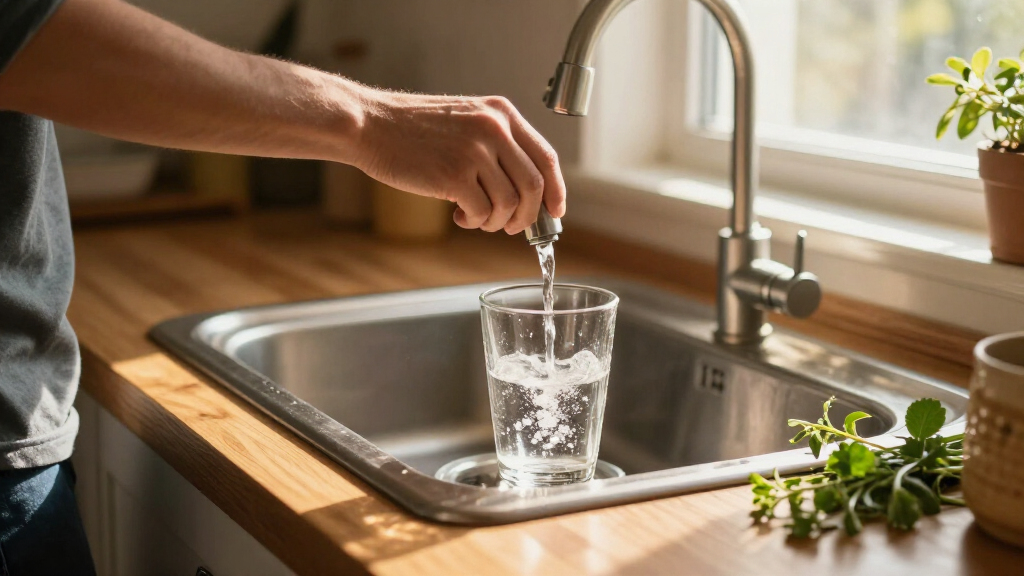
How We Picked
I compared the 15 systems by filtration purpose, installation demands, capacity, maintenance, and fit for common household needs. Reverse osmosis models were judged as drinking-water options, standard under-sink filters as simpler point-of-use systems, countertop units by their standalone convenience, and whole-house systems by the breadth of treatment and their specialized uses. I also considered whether the design asks buyers to manage a storage tank, a faucet, a drain connection, a countertop reservoir, or whole-house plumbing.
The ranking favors useful capability with a manageable ownership burden, rather than treating the most filtration stages or highest stated output as automatically best. The G3P600 leads as a balanced under-sink RO choice; the G3P800 suits buyers who put more weight on stated production capacity. Simpler filters rank well for people whose water concerns fit their stated treatment scope, while whole-house and countertop picks rise for their intended use cases. Product claims do not replace a local water report or independent test: buyers should verify certifications and contaminant reduction for the exact model before choosing.
Factors to Consider When Choosing Best Home Water Filtration Systems
I would start with the water problem and the point of use, then narrow the system type. These decisions shape installation, upkeep, and what the system can reasonably address across all 15 picks.
Match the system to a water test
Start with your utility’s annual water quality report if you use municipal water, then consider a certified lab test if you rely on a private well or have a specific concern. A general taste or odor complaint does not identify its cause, and a filter advertised for broad reduction may not address the contaminant you need removed. Check the model’s exact certification and performance data for that contaminant, including the conditions under which the claim applies. For well water, test for issues such as iron, manganese, hardness, and bacteria before selecting a treatment train. Avoid buying a system simply because it has more stages; stages matter only when they target a measured need. If results show several distinct problems, consult a qualified water professional about treatment order and compatibility.
Choose between point-of-use and whole-house treatment
A point-of-use system treats water at one drinking tap or countertop station, which can make sense when drinking and cooking water are your main concern. Whole-house equipment treats water as it enters the home, which may be useful when a contaminant affects showers, laundry, or multiple fixtures. That wider coverage usually takes more room, requires access to a main line, and can call for a plumber or periodic service. A common mistake is buying whole-house filtration to solve a single kitchen taste issue, or expecting a small under-sink filter to treat every tap. Consider whether you need treated water at all fixtures, and check whether outdoor spigots or irrigation should remain untreated. The right scope can reduce unnecessary installation and maintenance.
Account for reverse osmosis water and reject flow
Reverse osmosis can reduce a range of dissolved substances, but it changes more than the taste of drinking water. Many RO systems send some feed water to drain, and the ratio depends on the model, water pressure, temperature, and installation conditions. Tankless designs can save cabinet space and provide water on demand, while tank-based designs store filtered water and need room for a reservoir. Check whether the system includes a dedicated faucet, whether a drain connection is required, and what its stated recovery or waste figures mean in ordinary household use. If you want RO for drinking and cooking only, a point-of-use unit may be a better fit than treating all household water. Review the manufacturer’s water-quality requirements so the system operates within its stated range.
Compare installation with the space you have
Measure the cabinet, counter, and clearance around existing plumbing before ordering. Under-sink models can compete with garbage disposals, cleaning supplies, and pull-out drawers, while countertop units occupy visible workspace and need convenient access to refill water. Whole-house systems need room near the supply line for housings, shutoff valves, and future cartridge changes. Renters may favor countertop equipment because it generally avoids permanent plumbing changes, but they should still check electrical needs and how water is filled or emptied. For an under-sink setup, verify faucet-hole requirements and whether the kit can connect to the existing faucet. A fit check often prevents more frustration than comparing another filtration stage.
Plan filter changes and service before buying
Filter life varies with water quality and household use, so advertised intervals are starting points rather than guarantees. Compare the replacement schedule for every cartridge, membrane, UV lamp, or other service part, and confirm that compatible replacements are available. A system with several stages can offer targeted treatment but may create more parts to track. Whole-house housings may need space and tools for safe cartridge changes, while countertop reservoirs need routine cleaning as well as filter replacement. Ask who will perform the work and whether you can shut off water without affecting the household for long. The purchase decision should include the time and service routine you can sustain.
Pay for capabilities tied to your actual needs
Higher capacity, additional stages, UV treatment, mineral add-back, or scale control can be useful when each feature addresses a verified need. They can also add cost, upkeep, or complexity without improving the outcome you care about. For example, salt-free scale treatment is not the same as removing hardness minerals, and an alkaline stage does not prove that a system removes a particular contaminant. Compare the feature list against test results and the manufacturer’s performance documentation. A basic carbon filter may be enough for a narrow taste concern, while a household with confirmed iron or microbial issues may need a more specialized design. Spend more when a documented capability changes the water you need treated, not just because a model sounds more advanced.
Frequently Asked Questions
Should I choose reverse osmosis or a standard under-sink filter?
Choose based on the substances you want reduced, not on the assumption that one category is always better. Reverse osmosis systems can address a broad range of dissolved substances, but they need more connections and can send water to drain. Standard under-sink filters such as the Waterdrop 10UA or TSA are simpler options when their documented reduction claims match your concern. Check certification data for the exact model and contaminant, and consider whether you want remineralization or a dedicated faucet. A water test can make this decision much clearer.
Can a countertop system work if I rent or cannot modify the plumbing?
Countertop reverse osmosis units are often a practical fit when adding an under-sink faucet or drain line is not possible. The DREO and Bluevua models in this roundup operate as standalone countertop choices, but they still need space, power, refilling, and routine cleaning. Compare reservoir or pitcher capacity with how much filtered water your household uses each day. Check the setup instructions for any required faucet connection or wastewater handling before ordering. If the counter is crowded, a compact under-sink filter that connects to an existing faucet may fit better, if the connection is permitted.
Do I need a whole-house filter if I only care about drinking water?
Usually, a point-of-use system is the more direct match when your concern is limited to water for drinking and cooking. Whole-house systems treat water across fixtures, which can be useful for issues affecting bathing, laundry, or appliances, but they require more installation space and broader plumbing work. Before choosing, identify whether the concern appears at one tap or throughout the home and review test results. A whole-house carbon system also may not address every dissolved contaminant or hardness issue. Select treatment based on the documented problem and the places where it matters.
Will a whole-house filter soften hard water?
Not necessarily. A sediment or carbon filtration system may improve other water characteristics while leaving hardness minerals largely unchanged. The Kind Water Systems E-3000 is described as a salt-free softener and filter, but salt-free scale treatment differs from removing hardness minerals with a conventional softener. Check your water’s hardness and decide whether you need to reduce mineral concentration or limit scale buildup. Confirm the product’s stated treatment method fits that goal before comparing it with standard whole-house filters.
How should I compare filter replacement schedules across systems?
Look at the replacement interval and rated capacity for every consumable part, then account for your household’s water use and incoming water quality. A multi-stage RO unit may have separate prefilters and a membrane, while a countertop model may combine cartridges in a different schedule. Whole-house filters can have intervals that vary substantially with sediment load and the volume treated. Confirm that replacements are available for the exact model and check whether changing them requires tools or a service visit. The most manageable system is one whose upkeep you can follow and whose parts you can source reliably.
Conclusion
For most buyers seeking a drinking-water system under the sink, I would start with the Waterdrop G3P600 as best overall; choose the Waterdrop 10UA as best value-style pick when its simpler filtration scope matches your water concern. The Waterdrop G3P800 is my premium capacity choice for households that value its higher stated output, while the DREO countertop options are best for beginners and renters who want to avoid under-sink plumbing work. For specific needs, consider the iSpring WGB32BM for iron and manganese or the Kind E-3000 for salt-free scale treatment, after confirming suitability with water test results. If you want conventional multi-stage RO with a storage tank, compare the iSpring RCC7 models and APEC ROES-50; let your available space, documented treatment needs, and maintenance routine make the final call.
Fall Picks
fall essentials
As an affiliate, we earn on qualifying purchases.