
TL;DR

Get kitchen gear delivered free — and shop member deals
- Fast, free delivery on millions of items
- Access to Prime Big Deal Days deals on October 6–7
- Prime Video, Amazon Music and more included
To remove stuck-on food from cast iron, use hot water, coarse salt, and gentle scrubbing. Avoid harsh chemicals or steel wool that can strip seasoning. Regular maintenance keeps food from sticking and prolongs your pan’s lifespan.
Nothing ruins a perfect skillet meal faster than fighting to get that stubborn, burnt-on mess off your cast iron. It’s frustrating when your trusty pan resists your best scrubbing efforts, yet over-aggressive cleaning can strip away its seasoned surface. Instead, a few simple, deliberate steps can restore your pan’s non-stick magic without damage.
In this guide, you’ll learn how to tackle stuck-on food with techniques that protect your investment. From natural abrasives to soaking tricks, I’ll walk you through every practical tip to keep your cast iron in prime condition — ready for the next hearty fry or crispy hash.
Use hot water, coarse salt, and a soft brush or cloth to clean stuck-on food without damaging your seasoning.
Avoid harsh chemicals and steel wool unless you plan to re-season afterward.
Soaking or boiling can loosen stubborn residues but don’t leave your cast iron submerged for long.
Always re-season your skillet after cleaning to restore its non-stick surface and prevent rust.
Consistent maintenance keeps your cast iron in top shape, making food release easier over time.
Quick Fixes for Stubborn Food That Won’t Budge
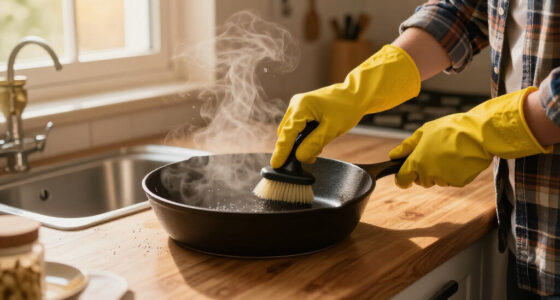
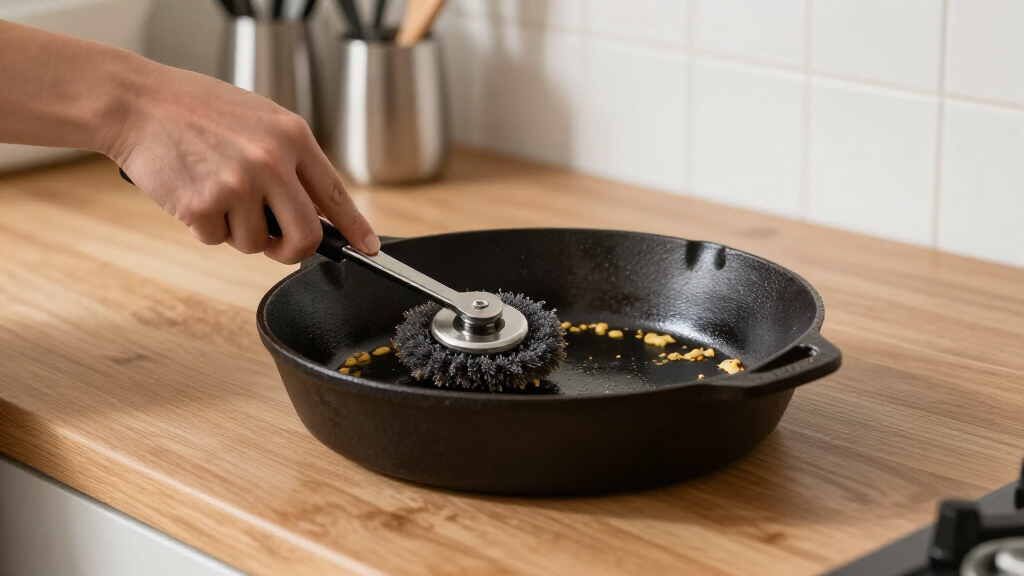
When food is stuck tight, your first move should be gentle but effective. Hot water combined with a stiff brush or non-abrasive scrubber often does the trick. But understanding why this works is important: hot water helps to soften the food bonds, making it easier to lift away, while a brush provides enough scrubbing action without damaging the seasoned surface. For really stubborn spots, a handful of coarse sea salt can serve as a natural abrasive—its gritty texture helps dislodge residue without the harshness of metal tools. This method matters because it balances cleaning power with preservation of your seasoning, which is the key to non-stick performance and rust resistance. Overly aggressive scrubbing with steel wool or harsh chemicals can strip away the seasoning, leading to more sticking and potential rust; thus, gentle yet effective approaches are preferred. Imagine a Sunday morning, your skillet covered in caramelized onions. Instead of scraping with steel wool, sprinkle a generous layer of salt, add a splash of hot water, and scrub with a cloth or soft brush. The gritty salt lifts the food without stripping your seasoning, and you avoid the scratchy metal that can ruin your pan.
As an affiliate, we earn on qualifying purchases.
How to Use Salt and Water to Clean Without Scratching
- Sprinkle about 1/4 cup of coarse salt into the warm, slightly damp skillet.
- Add a few drops of water to make a paste.
- Use a soft cloth or non-abrasive scrubber to vigorously scrub the surface, focusing on stubborn spots. This action helps mechanically lift residual food particles while the salt’s abrasiveness gently polishes the surface, preventing buildup that can lead to sticking. The key is to scrub enough to dislodge stuck bits without applying excessive force that might remove seasoning. Rinsing with hot water afterward washes away loosened debris and salt, which if left can become abrasive over time. Dry thoroughly to prevent rust, and then apply a thin layer of oil to maintain the seasoning. This method respects the delicate balance of cleaning while preserving the non-stick layer, ensuring your pan remains a reliable tool in your kitchen for years to come.
- Rinse with hot water, then dry thoroughly.
- Apply a thin layer of oil before storing.
This method removes stuck food while respecting the seasoning. It’s like using a gentle sandpaper—abrasive enough to clean, gentle enough to preserve your pan’s natural non-stick.
natural abrasive salt for cast iron
As an affiliate, we earn on qualifying purchases.
As an affiliate, we earn on qualifying purchases.
When Soaking or Boiling Is Your Best Bet
If food is really caked on — think burnt cheese or dried sauce — soaking can loosen the debris effectively. Filling the skillet with hot water, perhaps with a splash of vinegar, helps to chemically soften and break down stubborn residues. The acid in vinegar can further assist in loosening mineral deposits or burnt-on residues, making subsequent scrubbing easier. Letting the pan sit for 15-30 minutes allows the heat and moisture to penetrate and weaken the bond between food and surface. For particularly tough stains, bringing the water to a gentle boil on your stove accelerates this process by increasing heat and agitation, which helps lift even the most stubborn residues. Picture a cast iron pan with dried-on tomato sauce. Filling it with hot water and letting it simmer for 10 minutes softens the residue, making it much easier to scrub away. Remember, though, that prolonged soaking can damage the seasoning and cause rust, so always limit soaking time and dry thoroughly afterward. Proper soaking is a tradeoff: it’s effective for stubborn food, but must be used carefully to maintain your pan’s seasoning integrity.
cast iron seasoning reconditioning kit
As an affiliate, we earn on qualifying purchases.
As an affiliate, we earn on qualifying purchases.
Re-Season After Cleaning to Keep Food From Sticking
Cleaning can strip away your seasoning, especially if you use abrasives or soak too long. After removing stuck food, always reapply a thin layer of oil—flaxseed, vegetable, or your favorite seasoning blend—and bake it in the oven at 450°F for an hour. This process not only restores the non-stick coating but also creates a protective barrier that prevents rust and future sticking. The re-seasoning step is crucial because every cleaning, especially with abrasives or soaking, can wear down the seasoned layer. Restoring it ensures your pan remains naturally non-stick, which reduces the need for soap or harsh scrubbing in future cleanings. Regular re-seasoning maintains the pan’s surface integrity, making it easier to cook and clean over time. Think of it as giving your skillet a spa treatment—refreshing its surface so it performs at its best for years to come.
A quick re-season keeps your skillet smooth and ready for the next meal, whether it’s frying eggs or searing steaks.
As an affiliate, we earn on qualifying purchases.
Compare Cleaning Tools to Find What Works Best
| Tool | Best For | Pros | Cons |
|---|---|---|---|
| Non-abrasive scrubber | Light cleaning, surface prep | Preserves seasoning, gentle | Limited power on heavy residue |
| Coarse salt + cloth | Stubborn spots, natural abrasive | Effective, chemical-free | Requires rinsing and re-oiling |
| Steel wool | Really stuck-on, rust removal | Strong cleaning power | Removes seasoning if overused |
| Specialized cast iron brush | Regular maintenance | Durable, designed for cast iron | More expensive |
Choosing the right tool depends on how stubborn the food is and how much seasoning you want to preserve. For everyday cleaning, a soft brush or salt works perfectly. Steel wool is best reserved for rust or heavy buildup, but always re-season afterward. The tradeoff is between cleaning power and preserving the seasoning layer. Using the right tool for the job ensures longevity of your pan and maintains its non-stick qualities. Remember, each tool has its place: gentle tools for routine cleaning and more abrasive tools for rust removal or deep cleaning. Proper selection based on the situation helps avoid unnecessary damage and keeps your skillet performing optimally for years.
Prevent Future Food Sticking with Better Maintenance
The best way to avoid stuck-on food? Keep your skillet well-seasoned and clean it properly after each use. Always dry it thoroughly — never leave it damp. Apply a light coat of oil before storing, especially if you live in a humid area. Proper maintenance creates a slick, protective surface that repels food and moisture, reducing the chances of food sticking and rust forming. Think of your cast iron as a living surface that benefits from regular care: seasoning builds up over time, enhancing non-stick properties and rust resistance. Neglecting this maintenance can lead to a dull surface prone to sticking and rust. Regularly reapplying a thin layer of oil after cleaning, and heating it briefly to polymerize that oil, fortifies the seasoning layer. This proactive approach ensures your skillet remains a reliable, long-lasting kitchen companion, capable of handling everything from eggs to steaks with minimal sticking issues.
Frequently Asked Questions
Can I use soap to clean my cast iron skillet?
Yes, modern soap is safe in small amounts if you re-season afterward. Traditionalists prefer hot water and salt, but soap won’t harm your pan if used occasionally and followed by a light oil coat.
How often should I re-season my cast iron?
Re-season when the surface looks dull or food starts sticking. Typically, every 3-6 months with regular use or after deep cleaning. After cleaning with abrasives, re-season immediately to restore the non-stick layer.
Is soaking in vinegar safe for my cast iron?
Short-term vinegar soak (15-30 minutes) can help remove rust or stubborn stains. However, prolonged soaking can erode the seasoning and cause rust, so don’t leave it in vinegar overnight.
What’s the best tool for stubborn stuck-on food?
A combination of coarse salt and a soft cloth or brush usually does the job. Steel wool is an option for rust or heavy residue, but always re-season afterward to protect your pan.
How do I restore my cast iron after cleaning?
Apply a thin layer of oil and bake in the oven at 450°F for about an hour. This process rebuilds the seasoning and keeps your pan non-stick and rust-free.
Conclusion
Removing stuck-on food from cast iron doesn’t require harsh scrubbing or chemical cleaners. With patience and gentle techniques, your pan’s seasoning stays intact, and your cookware lasts for decades.
Remember: a well-maintained cast iron is like a trusted tool — it only gets better with care. Keep it seasoned, clean carefully, and enjoy cooking with a pan that ages like fine steel.
Fall Picks
fall essentials
As an affiliate, we earn on qualifying purchases.