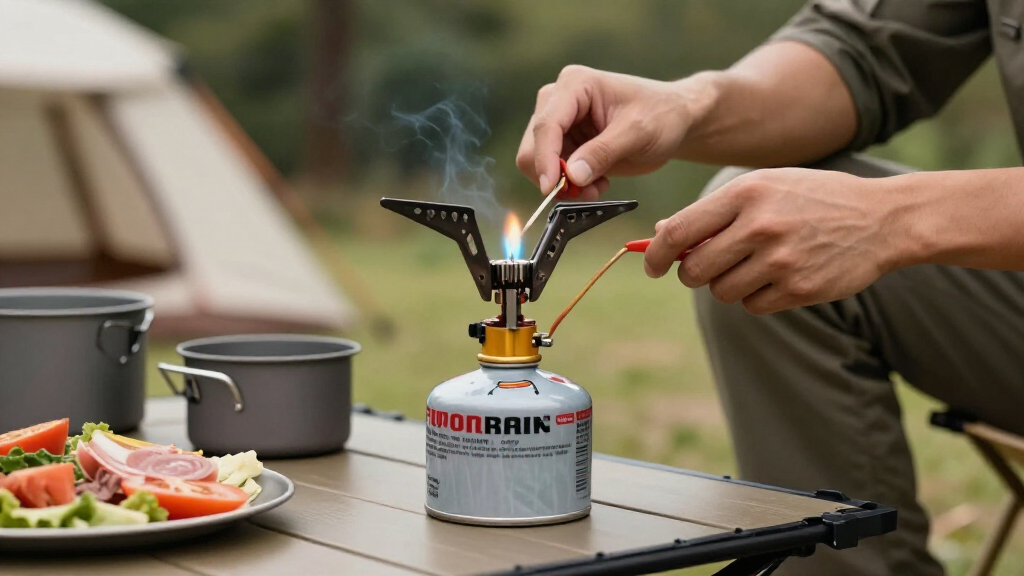

The best emergency cooking stove for most households is the Gas One GS-3400P, thanks to its dual-fuel design and included carrying case. For simple, fuel-tablet cooking, Coghlan’s Emergency Stove is a compact alternative, while the Coleman Triton suits households that need to prepare several dishes at once. The main tradeoff is between lightweight simplicity, flexible fuel options, and the capacity of larger propane stoves. Your choice also depends on which fuel you can store safely and reliably access during an outage. Read on for how these nine options compare and which one fits your emergency plan.

Get kitchen gear delivered free with Prime
- Fast, free delivery on millions of items
- Prime Video, Amazon Music and more included
- Member-only deals all year
Complete the kit



Key Takeaways
- Fuel flexibility separates the leading household pick: the Gas One GS-3400P accepts butane or propane, while most other gas models in this lineup rely on one fuel type.
- Fuel tablets favor simplicity over cooking range: Coghlan’s Emergency Stove includes 24 tablets, but tablet stoves are better for basic heating than meals that need adjustable heat or longer cooking.
- Two burners solve a different problem than high burner output: the Coleman Triton supports simultaneous cooking, while the BESTFIRE’s high-output two-burner format is aimed at larger outdoor cooking jobs.
- Compact systems trade versatility for convenience: the Fire-Maple Fixed Star bundles its stove with a pot-oriented system, which can suit solo users but is less adaptable to varied household cookware.
- Single-burner gas stoves dominate the middle ground: options from Chef Master and Gas One offer controllable heat in a portable format, but they do not match a two-burner stove for meal capacity.
| Coghlan’s Portable Folding Camp Stove |  | Best Compact Fuel-Flexible Stove | Material: Coated steel | Weight: 16 oz (1 lb) | Cooking surface: 6.5 in. x 6.5 in. | VIEW LATEST PRICE | See Our Full Breakdown |
| Coghlan’s Emergency Stove – Lightweight, Portable Camping Stove with 24 Fuel Tablets |  | Best Starter Kit for Small Meals | Fuel tablets included: 24 | Design: Foldable | Weight: Lightweight; exact weight not specified | VIEW LATEST PRICE | See Our Full Breakdown |
| Gas One GS-3400P Dual Fuel Portable Camping Stove with Carrying Case |  | Best Overall for Flexible Emergency Cooking | Fuel compatibility: Butane and propane | Butane cartridge capacity: 8 oz | Propane cylinder capacity: 16.4 oz | VIEW LATEST PRICE | See Our Full Breakdown |
| Coleman Triton 2-Burner Propane Stove, Portable Camping Cooktop |  | Best for Cooking Multiple Dishes | Burners: 2 adjustable burners | Cooking power: 22,000 BTUs | Power source: Propane | VIEW LATEST PRICE | See Our Full Breakdown |
| GasOne High Pressure Single Propane Burner – Outdoor Cooking with Heat Shield and Guard |  | Best for High-Heat Outdoor Cooking | Design: High-pressure single propane burner | Material: Heavy-duty metal | Burner head: Cast iron | VIEW LATEST PRICE | See Our Full Breakdown |
| Chef Master Portable Butane Camping Stove, 15,000 BTU |  | Best for Fast, Single-Burner Cooking | Power: 15,000 BTU | Ignition: Piezo electric | Wind protection: Double wind guard and additional wind shield | VIEW LATEST PRICE | See Our Full Breakdown |
| Fire-Maple Fixed Star 1 Backpacking and Camping Stove System, Black |  | Best Compact Boiling System | Weight: 18 oz | Material: Hard-anodized aluminum | Included components: Stove, 1-liter pot, and neoprene cover | VIEW LATEST PRICE | See Our Full Breakdown |
| BESTFIRE 2 Burner 150,000 BTU Propane Camping Stove with Windshield and Foldable Frame |  | Best for High-Output, Two-Burner Cooking | Listed output: 150,000 BTU | Burners: 2 | Controls: Independent control knobs | VIEW LATEST PRICE | See Our Full Breakdown |
| Gas One Portable Butane Camping Stove with Case: Automatic Ignition, Precise Heat Control |  | Best Simple Backup Burner | Output: 7,650 BTU | Fuel type: Butane | Canister size: 8 oz | VIEW LATEST PRICE | See Our Full Breakdown |
More Details on Our Top Picks
Coghlan’s Portable Folding Camp Stove
Flat-folding storage and broad compatibility with condensed fuels make this a practical backup for people who already keep camp heat or fuel cubes on hand. Its 6.5-by-6.5-inch cooking surface suits a small pot, but gives less room than the Coleman Triton’s two-burner setup. At 1 pound, it is easier to pack for a bug-out bag or keep in a vehicle than that larger cooktop. The tradeoff is a simple, low-output design: you must supply fuel separately, and it is better for modest meals than sustained high-heat cooking. Compared with Coghlan’s Emergency Stove, it offers more flexibility in fuel choice, while the Emergency Stove includes tablets to get started. I’d pick this when compact storage matters more than burner power.
Pros:- Folds flat for compact storage in a pack or emergency kit
- Works with canned heat, fuel cubes, solidified alcohol, and other condensed fuels
- Coated-steel construction is suited to outdoor use
- Weighs 1 pound
Cons:- Fuel must be purchased or stored separately
- Small cooking surface limits cookware size
- Not suited to prolonged or high-heat cooking
Best for: Backpackers and preparedness-minded buyers who want a fold-flat stove and already store compatible condensed fuel
Not ideal for: Households planning to cook full meals for several people or use large pans, since the cooking surface is small and output is not suited to prolonged high-heat cooking
- Material:Coated steel
- Weight:16 oz (1 lb)
- Cooking surface:6.5 in. x 6.5 in.
- Fuel options:Canned heat, fuel cubes, solidified alcohol, and other condensed fuels
- Design:Folding
- Fuel included:No
Our verdict“Choose this for a compact emergency stove when you value fuel flexibility and can accept small-pot cooking.”
Coghlan’s Emergency Stove – Lightweight, Portable Camping Stove with 24 Fuel Tablets
Included fuel tablets give this kit an advantage over Coghlan’s Portable Folding Camp Stove, which requires you to source compatible fuel separately. Its foldable design and lightweight build suit an emergency pack, while the lack of liquid fuel, priming, or a wick keeps the setup straightforward. That convenience comes with a narrow use case: this is for heating or preparing small portions, not for feeding a group or cooking a full meal. The 24 tablets provide a ready supply, but extended use means replenishing them. Unlike the Gas One GS-3400P, this model avoids gas cartridges and ignition hardware, yet it does not offer the same adjustable heat control. I’d choose it as a simple, compact backup rather than as a household’s main emergency cooktop.
Pros:- Includes 24 fuel tablets
- Foldable design stores compactly
- Does not require liquid fuel, priming, or a wick
- Lightweight for carrying in a camping or emergency kit
Cons:- Best suited to small cooking tasks
- Additional tablets are needed for extended use
- Offers less heat control than a gas stove such as the Gas One GS-3400P
Best for: Solo campers and emergency-kit builders who want a simple stove with a starter supply of fuel tablets
Not ideal for: Families or anyone expecting repeated, larger meals, because its cooking capacity is limited and extended use requires more tablets
- Fuel tablets included:24
- Design:Foldable
- Weight:Lightweight; exact weight not specified
- Fuel type:Fuel tablets
- Setup:No liquids, priming, or wick required
- Intended use:Camping, backpacking, and survival
Our verdict“Pick this for a lightweight, ready-to-pack backup for small meals, not for sustained household cooking.”
Gas One GS-3400P Dual Fuel Portable Camping Stove with Carrying Case
Butane and propane compatibility gives the GS-3400P more fuel flexibility than the Coleman Triton, which is propane-only, while its single burner keeps the package more compact than a two-burner cooktop. An automatic piezo ignition removes the need to rely on matches, and adjustable heat supports more than simple reheating. Its pressure sensor, cartridge ejection system, and gas-flow cutoff add safety features, though they do not remove the need to use the correct fuel and follow the stove’s instructions. The main limitation is fuel dependence: neither fuel is included, and the stove accepts specified cartridge or cylinder sizes. Compared with Coghlan’s tablet-fueled options, it offers greater cooking control but requires compatible gas supplies. I’d rank it first for buyers seeking a versatile, portable emergency stove.
Pros:- Compatible with butane and propane
- Automatic piezo-electric ignition
- Pressure sensor, cartridge ejection system, and gas-flow cutoff
- Includes a carrying case
Cons:- Butane and propane fuel are not included
- Limited to specified fuel container sizes
- Single burner cannot match the Coleman Triton’s two-pan capacity
Best for: Preparedness-minded households and campers who want adjustable cooking on one burner and the option to use butane or propane
Not ideal for: Buyers who want a stove ready to use without sourcing fuel, or who need two burners to prepare several dishes at once
- Fuel compatibility:Butane and propane
- Butane cartridge capacity:8 oz
- Propane cylinder capacity:16.4 oz
- Ignition:Automatic piezo-electric
- Safety features:Pressure sensor, cartridge ejection system, and gas-flow cutoff
- Included:Carrying case
- Fuel included:No
Our verdict“Choose the GS-3400P for a portable, controllable single burner when you can store compatible butane or propane.”
Coleman Triton 2-Burner Propane Stove, Portable Camping Cooktop
Two adjustable burners make the Triton the clearest choice here for preparing separate dishes at the same time, with a combined 22,000 BTUs of cooking power. It can handle 10- and 12-inch pans, so it offers substantially more cooking room than the single-burner Gas One GS-3400P or either compact Coghlan’s stove. Wind guards help shield the flames outdoors, and the removable chrome-plated grate simplifies cleanup. The tradeoff is size and fuel use: this is a portable cooktop for a vehicle, campsite, or patio, not a lightweight pack stove, and it runs on propane only. One 16-ounce cylinder lasts up to an hour on high, so emergency cooking plans need spare cylinders. I’d choose it when cooking capacity matters more than compact storage or dual-fuel flexibility.
Pros:- Two adjustable burners allow simultaneous cooking
- 22,000 BTUs of cooking power
- Wind guards help shield the flames
- Removable chrome-plated grate is easier to clean
Cons:- Bulkier than single-burner and folding emergency stoves
- Uses propane only, and the cylinder is sold separately
- One 16 oz. cylinder provides up to one hour of burn time on high
Best for: Families and car campers who need to cook two dishes at once using medium or large pans
Not ideal for: Backpackers or emergency-kit builders with little storage space, and buyers who want a stove that can use butane or tablet fuel
- Burners:2 adjustable burners
- Cooking power:22,000 BTUs
- Power source:Propane
- Pan compatibility:10-inch and 12-inch pans
- Burn time:Up to 1 hour on high with one 16 oz. propane cylinder
- Grate:Removable chrome-plated
- Warranty:3-year limited warranty
Our verdict“Pick the Triton when you need two-pan emergency cooking and have room to store the stove and spare propane.”
GasOne High Pressure Single Propane Burner – Outdoor Cooking with Heat Shield and Guard
High-pressure output sets this burner apart from the compact Coghlan’s models, which are better suited to modest cooking and condensed fuels. Its cast-iron burner head and heavy-duty metal construction are aimed at demanding outdoor tasks such as seafood boils and home brewing, where a stronger flame can be useful. A heat shield and guard add protective features, but the high output calls for attentive handling and a suitable outdoor setup. This is a single burner, so it cannot cook separate dishes like the Coleman Triton, and its propane connection means it does not offer the GS-3400P’s butane option. The sturdy build also makes it less appealing for lightweight emergency kits. I’d select it for high-heat outdoor jobs, not as the most compact or flexible household backup.
Pros:- High-pressure flame supports fast, high-heat outdoor cooking
- Cast-iron burner head and heavy-duty metal construction
- Heat shield and heat guard are included
- Intended for varied outdoor cooking, including tailgating and home brewing
Cons:- High heat output requires careful handling
- Heavy-duty construction can make it less portable
- Single propane burner lacks the dual-fuel flexibility of the Gas One GS-3400P
Best for: Outdoor cooks who need a high-output propane burner for large-pot tasks such as seafood boils or home brewing
Not ideal for: Backpackers, small-space emergency-kit owners, or cooks who need two burners or a low-output compact stove
- Design:High-pressure single propane burner
- Material:Heavy-duty metal
- Burner head:Cast iron
- Protective features:Heat shield and heat guard
- Hose:Durable hose assembly
- Intended use:Camping, tailgating, seafood boils, and home brewing
Our verdict“Choose this burner for high-heat outdoor cooking when sturdy construction matters more than compactness or two-burner capacity.”
Chef Master Portable Butane Camping Stove, 15,000 BTU
The Chef Master’s 15,000 BTU output makes it a stronger choice for quick skillet meals and faster heating than the 7,650 BTU Gas One Portable Butane Camping Stove. Its double wind guard and added wind shield help protect the flame outdoors, while Piezo ignition avoids needing a separate lighter. A pressure-sensing shut-off and in-line regulator add useful safety controls for emergency cooking. The hard-shell case makes storage and transport straightforward, though its butane fuel is not included, so you will need compatible canisters on hand. The tradeoff is a single cooking surface and less confidence on uneven ground; unlike the two-burner BESTFIRE, it cannot handle separate pots at once. I’d choose it for compact outdoor cooking, not indoor emergency use.
Pros:- 15,000 BTU output supports faster heating than lower-powered single-burner options.
- Double wind guard and extra shield help shelter the flame outdoors.
- Piezo ignition and pressure-sensing shut-off add convenience and safety features.
- Hard-shell carrying case simplifies storage and transport.
Cons:- Butane canisters are not included, so fuel must be sourced separately.
- Single burner limits meal size and simultaneous cooking.
- May be less stable on uneven surfaces and is intended for outdoor use.
Best for: Campers and emergency-kit owners who want a portable single burner with strong heat and wind protection.
Not ideal for: Households that need to cook multiple dishes at once, use a stove indoors, or rely on an uneven surface.
- Power:15,000 BTU
- Ignition:Piezo electric
- Wind protection:Double wind guard and additional wind shield
- Safety features:Pressure-sensing shut-off and in-line regulator
- Fuel:Butane canister; not included
- Portability:Lightweight design with hard-shell carrying case
Our verdict“Choose the Chef Master if you want a portable, wind-sheltered single burner with more heat than the Gas One but do not need two cooking zones.”
Fire-Maple Fixed Star 1 Backpacking and Camping Stove System, Black
The Fire-Maple Fixed Star 1 is the most integrated choice here: its stove, 1-liter pot, and neoprene cover pack together, making it easier to manage in a backpack or compact emergency kit than the larger BESTFIRE two-burner setup. Its heat-exchange design is stated to reduce boiling time by up to 30%, a practical advantage when the goal is heating water or preparing a simple meal with limited fuel. At 18 ounces, it favors portability over cooking capacity. The fitted pot also means less flexibility for larger pans, and the system does not include fuel. Unlike the Chef Master, it requires a windscreen for better performance in windy conditions. I’d pick it for solo users who prioritize compact water boiling, rather than families who need broad, multi-pot cooking.
Pros:- Stove and 1-liter pot nest together to reduce packing bulk.
- Heat-exchange design is stated to reduce boiling time by up to 30%.
- Piezoelectric ignition removes the need for a separate lighter.
- 18-ounce weight suits backpacking and compact storage.
Cons:- Fuel canister is not included.
- Requires a windscreen for optimal performance in windy conditions.
- Integrated 1-liter pot limits capacity and cookware flexibility.
Best for: Solo backpackers and emergency-kit planners who want a compact stove-and-pot system mainly for boiling water and simple meals.
Not ideal for: Families or cooks who need large cookware, multiple burners, or dependable performance in windy conditions without adding a windscreen.
- Weight:18 oz
- Material:Hard-anodized aluminum
- Included components:Stove, 1-liter pot, and neoprene cover
- Ignition:Piezoelectric
- Canister compatibility:Most canisters, excluding Coleman
- Boiling-time reduction:Up to 30% with heat-exchange technology
- Fuel:Canister not included
Our verdict“Choose the Fire-Maple for a compact, efficient solo boiling kit; choose the BESTFIRE instead if emergency meals require two burners and larger cookware.”
BESTFIRE 2 Burner 150,000 BTU Propane Camping Stove with Windshield and Foldable Frame
For emergency cooking that needs more than a pot of water, the BESTFIRE’s two independently controlled burners offer the clearest advantage in this group: you can cook separate dishes at once, unlike the single-burner Chef Master or Gas One. Its listed 150,000 BTU output and windshield suit outdoor cooking where high heat and some flame protection matter. Foldable shelves provide a place for prep, while the coated-steel frame is built around a sturdier, larger setup rather than backpack portability. That scale is also the main compromise: it takes more storage space and is less convenient to move than the compact Fire-Maple system. It needs a propane supply, and the separate burner controls may take practice. I’d reserve it for outdoor kitchens, group camps, or households that can store the frame and fuel safely.
Pros:- Two burners allow separate dishes to cook at the same time.
- Independent knobs provide individual flame control.
- Windshield helps protect flames in breezy outdoor conditions.
- Foldable shelves and storage bag support setup and transport.
Cons:- Large, heavy-duty frame is bulkier than the single-burner options.
- Requires a propane supply, which may need to be purchased separately.
- Independent controls can take practice to manage.
Best for: Families, group campers, and emergency planners who need two cooking zones and room to prepare full meals outdoors.
Not ideal for: Backpackers, apartment dwellers with little storage, or anyone seeking a compact stove for indoor emergency cooking.
- Listed output:150,000 BTU
- Burners:2
- Controls:Independent control knobs
- Material:Rust-resistant coated steel
- Included:Storage bag
- Wind protection:Windshield
- Additional features:Foldable shelves and adjustable flame
- Fuel:Propane; supply may need separate purchase
Our verdict“Choose the BESTFIRE when two burners and high-output outdoor cooking matter more than compact storage or easy portability.”
Gas One Portable Butane Camping Stove with Case: Automatic Ignition, Precise Heat Control
The Gas One Portable Butane Stove is a straightforward backup for heating a pot or pan outdoors, with automatic Piezo-type ignition and a CSA-approved safety shut-off. Its 7,650 BTU output is lower than the Chef Master’s 15,000 BTU, so it is better suited to modest cooking than fast, high-heat work. That lower-output approach pairs with a carrying case and an 8-ounce butane canister format, though the fuel itself is not included. Compared with the Fire-Maple, it does not bundle a pot or use a heat-exchange system to speed boiling; in return, it works as a conventional single burner with separate cookware. I’d keep it as a simple outdoor backup, but skip it if you need multiple burners, indoor operation, or the stronger wind protection offered by the Chef Master.
Pros:- Automatic Piezo-type ignition avoids needing a separate lighter.
- CSA-approved safety certification and shut-off feature provide added safeguards.
- Carrying case makes storage and transport easier.
- 1-year warranty is specified.
Cons:- 7,650 BTU output is lower than the Chef Master’s 15,000 BTU.
- Butane canister is sold separately.
- Listed as suitable for outdoor use only.
Best for: Campers and emergency-kit owners who want a simple, case-packed single burner for occasional outdoor pot or pan cooking.
Not ideal for: Cooks who need fast high-heat performance, two burners, indoor use, or a stove-and-pot system ready to pack together.
- Output:7,650 BTU
- Fuel type:Butane
- Canister size:8 oz
- Safety certification:CSA approved
- Ignition:Automatic Piezo-type
- Included:Carrying case
- Warranty:1 year
Our verdict“Choose the Gas One as a simple, portable outdoor backup when ease of ignition matters more than high heat or integrated cookware.”

How We Picked
I ranked these stoves around emergency usefulness rather than treating outdoor cooking features as interchangeable. I weighed fuel availability and flexibility, cooking capacity, heat control, portability, setup demands, and how readily each design could handle a simple meal during a power outage. I also distinguished fuel-tablet models from gas stoves: tablets can simplify storage and setup, but they provide fewer options for sustained or adjustable cooking.
The Gas One GS-3400P ranks first because dual-fuel capability gives households more flexibility if one fuel type is unavailable. The Coleman Triton places higher for family meal capacity, while Coghlan’s Emergency Stove earns a place for straightforward, lightweight backup use. Specialized picks rank lower for general household preparedness when their high output, single-purpose format, or compact cookware system narrows their audience. The right ranking for an individual buyer may change with household size, stored fuel, and cooking needs.
Factors to Consider When Choosing Best Emergency Cooking Stove
Emergency stove shopping starts with a practical question: what will you cook, for how many people, and which fuel can you store and use safely? The following factors help distinguish a useful backup from a stove that looks capable but does not fit your outage plan.
Match Fuel to Your Outage Plan
A stove is only useful if you have compatible fuel on hand and a safe way to store it. Butane canisters are convenient for compact stoves, while propane is common in larger outdoor cooking setups; dual-fuel models can widen your options, but they still require the correct approved canister or adapter. Do not assume that a camping stove works with every container of the same fuel. Check the manual for compatible fuel, connection requirements, storage guidance, and any temperature limits. Build fuel rotation into your household routine rather than letting emergency supplies sit forgotten. If you cannot store or obtain the required fuel reliably, a simpler fuel-tablet stove may be easier to maintain, though its cooking range is limited.
Choose Capacity for the Meals You Actually Make
Think beyond burner count: meal size, cookware fit, and whether dishes need different heat levels all affect useful capacity. One burner can be enough for boiling water or reheating a pot of food, while two burners let you cook a main dish and a side at the same time. A high-output burner does not automatically make a better emergency stove; it may use fuel quickly and can be harder to control for gentle cooking. Check the stove’s support and dimensions against the pots and pans you already own. A common mistake is buying a compact system that only works well with its included pot, then discovering it does not suit the meals your household relies on. Choose for routine emergency meals, not the most demanding recipe you can imagine.
Separate Boiling Speed From Heat Control
Emergency cooking often means more than boiling water: simmering soup, warming canned food, or cooking grains calls for steady, adjustable heat. Burner output gives a sense of heating potential, but it does not tell the whole story about flame control, cookware fit, or performance in wind. A powerful burner may be useful outdoors for large pots, yet less forgiving for small pans and low-heat tasks. Look for controls that are easy to adjust and a stable surface for the cookware you plan to use. Practice with the stove before an outage so you can learn how quickly it responds and how much fuel your usual meal requires. If your plan is limited to hot drinks and water, spending extra for high output may not add much value.
Plan for Safe Use, Not Just Easy Storage
Portable fuel-burning stoves can produce carbon monoxide and must not be used indoors, in tents, or in other enclosed spaces unless the manufacturer specifically identifies the appliance for that use. Follow the manual’s clearance and ventilation instructions, and use the stove outdoors on a stable, level surface away from combustible materials. Keep children and pets clear of hot cookware and fuel connections. A carry case helps with transport and storage, but it does not make a stove safe to operate inside a home during a power cut. Before an outage, choose an outdoor cooking location and check local fire restrictions. If you cannot use the stove safely outside, do not treat it as an indoor backup solution.
Balance Portability Against Stability and Meal Size
Lightweight folding stoves and compact cooking systems are easy to pack and store, but their small footprint can limit pot size and stability. Larger frames take more room and can be awkward to move, yet they provide a broader cooking surface for household meals. Wind protection also matters outdoors because gusts can slow cooking and waste fuel; a built-in windshield can help, though it does not replace choosing a sheltered, safe location. Consider where the stove will live, how far you may need to carry it, and whether it must support the heaviest pot in your emergency kit. A common buying error is focusing on folded dimensions while ignoring setup space and cookware support. For a home kit, stable placement and usable capacity may matter more than shaving off a little storage space.
Decide When Paying More Adds Real Preparedness
Extra features earn their place when they solve a problem your household is likely to face. Dual-fuel support can justify a more versatile model if you can store both approved fuel types; a second burner can matter if you regularly cook for several people. A compact integrated system may be worthwhile for a solo user who prioritizes a tidy, portable kit, but it can be limiting for shared meals. Avoid paying for maximum heat output when your plan centers on reheating food or boiling water. Include fuel, cookware compatibility, and storage needs in your comparison rather than judging the stove alone. The best emergency setup is the one you can store, operate outdoors, and supply with fuel over time.
Frequently Asked Questions
Can I use a portable camping stove indoors during a power outage?
Do not use a fuel-burning camping stove indoors, in a garage, or in a tent unless its manufacturer explicitly identifies it for indoor use and provides instructions for that setting. Many portable gas stoves can produce carbon monoxide, which has no smell and can become dangerous in enclosed areas. Opening a window does not make an outdoor-only stove safe for indoor cooking. Set up an outdoor cooking spot before an emergency and follow the manual’s clearance, ventilation, and surface requirements. If outdoor use is not possible, use an emergency cooking method designed and approved for indoor use.
Should I choose a dual-fuel stove or keep one fuel type for emergencies?
Dual-fuel capability can help if your household can safely store both compatible fuel types and wants another option when supplies are limited. It does not mean the stove accepts arbitrary canisters, so check the manual and connection requirements before buying or stocking fuel. A single-fuel stove may be the simpler choice if you already have a dependable supply and prefer fewer accessories or compatibility questions. Compare the fuel you can store, rotate, and obtain locally rather than assuming one type will be available during a disruption. Whichever design you choose, keep enough approved fuel for the meals you intend to make.
Is a two-burner stove worth choosing for a small household?
A two-burner stove is useful even for a small household if you want to prepare a main dish and a side at the same time or cook with different heat levels. It takes more room to store and set up than a single-burner model, and your cookware needs to fit without crowding. If emergency cooking will mostly involve boiling water or warming one pot, a single burner is usually easier to store and operate. Consider whether you will use both burners with your normal emergency meals, not just whether the extra burner sounds convenient. Household size matters, but meal style and available setup space matter too.
Are fuel-tablet stoves a practical alternative to gas stoves?
Fuel-tablet stoves can be a practical lightweight backup for simple heating tasks when ease of storage and basic setup matter more than adjustable heat. They are less suited to cooking varied meals that need sustained heat, precise simmering, or repeated use over a longer period. Check how many tablets are included or sold separately and what the manufacturer says about compatible fuel. A tablet stove should not be assumed to match a gas stove’s cooking speed or versatility. It can complement another emergency cooking method, especially when your needs are modest, rather than replace every household cooking option.
What should I test before relying on a stove for an emergency?
Read the manual, confirm the approved fuel, and practice setting up the stove outdoors on a stable surface. Check that your cookware fits securely and that the controls are manageable for the meals you plan to make. Try a simple meal and note how much fuel it uses, then store enough compatible fuel with your emergency supplies. Inspect hoses, seals, canister connections, and the stove body according to the maker’s care instructions; do not use equipment that appears damaged. A practice run can expose missing accessories or storage problems before an outage puts pressure on your plan.
Conclusion
For the best overall balance, choose the Gas One GS-3400P if you want a portable stove with dual-fuel flexibility. The best value for basic backup cooking is Coghlan’s Emergency Stove if fuel tablets suit your limited, simple cooking needs; it is not a substitute for adjustable gas cooking. Beginners who want a familiar, straightforward single-burner format can look at the Gas One Portable Butane Camping Stove, while the Coleman Triton is the better fit for family meals that benefit from two burners. For a premium-style, compact kit focused on efficient solo cooking, consider the Fire-Maple Fixed Star; for large outdoor pots and high-output cooking, the BESTFIRE is the specialist choice. Match the stove to your safe outdoor setup and fuel plan before deciding.