
TL;DR
Mason jars come in various sizes and lid types, each suited for different tasks. Proper sealing with the right lid ensures safe preservation, and staying updated on innovations can improve your storage game.
Mason jars are more than just a pretty container; they’re a backbone of food preservation and off-grid storage. But without understanding their sizes, lids, and sealing tricks, you risk spoiled food or ineffective storage.
Whether you’re canning your summer bounty or organizing pantry staples, knowing what makes a jar seal tight and safe is a skill worth mastering. Let’s break down the essentials so you can confidently use your jars for years to come.
Choose the right jar size based on your preservation volume—pints for daily jams, quarts for bulk storage.
Use the correct lid type—single-use for canning, reusable for storage—to ensure safety and longevity.
Always follow proper processing steps and check the seal after cooling to confirm safety.
Stay updated on new lid designs and materials to enhance reuse and environmental friendliness.
A good seal isn’t just about closing the jar; it’s about creating that vacuum that keeps your food safe for months.
Mason Jar Basics: Lids, Sizes, and Safe Sealing
Mason jars are more than pretty storage. The right size, lid, headspace, and processing method turn glass jars into a reliable preservation system. The core idea is simple: the jar only becomes shelf-stable when heat drives air out and cooling pulls the lid into a true vacuum seal.
The two-piece lid system is the safety mechanism.
A flat lid with sealing compound plus a screw band allows air to vent during processing, then forms the vacuum that helps prevent spoilage.
Pint jars are the versatile middle ground for jams, sauces, pickles, and drinks.
Quart jars suit broth, large preserves, and pantry staples, with longer processing needs.
Quarter-pint through quart covers most kitchen preservation projects.
Flat lid plus screw band creates the standard canning setup.
The cooled lid should curve inward and stay firm when pressed.
Water bath canning is used for properly prepared high-acid foods.
Low-acid foods need pressure canning to reach safe processing temperatures.
Which Jar Size Fits the Job?
Size controls convenience, processing time, storage efficiency, and waste. Smaller jars are easier for testing or gifting; larger jars save effort for bulk preservation but demand more time and energy.
Quarter Pint
Best for spice blends, tiny preserves, tasting samples, and gifts where portion control matters.
Half Pint
A practical choice for small-batch chutney, jam, jelly, sauces, or recipes you open slowly.
Pint
The everyday workhorse for pickles, jams, sauces, iced tea, meal prep, and pantry storage.
Quart
Ideal for broth, large pickles, bulk dry goods, and projects where fewer jars save shelf space.
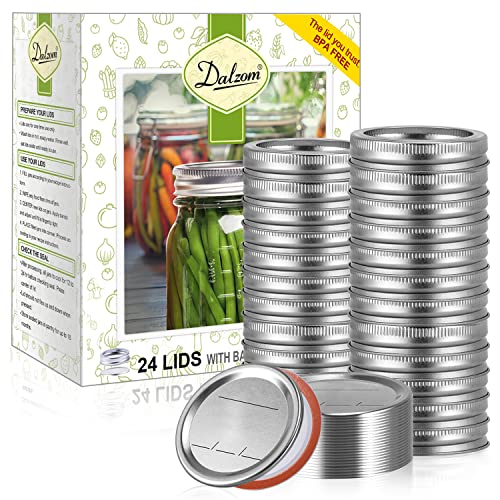
Dalzom® 24Pcs Canning Lids with 24Pcs Rings Regular Mouth, Premium Mason Jar Lids with Bands/Rings for Ball, Kerr Jars – Food Grade Material, 100% Fit & Airtight for Regular Mouth Mason Jars
🥒 48Pcs/24Sets Regular Mouth Canning Lids with Ring fit ball and kerr brand preserving jars. (24Lids + 24Rings…
As an affiliate, we earn on qualifying purchases.
As an affiliate, we earn on qualifying purchases.
Lids Are Not Interchangeable
The right lid depends on the job. Canning prioritizes food safety and vacuum formation. Storage lids prioritize convenience, reuse, and everyday access. Decorative lids are for presentation, not preservation.
Single-use metal lids
Designed to deform during processing so the sealing compound bonds to the jar rim. Use fresh lids for food preservation.
Reusable gasket lids
BPA-free plastic or metal lids with silicone gaskets work well for dry goods, fridge storage, and repeated use.
Decorative lids
Good for gifts, crafts, pantry styling, and non-canning uses. They should not replace tested canning lids.

AOZITA 10 WIDE Mouth & 10 REGULAR Mouth Mason Jar Lids – 20 Pack Food Grade Plastic Mason Jar Caps for Ball, Kerr and More Canning Jars – Leakproof & Dishwasher Safe – Multicolor
◆20 PACK WHITE REGULAR & WIDE MOUTH LIDS – Regular Mouth Lids Fit 2.75 in (70 mm) Outer…
As an affiliate, we earn on qualifying purchases.
As an affiliate, we earn on qualifying purchases.
Comparison: Match the Lid to the Task
A lid can look secure without being safe for canning. Use the table as a quick decision tool before filling jars.
| Use Case | Standard Metal Canning Lid | Reusable Silicone-Gasket Lid | Decorative Lid | Best Reason |
|---|---|---|---|---|
| Water bath canning | ✓ | ~ | ✗ | Use tested lids approved for heat processing and vacuum formation. |
| Pressure canning | ✓ | ~ | ✗ | Low-acid foods require strict processing and reliable lid integrity. |
| Dry pantry storage | ~ | ✓ | ✓ | Convenience and repeat opening matter more than heat sealing. |
| Fridge leftovers | ~ | ✓ | ~ | Reusable lids reduce waste and are easier to clean after frequent use. |
| Gifts and crafts | ~ | ✓ | ✓ | Appearance can lead, as long as the contents are not shelf-stable preserves. |

Showvigor 2 Pack Regular Mouth Mason Jars 16oz Glass Canning Jars with Airtight Lids for Preserving, Jam, Honey, Jelly, Wedding Favors, Sauces, Meal Prep, Overnight Oats, Salad
🍒【Airtight Seal】The lids on these mason jars provide a tight seal to keep food fresh and prevent leaks…
As an affiliate, we earn on qualifying purchases.
As an affiliate, we earn on qualifying purchases.
The Safe Sealing Flow
A reliable seal is a sequence, not a single twist of the band. Each step protects the next one.
Fill with headspace
Leave the recipe’s recommended space so food can expand and air can escape.
Wipe the rim
Remove residue that can interrupt contact between glass and sealing compound.
Fingertip tight
Too tight traps air; too loose can leak. The band should allow venting during heat.
Process correctly
Use water bath for high-acid foods and pressure canning for low-acid foods.
Check after cooling
The lid should be concave, firm, and silent when pressed in the center.

LOVE MOMENT Electric Mason Jar Vacuum Sealer Kit for Wide Mouth and Regular Mouth Mason Jars
【Suitable for two types of Mason jars】The electric Mason jar vacuum sealer contains two sizes of mouth seals…
As an affiliate, we earn on qualifying purchases.
As an affiliate, we earn on qualifying purchases.
What Drives a Better Storage Game?
Recent mason jar trends are practical: easier cleaning, less waste, safer materials, and clearer separation between canning lids and everyday storage lids.
Feature Priority Spectrum
Relative importance by use case, from daily pantry access to long-term preservation.
Seal Check Checklist
Before storing shelf-stable jars, confirm the physical signs of a completed vacuum.
Traceability: From Jar Choice to Safe Storage
Safe preservation links every decision. The jar volume, mouth style, lid type, heat method, and final seal all have to agree.
Match volume
Pick half-pint, pint, or quart based on recipe yield and how fast you use it.
Choose access
Wide-mouth jars make chunky ingredients, cleaning, and unloading easier.
Use the right top
Canning lids are for processing; reusable lids are for storage convenience.
Process by food type
High-acid foods use water bath; low-acid foods need pressure canning.
Verify before storing
If the lid flexes or pops, refrigerate and use soon or reprocess safely.
Frequently Asked Questions
The most common mistakes come from treating all jars and lids as interchangeable. They are not.
Are all mason jar lids reusable?
No. Most flat metal canning lids are single-use for preservation because the sealing compound changes during processing. Reusable gasket lids are made for repeated storage use.
What size should I use for canning?
Use half-pints for small preserves, pints for regular jams and pickles, and quarts for larger batches or bulk storage.
How do I know a jar sealed?
The cooled lid should be concave and should not move when pressed. If it flexes or pops, store it in the refrigerator and use it promptly.
What is the safest sealing habit?
Follow tested processing times, keep rims clean, tighten bands only fingertip tight, and verify every seal after cooling.
The final rule: sealing is about vacuum, not force.
A good seal is not created by cranking the band tighter. It forms when correct heat processing vents air and cooling pulls the lid inward. Clean jar, correct lid, proper method, checked seal: that is the system.
Which Mason Jar Sizes Fit Your Needs Best?
Mason jars come in a handful of sizes, each suited for different tasks. The most common are the half-pint (8 oz), pint (16 oz), and quart (32 oz). Think about what you’re storing: small jams, big batches of pickles, or bulk pantry items.
For example, a half-pint is perfect for small batches of chutney or spice blends. Pints are versatile—great for jams, sauces, or iced tea. Quarts? Ideal for larger preserves or even storing homemade broth.
Specialty sizes, like the 4 oz or 24 oz, pop up for specific projects but the standard options cover most needs. Wide-mouth jars make filling and cleaning easier, especially when handling chunky ingredients or preserving whole vegetables.
Choosing the right size matters because it affects how you manage your food. Smaller jars reduce waste if you only need a little, but larger jars are more efficient for bulk storage. Also, larger jars require more processing time and energy, so consider your capacity and energy efficiency when selecting sizes for canning or storage.
Understanding these size differences helps you plan your preservation projects more effectively. Smaller jars are convenient for testing new recipes or sharing, while larger jars are better for bulk storage, saving you time and effort in the long run. The tradeoff is often between convenience and efficiency, so choose what aligns best with your typical preservation volume and storage space.
What Are the Different Types of Mason Jar Lids and When to Use Them?
Mason jar lids aren’t all the same. The classic metal lid with a rubber seal is designed for canning—think of it as your food’s security blanket. Reusable lids, made from BPA-free plastic or metal with silicone gaskets, are great for storage or crafts.
Standard lids are single-use, especially if they’re the typical flat metal ones used in water bath canning. Reusable lids, however, can be washed and reused multiple times. Just inspect the gasket for cracks or deformation before each use.
Using the wrong lid for a task can compromise your food safety. For instance, decorative lids may look appealing but lack the sealing capability necessary for preserving food safely. Conversely, using a canning lid for storage might be unnecessary and less convenient, especially if you want to reuse the lid repeatedly.
Understanding the differences helps you make informed choices—using a proper lid ensures a tight seal during processing and storage, reducing the risk of spoilage or contamination. The tradeoff lies in safety versus aesthetics or convenience. Canning lids are designed for safety and long-term preservation, while decorative or storage lids prioritize ease of use and appearance. Choosing the right lid depends on your primary goal—long-term preservation or everyday storage—and understanding these distinctions ensures your food stays safe and your jars remain functional.
How to Achieve a Safe, Reliable Seal Every Time
The key to safe preserving is a good vacuum seal. Mason jars use a two-piece system: a flat lid with a sealing compound and a screw band. When processed correctly, the lid pulls inward, creating a tight vacuum that keeps food safe.
Here’s how to do it:
- Fill jars leaving the recommended headspace. This space allows for the expansion of food during processing and the formation of a vacuum seal.
- Wipe rims clean to remove food residue, as any debris can prevent a proper seal and lead to spoilage. Clean rims ensure the lid can form a complete, airtight seal.
- Screw on lids fingertip tight—overtightening can prevent air from escaping during processing, which is necessary for forming the vacuum. Under-tightening may cause leaks. Finding the right tension ensures that the lid can vent excess air during processing and then vacuum seal as it cools.
- Process in boiling water or a pressure canner according to the recipe, as proper heat ensures the lid forms a seal and kills bacteria. The heat causes the air inside the jar to expand and escape, and as it cools, a vacuum forms, pulling the lid tight.
- After cooling, check the seal: lids should be concave, firm, and not pop up when pressed. A proper seal indicates the vacuum has been created successfully, which is critical for preventing spoilage during storage.
If a lid isn’t sealed, refrigerate the jar and use it within a few days, or reprocess if possible. Proper sealing prevents spoilage and foodborne illnesses, protecting your health and investment in quality food preservation. Remember, a reliable seal is the cornerstone of safe preservation—skipping steps or rushing can compromise safety and lead to wasted food or health risks.
Frequently Asked Questions
Are all mason jar lids reusable?
Most metal canning lids are single-use because their sealing compound is designed to deform during processing. However, reusable lids made from BPA-free plastic or metal with silicone gaskets are built for multiple uses—just inspect them before each reuse.
What size mason jar should I use for canning?
It depends on your project. For small batches or single servings, half-pint jars work well. For regular jams and pickles, a pint is standard. Use quarts for large batches or bulk storage. Match the jar size to your intended quantity for best results.
How do I know if a jar is sealed properly?
The lid should be concave and not pop up when pressed. After cooling, listen for a subtle ‘pop’ sound during sealing. If the lid moves or makes noise, refrigerate the contents and reprocess if possible.
Can I reuse mason jar lids?
Standard metal lids are typically single-use for safety reasons. Reusable lids designed with silicone gaskets are meant for multiple uses. Always check the gasket and lid condition before reusing to ensure a proper seal.
What’s the best way to ensure safe sealing?
Follow processing times precisely—water bath for high-acid foods, pressure canning for low-acid. Ensure lids are properly fitted, and always verify the seal after cooling. A properly sealed jar is your best assurance against spoilage.
Conclusion
Mastering mason jar sizes, lids, and sealing techniques transforms your food storage from a guessing game into a reliable system. Every time you hear that satisfying pop from a sealed jar, you know your preservation is secure.
Keep your jars clean, use the right lids, and process carefully. Your off-grid pantry will thank you with fresh flavors and safety—no shortcuts needed. Now, go fill those jars with confidence.